Sharing the airspace with a drone light show

Night flying regulations are just part of the things you need to plan for to keep you, and others, safe
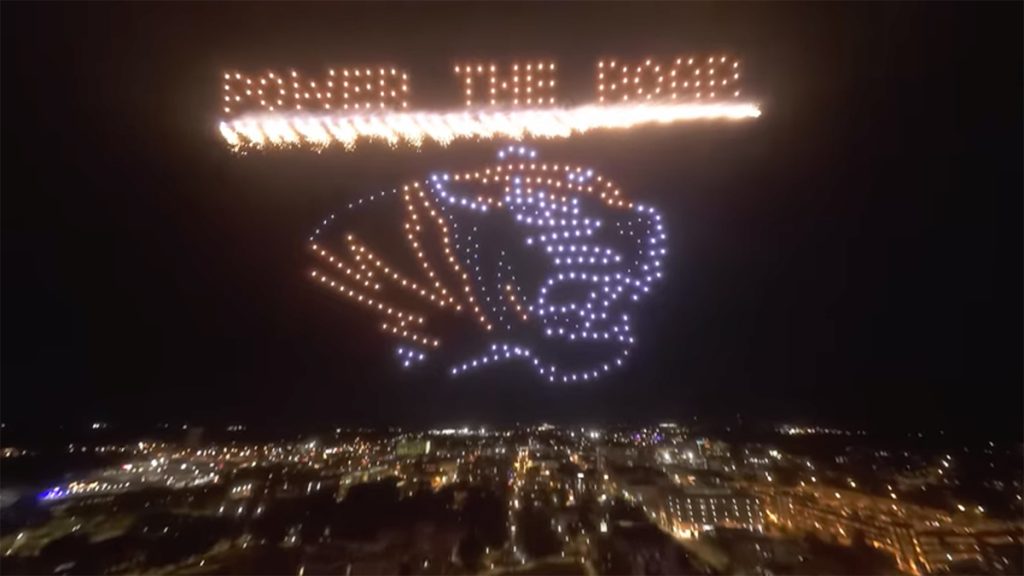
Many drone pilots revel in the chance to fly around their town’s annual 4th of July pyrotechnic display. It is usually the highlight of their year. But that wasn’t the only exciting aerial light show I flew this year. I’m talking about drone light shows, like this one over the skies of the University of Missouri, back in September.
Drone light shows are soaring across the world, even replacing conventional fireworks displays, and are setting records at the same time. The largest drone light show in history debuted in October over Liuyang, China. Nearly 16,000 drones dazzled the skies during a colorful and choreographed display of complex three dimensional images. This wasn’t just a show to me; it was one of the most technologically advanced forms of entertainment I’ve ever seen!
In the States, Sky Elements Drone Light Shows is the dominant competitor for drone light shows. The company puts on hundreds of shows a year and partners with the biggest marketing brands to portray any aerial scene imaginable. Sky Elements operates four or five shows across the country on any given day, flying up to 2,000 drones per show. Each 12-minute performance is incredibly technical and requires special permits to emit pyrotechnics, for which they hold the world record for doing so with a drone light show last year.
Drone light shows are here to stay. Many Part 107 commercial drone pilots are going to get the chance to fly near them to capture an amazing vantage point. What the common pilot needs to understand is there are inherent risks associated with operating in proximity of drone light shows. There should be a proper approach to flying safely so that everyone can enjoy the show while avoiding a potential catastrophe.
Planning for covering a light show
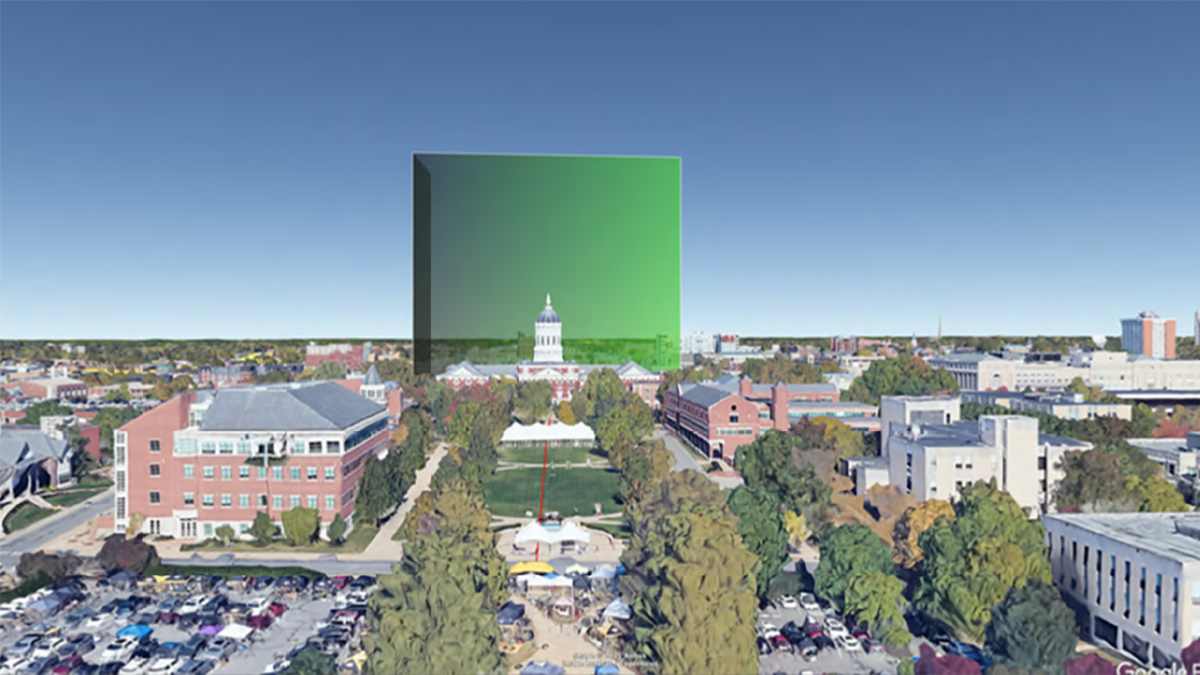
Before flying the show Sky Elements put on for Mizzou, I had the opportunity to meet Hayes Walsh, a creative content director for its production team. We strategized about the flight I was planning. The key factors for coordinating that flight involved:
- Discussions about the airspace boundaries for the show’s drones;
- The communications equipment used to control their drones and the risk for possible radio interference;
- And the positions of other pilots who planned to operate at the same time.
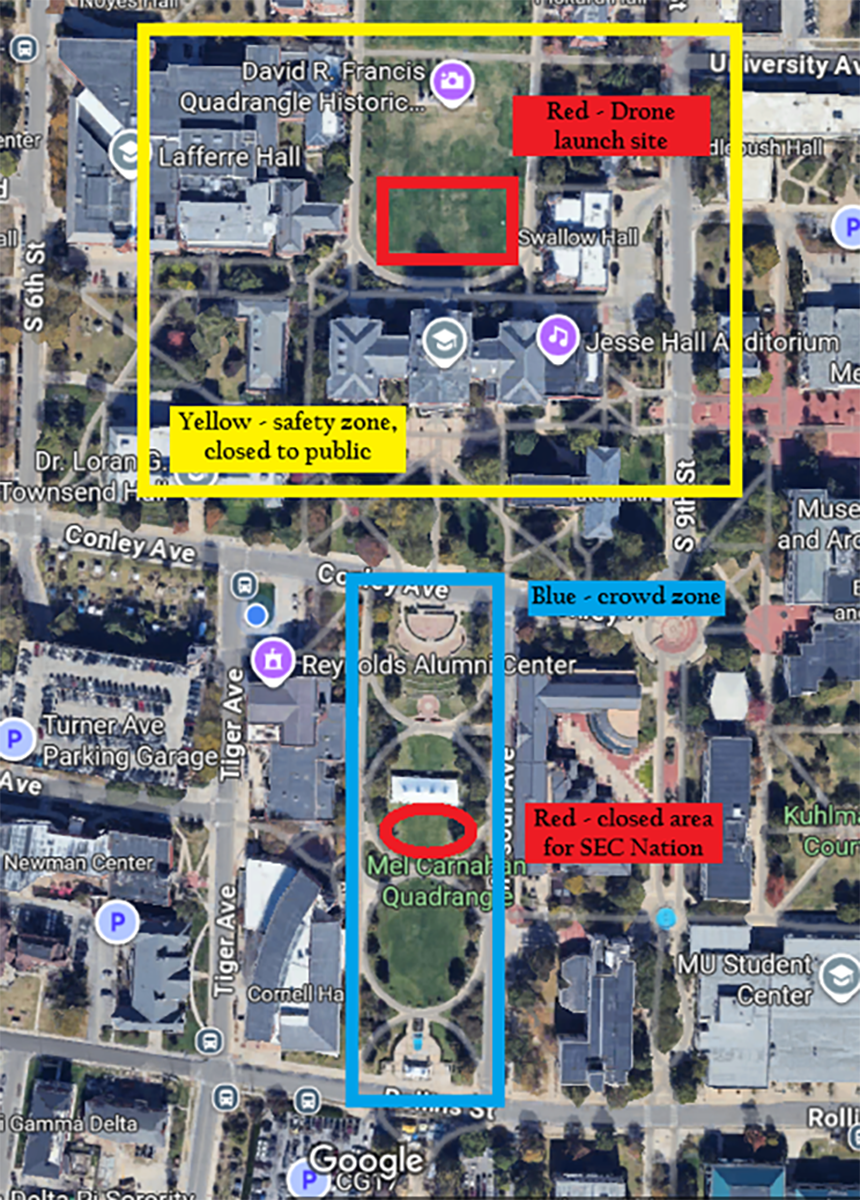
During the show, the most important known concern for me was keeping my physical distance from the swarm. I planned to stay along a corner perimeter just to the north and along the east of the Francis Quad. Another pilot I knew of flew the opposite corner. Flying at night also poses challenges, which may be read about here, but the show drones provided ample light to see the surrounding buildings and typical collision hazards. There was no issued Temporary Flight Restriction.
The most critical unknown concern in any of my drone flights usually happens after the launch. The Sky Elements team was flying an FPV style drone around the entire display with incredible acrobatics! That drone was also permitted by the FAA to operate without a strobe, making it nearly impossible to see. Walsh described the FPV operations as being incredibly choreographed and that the lack of a strobe allows for the audience to enjoy the show without a pesky light buzzing about. This poses a collision risk for pilots who are unaware.
Controlled landings
About a month later, Walsh joined my drone journalism class. We learned that there’s so much more happening behind the scenes than I ever imagined. You can listen in on the conversation by watching the following video. Pay close attention to time stamp 21:21when Walsh begins to describe how the drones maintain their position. “Obviously when you’re working with thousands of robots for flying out 1,000 shows every year a couple of them are going to miss cooperate or they’re not gonna have a signal like be sent to it correctly,” said Walsh. “What our team does is we make sure that if it goes wrong, that it (a drone) does the safest thing, which is a controlled landing in our zone.”
This is critical for how they get these drones approved to fly almost anywhere. If a drone were to deviate from their position by even a mere foot, the drone will automatically drop out of the formation to the ground below.
Clearly, the largest concern for emergency officials was the pyrotechnics, which had never been discharged that close to Jesse Hall, and required additional approval between the City of Columbia Fire Department and Office of Environmental Health and Safety. Lest not forget, Jesse has burned down once before, and it’s obvious they didn’t want a repeat due to a small UAS with a flare floating from its hind rotors!
No plan? Don’t launch
My simplest advice, if you’re a drone pilot who sees a drone light show above you, but you didn’t plan to fly in advance, simply don’t launch, or at least not anywhere near the show. Don’t forget to check the Aloft Air Control App to ensure you’re in compliance with any controlled airspace nearby and file for LAANC, if necessary.
After all, impulsivity is one of the five hazardous behavioral traits identified by the FAA likely to cause a collision. Anti-authority is also one of the other traits for those pilots who think the airspace is all theirs and are looking to fly as close as they can.
In conclusion, as a pilot who’s now flown my drone around a drone show, the next time one comes to town I’ll probably just sit back and watch. It just feels more natural that way. For those who plan accordingly, communication with the group putting on the show and working well in advance to coordinate with other possible pilots is going to be the best course of action for a spectacular view from above.
Cite this article
Lee, Dominick (2025, Dec. 17). Sharing the airspace with a drone light show. Reynolds Journalism Institute. Retrieved from: https://rjionline.org/news/sharing-the-airspace-with-a-drone-light-show/