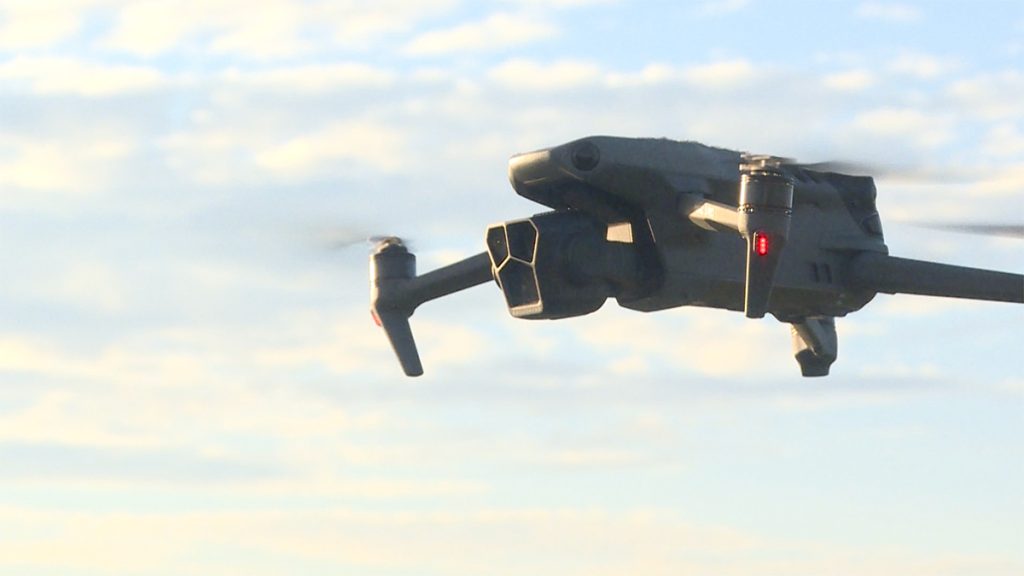
FCC’s ban of foreign-made drones affects the biggest maker on the market

There are still DJI models for sale, but future drones won’t be available unless the federal government stance changes
In December, the Federal Communications Commission banned future models of drones manufactured in China and other adversarial nations. The move includes the world’s largest drone manufacturer, Dà-Jiāng Innovations (DJI). It’s the latest in a series of legislative and regulatory changes to squeeze imports and prop up American drone making.
The decision has the potential to dramatically impact the industry. Although the true number is unknown, it is generally believed that DJI manufactures at least 70% of drones globally.
But the ruling deals with models and parts made after Dec. 22, 2025, so you can still find foreign-made drones for sale.
The ‘DJI ban’ in context
The U.S. Department of Defense, the General Services Administration and the National Aeronautics and Space Administration issued an interim rule, enacted in November 2024, amending the Federal Acquisition Regulation (FAR) to implement a prohibition on the procurement and operation of unmanned aircraft systems manufactured or assembled by foreign entities identified in the American Security Drone Act of 2023.
The decision sent shockwaves throughout the drone community, stoking fears that an outright ban of DJI and other drone brands, like Autel, would take place.
With more than 1 million registered drones in the U.S. since the end of 2024, the implications of a total ban would be seen as devastating to the multiple industries that have adopted and been revolutionized by DJI drones.
From the consumer standpoint, DJI products are the most affordable and technologically advanced product that money can buy.
2025 has proven to be a tumultuous year for drone pilots looking for guidance on their already existing drones. In October, the FCC voted to grant itself the authority to retroactively ban electronic devices that were already cleared for sale, if their makers were later deemed national security risks, a move widely seen as targeting Chinese companies like DJI.
However, FCC chairman Brendan Carr has refuted concerns by stating formerly approved models of drones could continue to operate without disruption.
“President Trump has been clear that his Administration will act to secure our airspace and unleash American drone dominance,” Carr wrote in a post on X. “We do so through an action today that does not disrupt the ongoing use or purchase of previously authorized drones and with appropriate avenues for excluding drones that do not pose a risk.”
(My class at the Missouri School of Journalism, which has about 40 students per semester, is powered by a fleet entirely composed of DJI drones. The University of Missouri made a decision to enforce its own regulations in addition to the executive order by barring operations of foreign drones if the program includes federal funding. The journalism drone program isn’t funded that way.)
Impact on U.S. industries
DJI drones are renowned for their affordability, exceptional capabilities, wide availability, superior safety features and user-friendly operation, making them an obvious choice for many drone operators in various public scenarios, including the following:
- Safety and emergency response: DJI drones play a critical role in disaster management, such as fire outbreaks or floods, where they provide real-time data, aiding in quicker response times and preventing further harm. They’re also used in search and rescue missions due to their ability to reach inaccessible areas.
- Environmental monitoring and conservation: DJI drones are used in environmental monitoring, wildlife conservation, and agricultural management. They can capture detailed images of a region’s flora and fauna, monitor biodiversity, and even help detect illegal activities such as poaching.
- Infrastructure inspection and maintenance: DJI drones make the inspection of critical infrastructure like bridges, power lines, and wind turbines safer and more efficient. They can access difficult areas, reducing the risk to human inspectors.
- Delivery and logistics: DJI drones can speed up deliveries and reduce traffic congestion and CO2 emissions. This can be particularly beneficial for delivering critical items, such as medicines in remote or difficult-to-reach locations.
- Data collection and mapping: DJI drones provide accurate data for mapping and surveying purposes, benefiting sectors like construction, real estate, archaeology, and forestry. They can create high-resolution 3D maps, track changes over time, and access remote locations.
The drone industry is predicted to create numerous jobs across various sectors, driving economic growth. According to the FAA, it could generate over $65 billion for the U.S. economy over the next five years and create 100,000 new jobs in 2025.
American drone dominance
The U.S. government is pushing to assert what it calls “American Drone Dominance” in the national airspace system U.S. Secretary of Defense Pete Hegseth has addressed the need for drones for warfare and defense.
Although the messaging has the underpinnings of a militaristic strategy, it indicates a clear shift toward creating a void where American ingenuity can step in and replace the dominance of Chinese-made drones over American airspace.
Hegseth said the decisions of the Trump administration will inspire the innovators of the American drone market, stifle the competition with China and drive down the often unaffordable cost of commercial drones already manufactured in the U.S.
Cite this article
Lee, Dominick (2026, Feb. 16). FCC’s ban of foreign-made drones affects the biggest maker on the market. Reynolds Journalism Institute. Retrieved from: https://rjionline.org/news/fccs-ban-of-foreign-made-drones-affects-the-biggest-maker-on-the-market/