
Drone flights beyond visual line of sight are here to stay

How FAA Part 108 will reshape the U.S. Airspace System
It is safe to assume every commercial drone pilot at one time was a novice. Maybe then, it is also safe to assume before launching a drone for the first time, some significant portion of those beginners were naive to the complexities of the National Airspace System. After all, the federal code of regulations regarding sUAS operations has only existed for just over a decade, and many first-time pilots are still unaware of the current laws.
Even before their very first flight, new pilots should begin learning about the laws by acquiring the free certification administered via the FAA online, called the TRUST exam. Many pilots who don’t get this certification often begin by breaking one of the most critical safety rules written into the law — flying beyond visual line of sight (VLOS).
According to the FAA, visual line of sight is incredibly important because it allows for the drone operator to know the following during all phases of the flight:
- The unmanned aircraft’s location.
- Determine the unmanned aircraft’s attitude, altitude, and direction of flight.
- Observe the airspace for other air traffic or hazards.
- Determine that the unmanned aircraft does not endanger the life or property of another.
From my personal and teaching experience, the general inspiration for amateur pilots to fly long distances comes from a curious sense of adventure — the desire to essentially be in two places at once and to discover the world through the ease of flight. However, visual line of sight is the rule I encourage them to adhere to most closely because I have seen the costly outcomes for students who do not. Above all, early-career pilots seem to love pushing the limits of what their drones are capable of, merely “just to see how far it can go.”
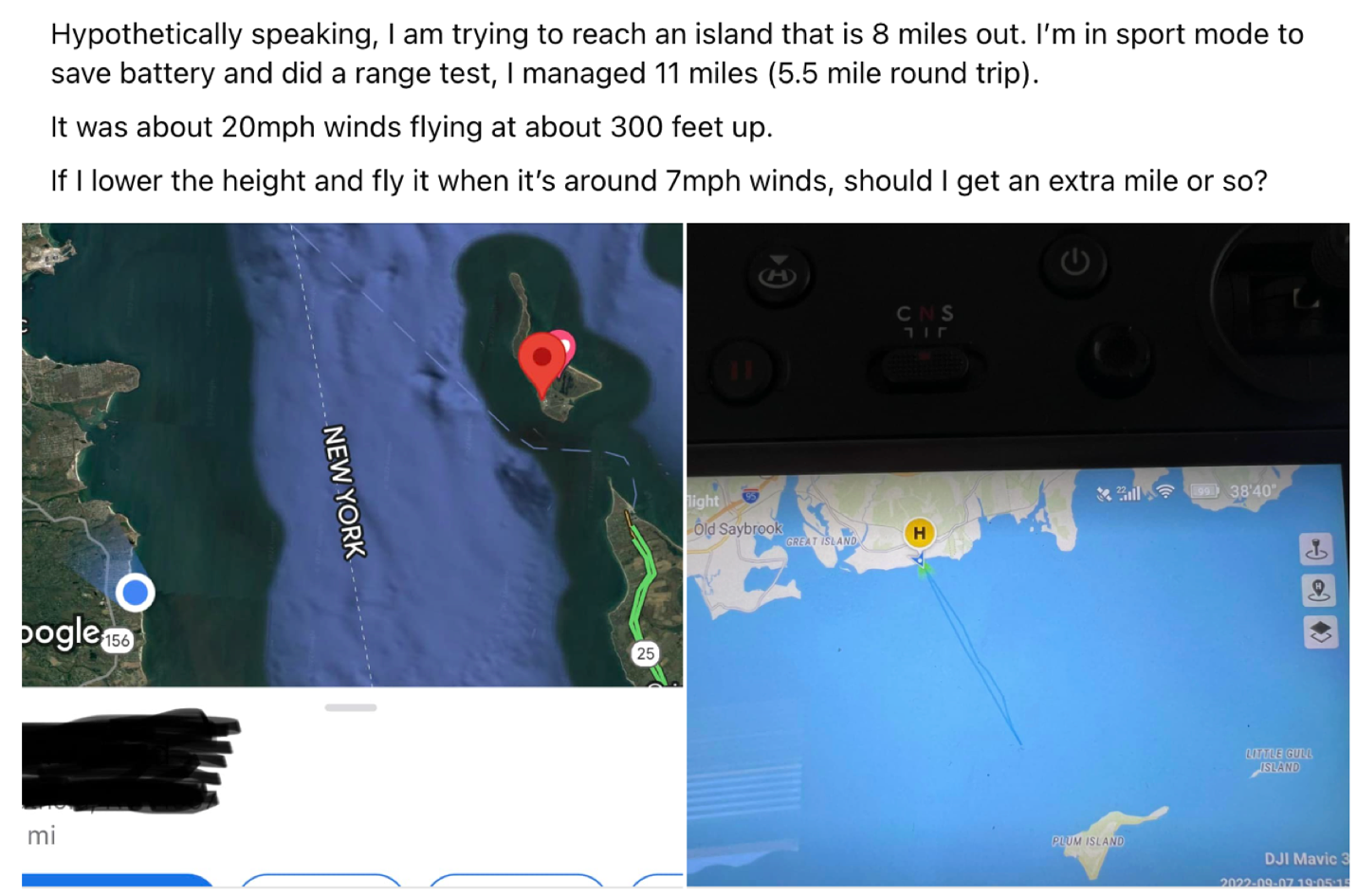
Currently, to legally fly beyond visual line of sight (BVLOS), a Part 107 commercial pilot must obtain a waiver from the FAA. According to the FAA, operators may request a waiver from most restrictions if they can demonstrate that their operation will provide a level of safety at least equivalent to that of the regulation from which the waiver is sought. Some of the most requested waivers involve operations beyond visual line of sight, nighttime operations, and flights over people.
For Part 107 commercial pilots looking to fly BVLOS and acquire a waiver, Pilot Institute has created a useful guide to assist.
Proposed rules on flying beyond line of sight
In August, the FAA gave the public three months to give input on creating a new rule for drones operating beyond line of sight.
According to the FAA, “This proposed rule is intended to provide a predictable and clear pathway for safe, routine, and scalable UAS (unmanned aircraft systems) operations that include package delivery, agriculture, aerial surveying, civic interest, operations training, demonstration, recreation, and flight testing.”
Part 108 is designed to expand access to the sky by replacing individual waivers with a standardized framework, opening the door for more operators to fly advanced missions at scale. Public perception has been mixed as indicated by the over 1 million comments submitted from stakeholders in the aviation community.
From line of sight to over the horizon
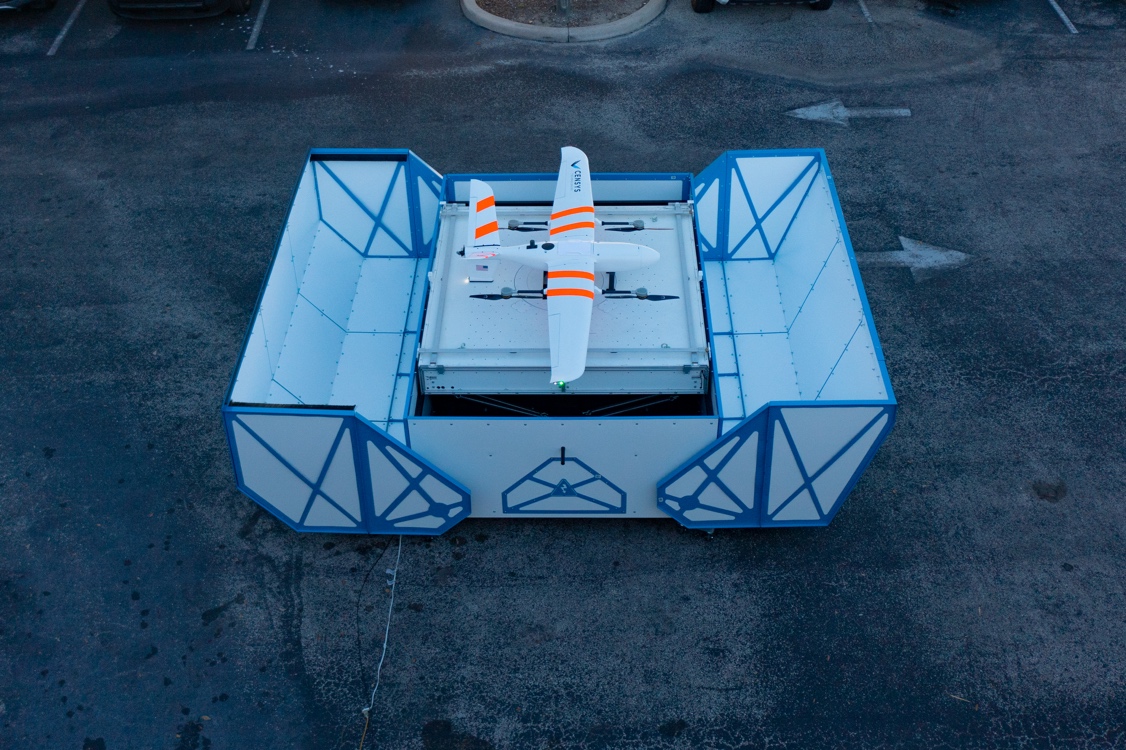
In early February, Censys Technologies, an industry leading asset intelligence company specializing in the development and production of BVLOS drones, hosted the first-ever live public demonstration of a long-range BVLOS drone mission spanning 79 miles of critical infrastructure. Censys has helped to facilitate over 87 BVLOS waivers for companies and operations across the United States.
I caught up with Senior Regulatory Affairs Specialist Pete Frank about a week later to discuss the impact Censys is having on the landscape of aerial missions beyond line of sight — and even further — with drone operations the company refers to as over-the-horizon BVLOS. “So that’s 10 plus miles,” Frank said. “Think of gathering data for 50 miles of a row of power lines in a single mission, versus having to constantly break down, set up, physically move somewhere, fly it and repeat.”
When asked about the U.S. government’s initiative to birth a dominant, American-made drone industry, Frank suggested the plan would need to include tenets of BVLOS operations to succeed.
“There’s also the desire to increase our industrial base when it comes to manufacturing drones,” Frank said. “I always knew it would be controversial, because it’s representing a massive change to the way things are done currently. For the past 10 years we’ve had Part 107, which is very operator focused. I think one of the fundamental differences between Part 107 and Part 108 is that part 108 is company focused.”
What commercial pilots should expect
Commercial drone pilots who already have the means to operate BVLOS under Part 107 guidelines now should assume that even with Part 108 on the horizon, Part 107 is here to stay. Frank said the process for obtaining a BVLOS operational waiver may be streamlined, but it won’t give complete freedom to drone pilots flying under Part 107 to just fly as far as they want.
“If you yourself wanted to go out and just have an LLC, it’s not designed for that.” Frank said. “It’s more of, if a company or organization, or public entity has a fleet of drones, and it’s also geared more towards automated operations as well.” Frank said there’s no certificate necessary for Part 108 like there is for Part 107. The FAA will decide on a case by case basis through a highly scrutinized application process.
With the implementation of Part 108, the FAA says all pilots should expect there to be an increase in detect and avoid (DAA) systems to aid in electronic conspicuity (EC) to avoid collisions. “There’s a lot of pushback from the traditional aviators who are in the manned or crewed vehicles,” Frank said.
Due to public uproar, the FAA reopened the window for public comment in January, regarding the requirement for crewed craft to emit an Automatic Dependent Surveillance – Broadcast, or ADS-B.
ADS-B replaces radar technology with satellites, bringing major advantages for crewed aircraft. While radar relies on radio signals and antennas to determine an aircraft’s location, ADS-B uses satellite signals to track aircraft movements and broadcasts it, so that other craft in the area may determine the plane’s position in flight. Some advanced models of drones already can detect an aircraft’s ADS-B Out, but no drone would be able to emit the signal itself. That responsibility would remain in the hands of crewed aircraft aloft, leading to the aforementioned resistance.
It is expected the FAA will finalize the new rule with or without amendments in early 2026. Pilots of all types are waiting to see where the onus of detect and avoid systems lies regarding BVLOS drone operations. However, I believe it is safe to say that, just like only 10 years ago, every early adopter of Part 108 will at some point be a beginner in its industry. Those flights will likely pose a collision hazard for crewed craft and people on the ground, as seen after two Amazon delivery drones crashed last year in Arizona.
If approved, the final rule on Part 108 could be potentially enacted in six to 12 months.
H2
Cite this article
Lee, Dominick (2026, March 10). Drone flights beyond visual line of sight are here to stay. Reynolds Journalism Institute. Retrieved from: https://rjionline.org/news/drone-flights-beyond-visual-line-of-sight-are-here-to-stay/