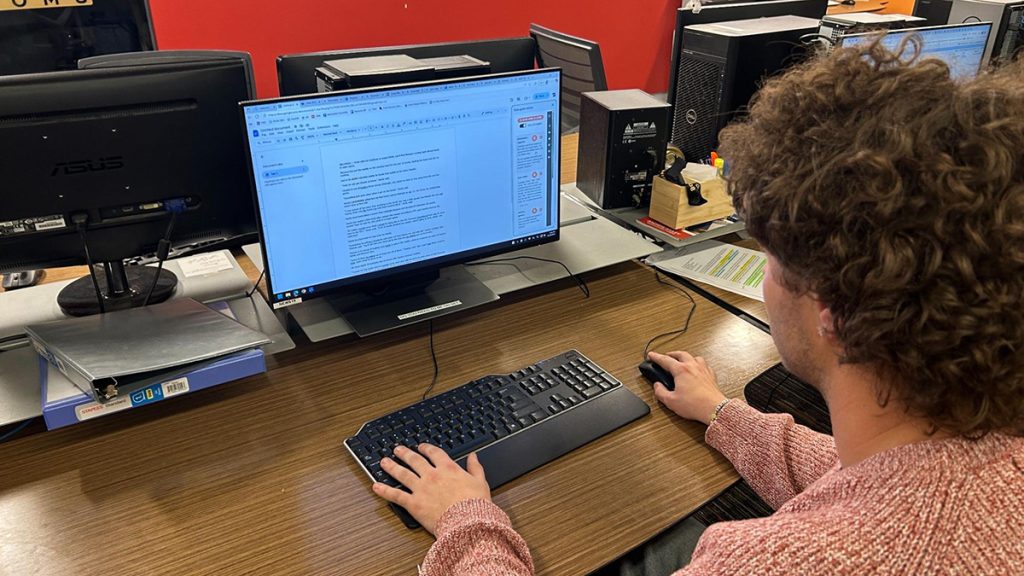
Camden Buehler, a Mizzou journalism student, uses Stylebot while editing digital stories for KOMU’s website. Buehler said he uses Stylebot at the beginning of his editing process to flag any possible errors. Photo: Jacob Richey
Teaching a new generation of journalists AP Style

Stylebot is a tool that helps reach a digital generation right where they are — online
Stylebot is an app that offers a digital option for those of us trying to maintain standards and consistency in our work. For years, I’ve taught AP Style and had students whose work gets published at the Columbia Missourian, a community newspaper staffed by students at the Missouri School of Journalism. With a task of editing across the Missouri News Network’s five outlets (KBIA, KOMU 8, The Columbia Missourian, Vox Magazine and the Missouri Business Alert), the challenge of teaching AP Style has grown. Students struggle to memorize the rules and apply them to the different forms of writing from podcast scripts, radio episodes or news features.
For us, it has perhaps been compounded as we’ve relied more on the online stylebook and our expectation of students knowing what to look up in it. Stylebot has helped our news outlets maintain consistency in our work while we teach a new generation of editors and producers.
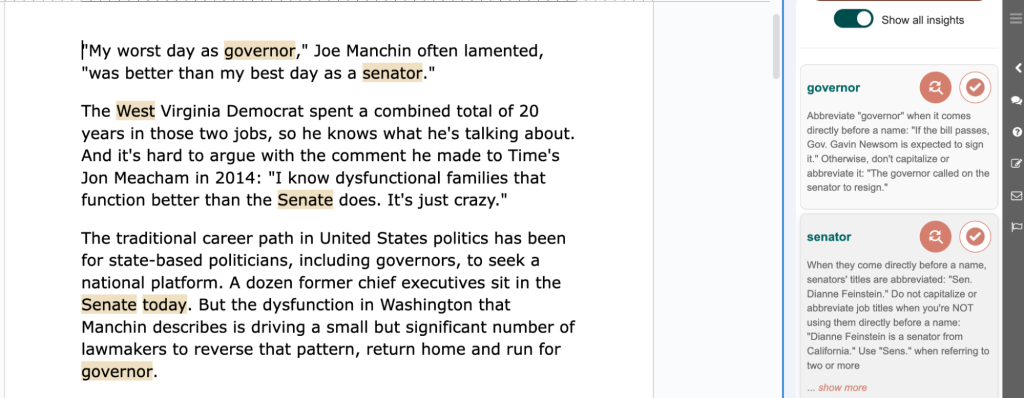
Stylebot is trained on the most regularly used rules of AP Style — think about the stuff you’re using 90% of the time: titles, punctuation, capitalization, numerals.
The app is not based on generative AI, so no hallucination of rules or answers. It’s actually based on the USC Annenberg School’s stylebook and closely mirrors AP rules. Users can also upload their own custom stylebooks for an additional cost. For our small team, the cost works out to about $5.50 per month per user.
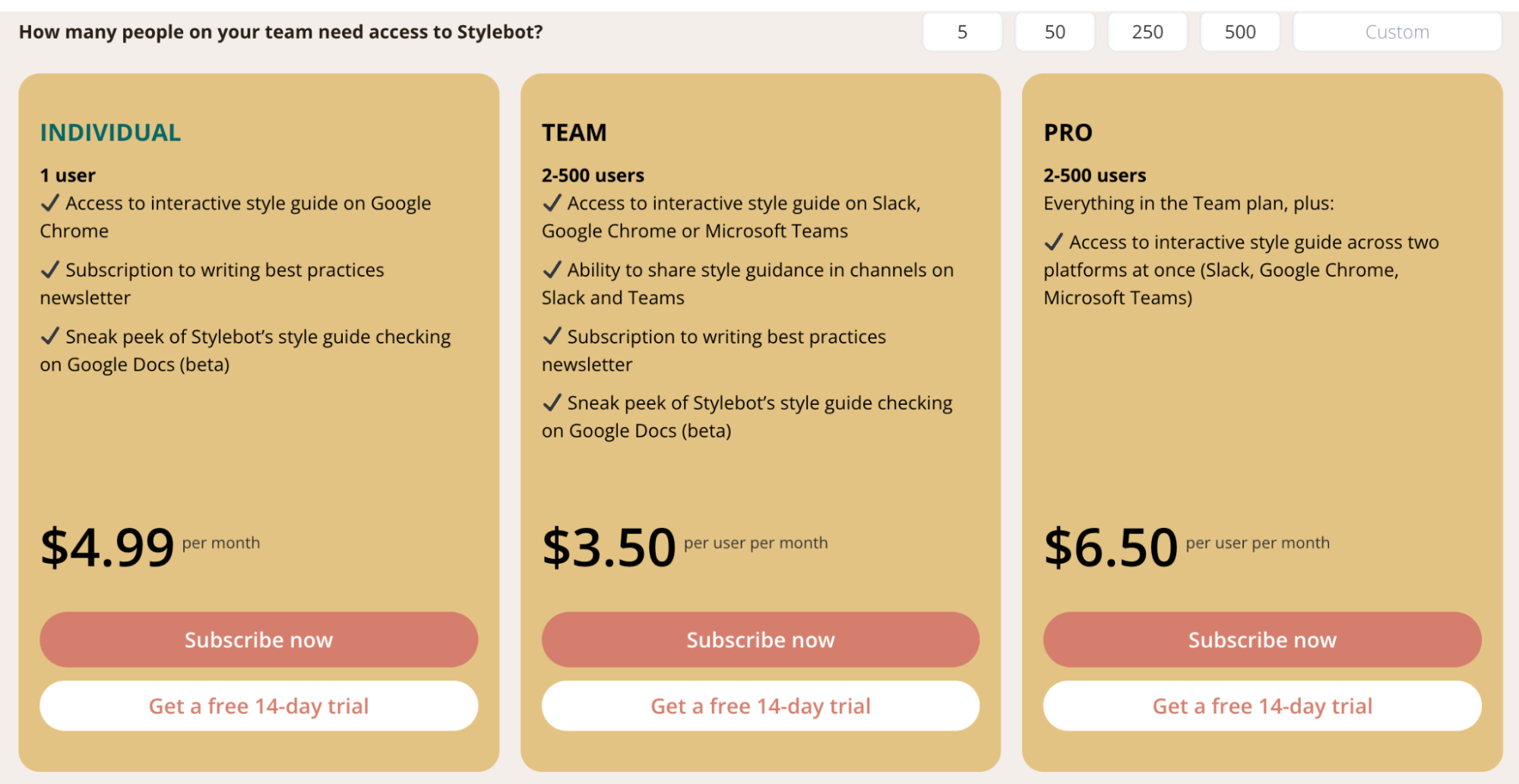
The app works in tools many journalists are already using, such as Slack, Teams, Google’s Chrome browser — and now Google Docs, which is how we’re using it in our newsrooms. We chose to use Google Docs because not all our newsrooms use the same content management system and this seemed like the best way to implement it across our five outlets.
A few months into our trial, we’ve found some success using Google Docs version of Stylebot. It flags content for passive voice and marks a few things we might not have caught on a first read through a story. Students say they’re using it to double-check what they think they know from memory. One student said it could “save me from errors I might miss when I’m tired or rushing.”
The beauty of Stylebot is that it isn’t making any editorial decisions. It’s just telling us that there might be issues ahead. It’s up to editors to review what gets flagged or highlighted and then make the call. It also sends users back to stylebook entries for more guidance — so it’s like having a AP Style consultant right beside you as you read through content.
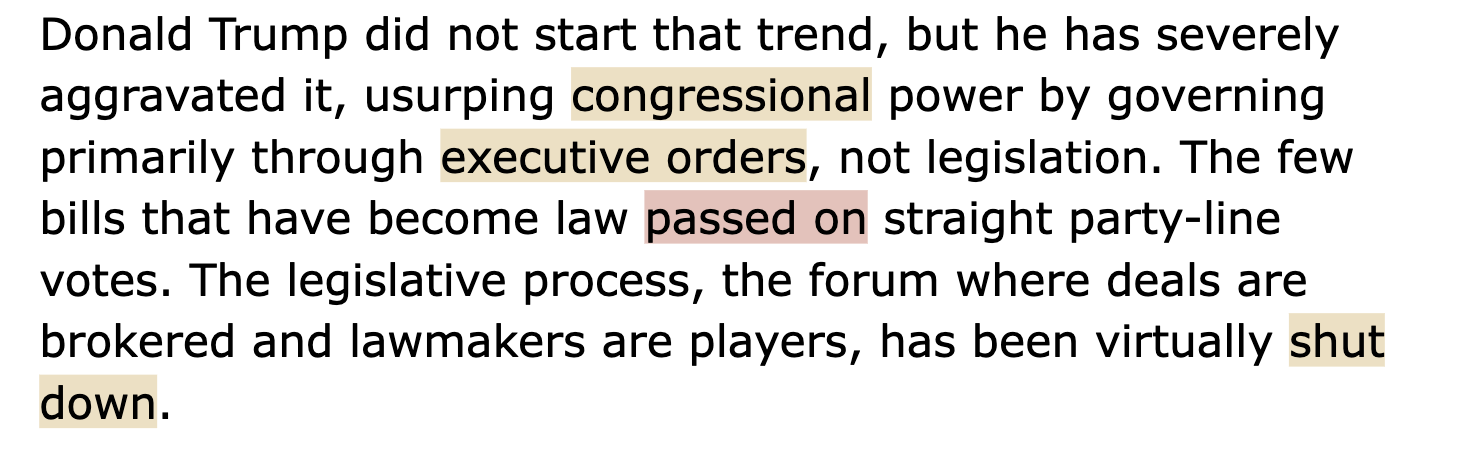
One thing that will surely keep editors in business as we grapple with the role of Artificial Intelligence in our industry is understanding context. AI — and even Stylebot — doesn’t quite get nuance, so humans have to act on the content. It suggested I change “passed on” to died in a story about how legislation passed on straight party-line votes.
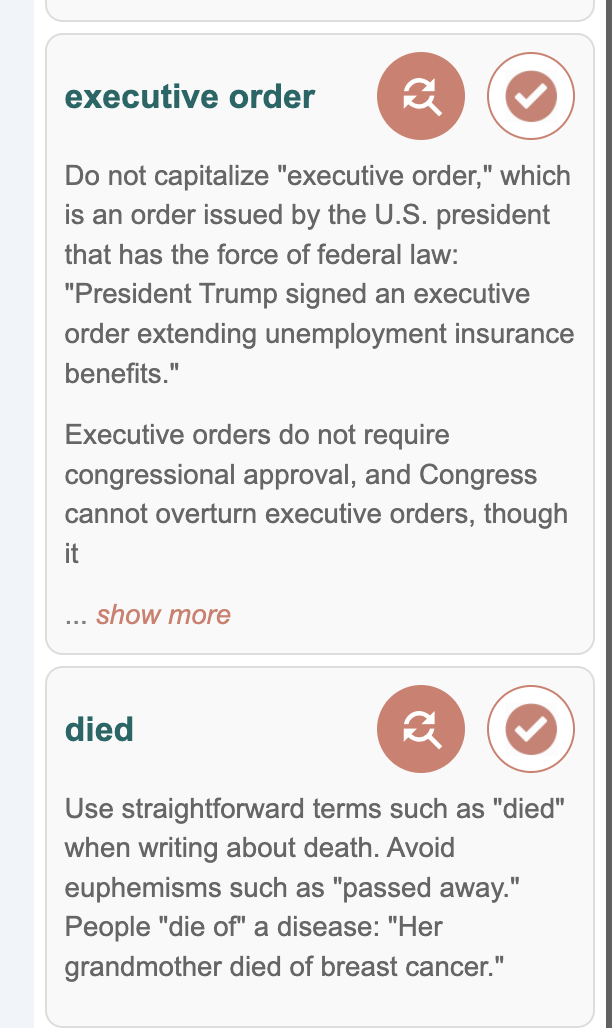
Using Stylebot has sped up the work of doing an initial read on content to check for style, which means student editors can now do more substantive editing, looking for holes and issues with structure. We’ve got a way to go in integrating it more fully across all our platforms — but getting editors to start looking up AP Style questions has been worth it.
Laura Johnston is a professor of professional practice at the Missouri School of Journalism where she’s been teaching for 20 years. She currently teaches writing and editing and works as an editor at the Columbia Missourian.
Cite this article
Johnston, Laura (2025, Dec. 8). Teaching a new generation of journalists AP Style. Reynolds Journalism Institute. Retrieved from: https://rjionline.org/news/teaching-a-new-generation-of-journalists-ap-style/