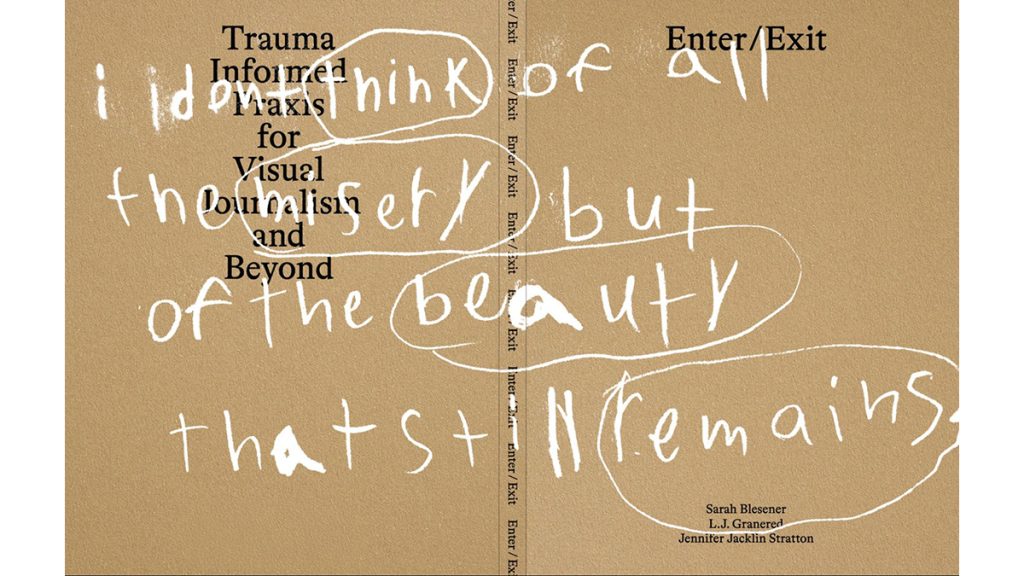
Cover of Enter/Exit.
Enter/Exit: Care centered resource building for visual journalists and newsrooms


Announcing the digital launch and new print edition
Over the past year, through our Reynolds Journalism Institute fellowship, we have been developing Enter/Exit: Trauma-Informed Praxis for Visual Journalism, an open-source toolkit with a small-run print edition created to support journalists and newsrooms reporting on trauma’s aftermath with empathy, care, and respect.
Enter/Exit offers practical guidance and care-driven strategies for different phases of the reporting process — entering a space with respect, engaging participants and team members collaboratively, and exiting with intention and aftercare. It includes essays, interviews, case studies, and creative contributions exploring topics such as informed consent, trauma and body language, anonymous portraiture, and more.
In a media landscape increasingly defined by images, visual journalism holds immense power to shape how audiences understand pain, resilience, and recovery. Yet, few resources exist to help photographers, editors, and reporters navigate this work through trauma-informed, ethical frameworks. Enter/Exit is a project rooted in questions and was conceived as a space to put perspectives in conversation that are normally kept apart. At its core, Enter/Exit explores how stories can be visualized, reported, and shared with an ethics and aesthetics of care.
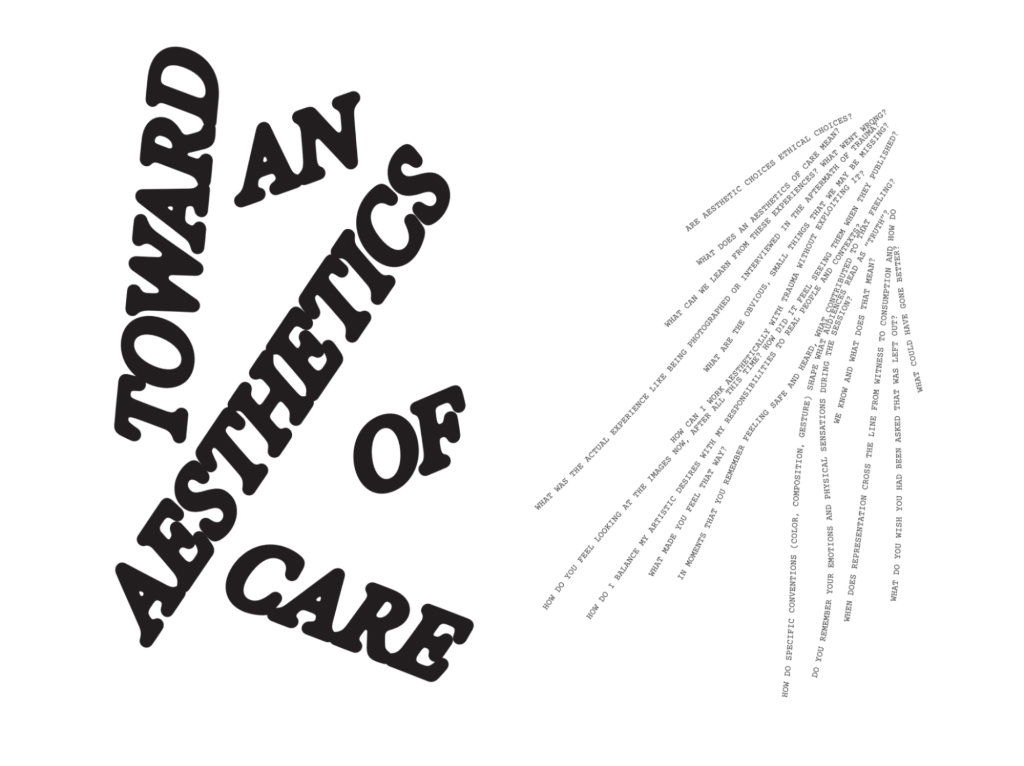
Open collaboration and feedback: Toward an aesthetics of care
As part of our RJI Fellowship and the continued evolution of Enter/Exit, we worked with a small testing group that included newsroom staff, independent visual journalists, editors, and educators. Their feedback helped us better understand the functionality of Enter/Exit as a resource across roles and environments. In particular, the conversations we had circled themes of how to engage in this kind of work under deadline pressure, within institutions, and in deeply sensitive reporting contexts.
“In an era obsessed with virality, the book insists on something slower and more humane,” wrote public health advocate JoAnn Stevelos. “It asks journalists to stay in the discomfort long enough to understand what story they’re actually being told.”
“Documentary storytelling can be heavy, and we often carry some of the trauma of others,” said Gail Fletcher of The Guardian. “Enter/Exit is a reminder that this work must be slow and intentional. I use it to ground myself when reporting on difficult stories.”
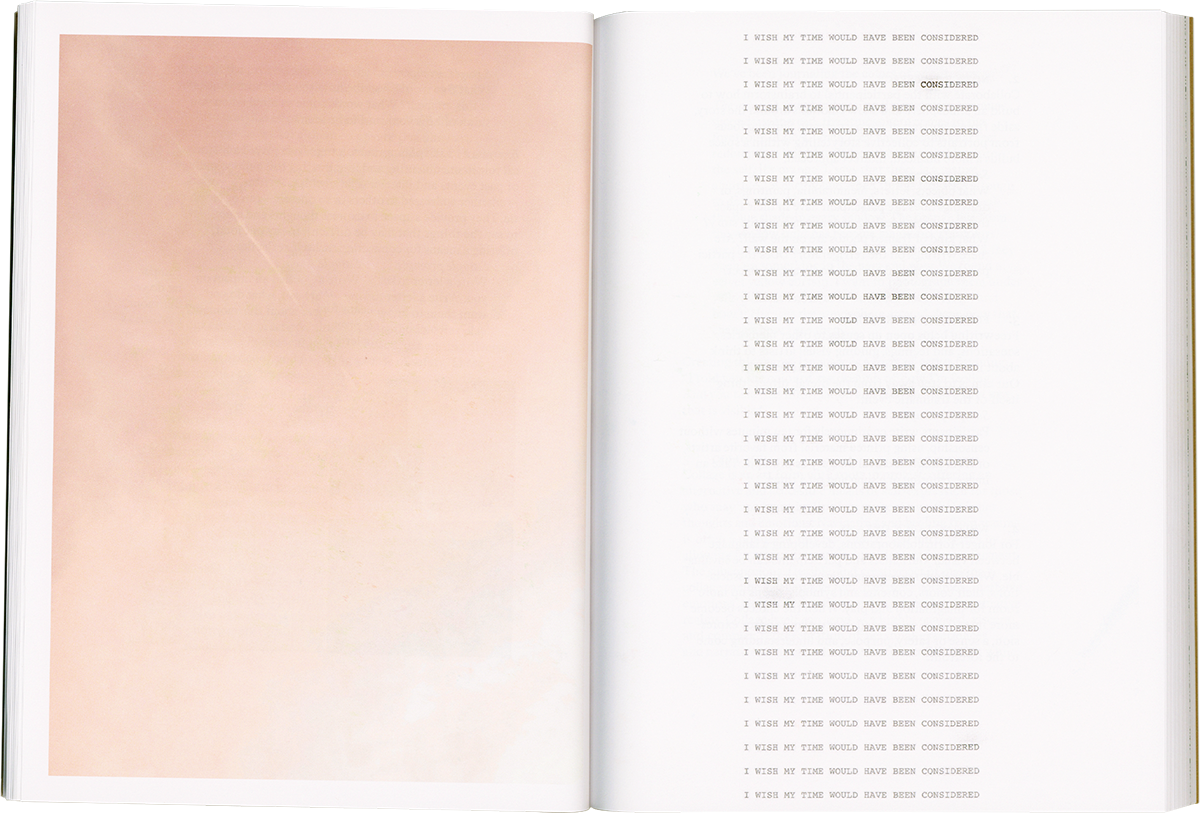
Others emphasized how the resource travels beyond individual practice and back into shared spaces.
“I can’t stress how much Enter/Exit’s advice on the pre-photo session conversation has empowered me to find new approaches to a story through collaboration with the person being photographed. It’s humbling and exciting, and in the best instances, I’ve heard back from people after the shoot about how healing the experience has been for them.,”said Stephanie Strasburg, photojournalist at Pittsburgh’s Public Source. “I keep it with me and return to it often. Its guidance on pre-photo conversations has shaped not only my reporting, but how I bring these ideas back into my newsroom conversations and group learning spaces.”
“One of the biggest takeaways is the concrete guidance on how to enter and exit a space with a source,” said visual journalist Zaydee Sanchez. “It’s uncomfortable at times, but necessary—especially the sections on anonymity and representation.”
Photojournalist and Prism Photo co-founder Alyssa Schukar echoed that emphasis on application. “Enter/Exit helped me see how small choices in process and interaction can either support or undermine someone’s dignity,” she said. “It offers practical frameworks for more ethical, empathetic storytelling.”
Many of the conversations brought up the desire for the voices of the participants to be centered and highlighted on their own, rather than solely translated as pedagogy for journalists. This led us to create a zine called Towards and Aesthetics of Care centering several of the full interviews we had with participants.
It was also noted how rare these conversations still are within journalism.
“Beautifully, thoughtfully written, that acknowledgment that this must be a never ending conversation and building of both interior self and encouraging collective growth” said photographer Lynn Johnson”It strikes me that no one ever asks these questions in photographic or journalism education, newsrooms or other story gathering cultures. This is what makes Enter/Exit unique and critical.”
Together, insights from this testing group representing both newsrooms, practitioners within and outside of journalism and independent visual journalists, helped refine Enter/Exit as a practical, responsive resource. Their feedback showed how the work is being used, questioned, and adapted in real-world settings, reinforcing the need for tools that support slower, more accountable approaches to storytelling, and highlighting where the work is most useful, where it raises hard questions, and where more training, resources and field-wide shifts are needed.
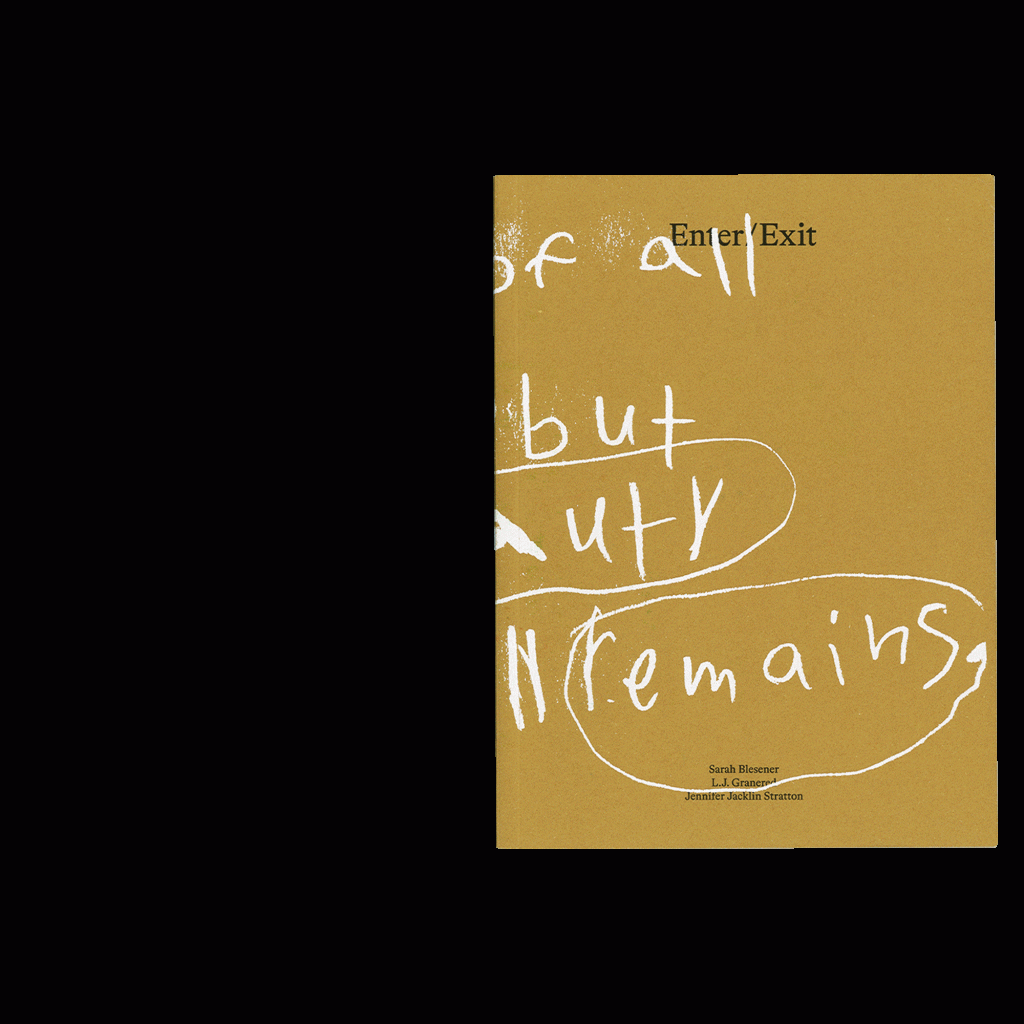
Explore Enter/Exit and join the conversation
Now available online as an open, evolving resource, Enter/Exit provides trauma-informed tools adaptable to any newsroom size, from local and rural outlets to freelance visual journalists in the field. To reach communities with limited internet access, we have also produced a limited print run, ensuring the resource remains accessible and portable. The toolkit will launch in both English and Spanish, supporting journalists serving diverse and multilingual communities.
Rooted in questions that often go unasked, a space to put in conversation perspectives typically kept apart and originating from questioning our own work and practices, we ask: What does collaboration mean in the act of image-making itself? What is it like for someone when the most difficult moments of their life are shared on the front pages of print publications, websites, and television news? What are we missing? How might shared decision-making shift the ethics and aesthetics of visual storytelling? And what is lost when the pursuit of the final product eclipses care for the process?
Enter/Exit
Access the free digital resource
Print copies can be ordered once available starting in March
Cite this article
Jacklin-Stratton, Jennifer; and Blesener, Sarah (2026, Feb. 23). Enter/Exit: Care centered resource building for visual journalists and newsrooms. Reynolds Journalism Institute. https://rjionline.org/news/enter-exit-care-centered-resource-building-for-visual-journalists-and-newsrooms/