Logo by Wally Krantz, Outside Order Inc.
Introducing Covering Drugs: A media resource guide

This 150-page reference guide includes research, surveys, data, and other helpful information for journalists covering substance use, addiction, overdose, harm reduction, treatment, and recovery
When I proposed this fellowship project a year ago, the main purpose of the Covering Drugs guide was to make it easier for journalists to find relevant data and other resources when reporting on substance use, addiction, overdose, harm reduction, treatment, and recovery.
During grad school and the work I’ve done since finishing my degree, I’ve collected thousands of digital files saved in folders for specific topics. All of this knowledge was useful to me, but as far as I could tell, it was not organized anywhere, or shared in an accessible way.
My theory of change is that if journalists could more easily find answers to critical questions, then the quality of reporting will improve. One caveat is that there aren’t clear answers to some questions—which is a challenge when writing an 800-word article on deadline, with pressure to generate headlines and summaries that make definitive statements.
After spending nearly 20 years working as a reporter and editor, I went back to school to study public health in 2017. Since I was focusing on substance use and addiction, I understood some of the common criticism: media coverage of drugs has historically been problematic, particularly during the drug war era.
There was also reluctance to acknowledge how researchers and scientists have contributed to the problem by keeping much of their work inaccessible to journalists and the public. That has started to change, particularly with a directive requiring publications and data that result from federally funded research to be made freely available upon publication, which took effect in 2025.
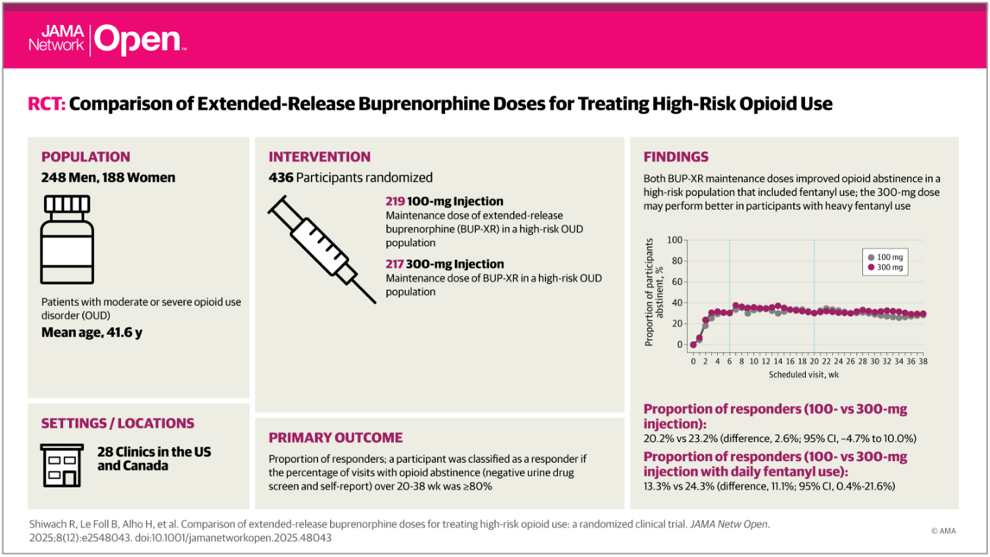
But there are still challenges with achieving true open access, and parallel problems with the way research findings are presented, sometimes obscuring critical information or the limitations of studies. Plain language summaries and visual abstracts like the one below can help, but don’t always highlight the takeaway a patient might prioritize.
Information overload may be a bigger hurdle. As research studies become more accessible and government agencies, think tanks, trade associations, and advocacy groups publish a constant stream of data and documents—survey results, reports, toolkits, best practice guides, infographics, and other resources—there’s an enormous amount of information to find and sort through.
Search engines and artificial intelligence tools can help, but don’t necessarily provide accurate answers or elevate the best sources. With social media in the mix, influencers making persuasive videos may have more impact than a carefully designed study or a report a team of people spent years researching and writing.
And now, who or what sources to trust has become a crisis, fueled by politics, technology, and long-standing divides over how to help people with addictions and address the harms associated with alcohol and drugs.
Why I created this guide
There’s a lot of disagreement in the field, and in the data, and many knowledge gaps. It’s not hard to find two sets of studies that support opposite conclusions, and with the rapidly changing drug supply and patterns of use, older research can lose its relevance quickly.
I’ve tried to acknowledge these debates, and list reviews of research as much as possible, but for some topics I did include links to individual studies. This project inevitably involved some tough decisions about what to include or leave out, but I’ve tried to be objective and present a range of perspectives, pointing in directions for additional research and reporting.
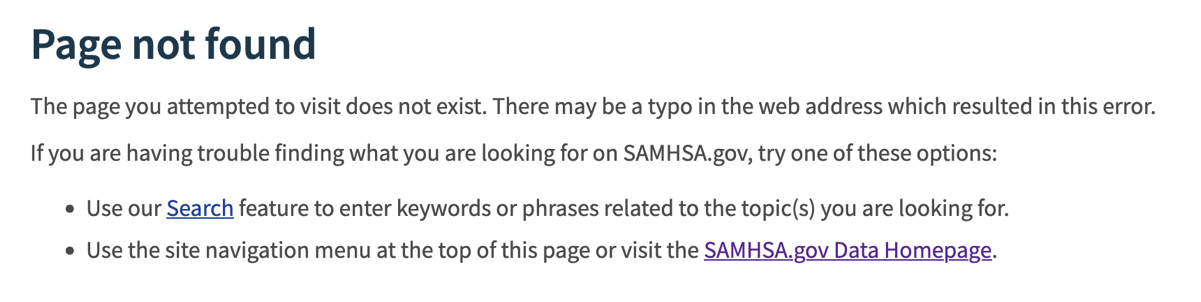
Beyond creating a road map or reference guide to useful data, this also became a preservation project, as sources were altered or removed from U.S. government websites. Even when that has happened, many documents are still available elsewhere online, so I’ve linked to those options. (Many government publications include a public domain notice so they can be shared.)
What this guide covers — and doesn’t
Covering Drugs is a reference guide, organized around questions journalists are likely to research—and some they might not have thought to ask. AI tools have changed how many of us search for information, shifting from keywords to questions, so that shaped the user interface and design.
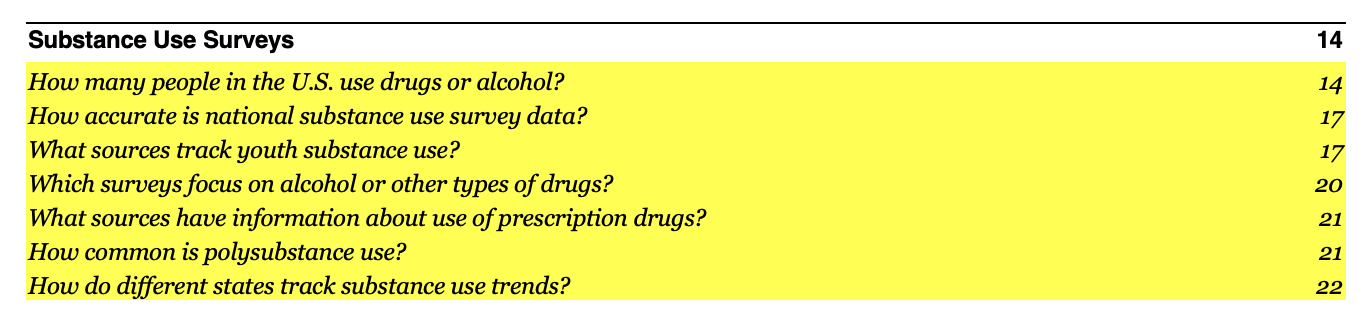
The question format also helps keep the focus on what readers, listeners, and viewers want to know. I’ve noticed that many websites are organized based on the type of content, or date of publication, or they’re just a navigational mess, with no easy way to find information about a topic. Site search tools aren’t always helpful, returning long lists of links that may or may not be relevant.
My organizing principle was, “What do journalists or the general public want to know?”
But there are many questions I wasn’t able to include, mostly due to lack of time. I wish I had been able to address more specific questions about cannabis, vaping, tobacco, the neurobiology of addiction, pregnancy and substance use, and dozens of other topics. There could easily be a whole section on prevention, but there’s so much disagreement about what can or should be prevented, and how best to go about it, I would have needed much more time to tackle that.
Maybe I’ll have the opportunity to expand and update the guide down the road, but for now, it’s my best attempt at capturing the knowledge I had the bandwidth and comfort level to summarize during the eight months of this fellowship, which was a part-time project. Someone else or a group of people would have made different choices—including things I missed or describing things in a different manner.
As I mentioned in a previous article, I didn’t set out to create a language guide. Plenty of those already exist, with mixed evidence about their impact and now a politically charged war of words, the guidance shifting depending on who’s winning. I also didn’t address the use of photography and video by media outlets. That’s an important topic, since images shape how we think about alcohol and drugs, but this guide is really focused on research and data.
Who this guide is for
This guide is primarily for journalists, but I think other people will find it useful, too. Many researchers are specialists in one area, but don’t necessarily have broad knowledge about other topics. Service providers have access to training and educational opportunities, but may benefit from a document that organizes a lot of information in one place. It could also be useful for policymakers and other individuals involved in decisions about how grants and opioid settlement funding should be spent.
When I facilitate training workshops, I often start by asking, “What are some of the ways you learned about drug and alcohol use, addiction, treatment, and recovery? What are the sources of information that shaped your views?” Sometimes it takes a little nudging but once the responses start flowing, it’s usually a mix of personal and family experiences, friends, school, neighborhoods and communities, news, TV series, films, music, books, social media, advertising, public health campaigns, and some professional education.
The takeaway is that most of us learn about these topics in a haphazard way, absorbing a mix of different messages based on what we’re exposed to throughout our lives.
Twenty years ago, when my husband Graham’s addiction was escalating and I was trying to help him—bailing him out of jail, accompanying him to court hearings, looking for a treatment program or a therapist—I was surrounded by “tough love” messaging, told he needed to hit “rock bottom,” and encouraged to walk away.
Ultimately, this guide represents what I wish I’d known back then, and what I hope journalists can be a conduit to sharing with a wider audience—most of all, anyone who is feeling overwhelmed and searching for answers. I’m grateful to all of the people I’ve learned so much from personally and professionally, and humbled by what we still don’t know.
To download a copy of the Covering Drugs guide, click the link below or visit coveringdrugs.org. All of the 2025-2026 RJI fellowship projects will be presented during a webinar on Mar. 5, 2026. Register at bit.ly/rjifellowspresent.
H2
Cite this article
Stellin, Susan (2026, March 3). Introducing Covering Drugs: A media resource guide. Reynolds Journalism Institute. https://rjionline.org/news/introducing-covering-drugs-a-media-resource-guide/