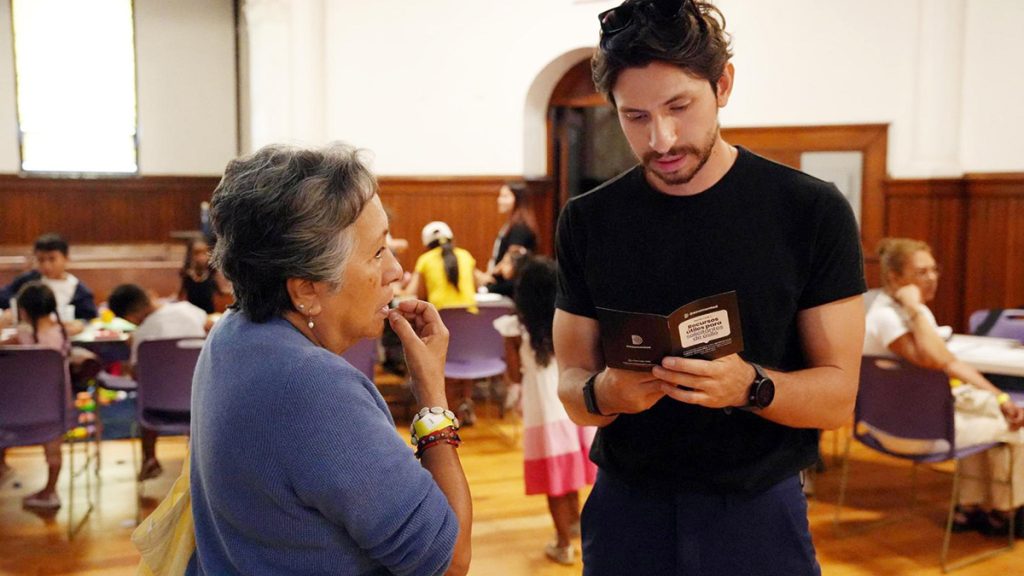
Rommel H. Ojeda, Documented’s Senior Community Correspondent, right, shares a printed guide with an attendee. Photo: April Xu
Building trust begins by listening — But it only grows when newsrooms give back

Closing the loop with the communities we serve reminds people that their voices matter—and that through collaboration, real progress and change actually happen
In my previous columns, I have discussed how at Documented we’ve become a bridge between communities and immigration professionals, and I explained the first two of our three-step process for engaging with our immigrant communities: Listen, Understand, Take Action.
Now, I want to focus on how we take action. This closes the loop and allows us to build trust with the communities we serve. In fact, trust is Documented’s Gold Standard, which we think is our most valuable asset.
Let me explain: In community-driven journalism, it means going back to the communities we serve to listen, constantly to avoid being extractive, and give back to those that trust us.
Listen + understand + take action = trust
Trust is our number one currency and it’s in danger. In the U.S. 70% of adults say they have some trust in the information they get from national local organizations. This is down from 82% in 2016.
As local news organizations that want to serve our communities, we need to act, because trust provides exclusive insights into communities’ needs that no other person or organization can access. At Documented, it allows us to reach hard-to-reach people after they provide crucial information that becomes some of our most powerful journalism.
But trust doesn’t come cheap, nor easy or fast. The following are the ways we Take Action, working towards putting trust front and center:
1. We take action by responding to messages from our communities
For long enough, media organizations have avoided using the comments section as a tool. I became frustrated in 2018 when I was promoted to a news anchor position in Chile, only to find a one-way communication model that left our audiences out, even as we encouraged people to post on our social media accounts. We were asking for feedback, but then did not take action from what people shared with us. The truth is, no one was there to listen or read. We wanted people to comment only to boost our post engagement by tricking the platform’s algorithm. At Documented, we take a different approach. We read the comments on the platforms where we ask people to engage with us : WhatsApp, WeChat, Nextdoor, and our flagship newsletter, Early Arrival.
We also read comments on our social media accounts. While we don’t actively solicit feedback on these platforms, we do review any comments that are worth considering.
Feedback comes in different forms: Caribbeans send more audio messages. Latinos like videos more and respond via text. Our Chinese communities participate in group chats in simplified Chinese. And our Early Arrival subscribers, composed mainly of immigration lawyers, nonprofit workers, and scholars, respond to our newsletter by sending us emails and attending our events.
We make every effort to read and listen to them all. In fact, our community correspondent Denia Pérez says she reads and responds to 100% of the messages community members send via WhatsApp.
2. We take action by creating or adapting our content based on our conversations
Originally, in 2018, Documented published only immigration investigations in English. We then adapted our publication to serve Latin American Spanish-speaking immigrants on WhatsApp. In our conversations with community members, we identified a need for explainer pieces to help low-wage immigrants navigate the multilayered government bureaucracy at the municipal, state, and federal levels. We took action by regularly producing explainer guides. Instead of copying and pasting the same answers on WhatsApp, we sent people links to our guides on our website in Spanish.
Over time, especially during the COVID pandemic, it became our best-performing product, reaching up to 60% of our monthly traffic. Today, our Guides represent 16% of all posts but capture 20% of our traffic. It’s a successful performance for an editorial product that is almost 100% produced on what we hear from our community.
According to our Deputy Director of Communities Madeline Faber, “Out of all the stories published by the Latino team during February, 57% of them originated from the WhatsApp community comments or included voices from them. The Chinese team showed an impressive 83 percent during the same period”.
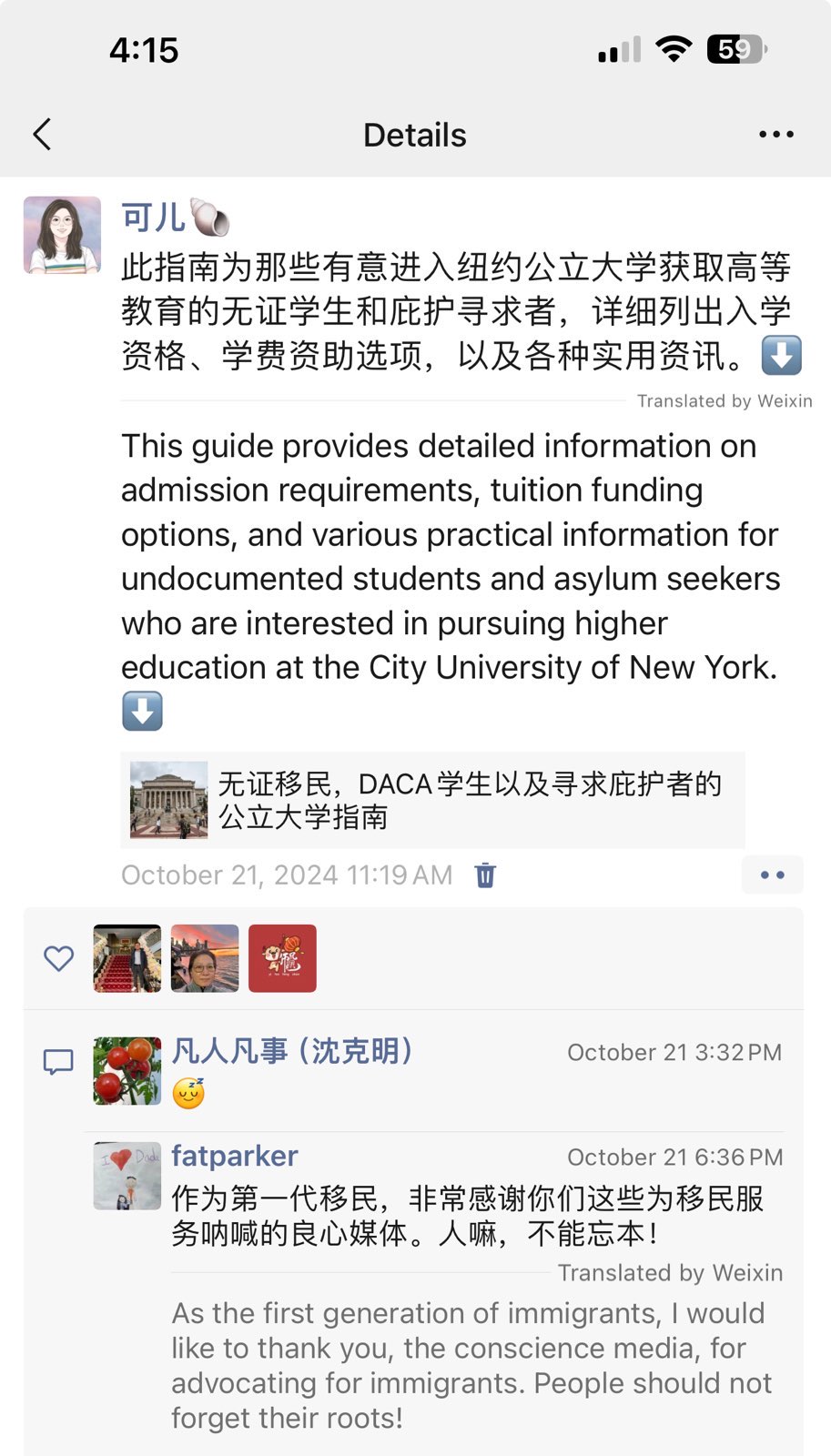
“A Documented guide takes a moment in the news and strips it down to what immigrant readers need to know here and now to make an informed decision”, says Faber. Among the ones she highlights as examples are this guide made from questions from immigrants on the consequences of them missing immigration hearings, this explainer on how immigrants can move their hearing online and this piece, made after many members of our WhatsApp community asked about the possibility of ICE entering their homes.
3. We take action by adapting our products based on feedback from our communities
It started organically. The guides we were producing based on community conversations needed a place to be stored and accessed. So we created our Library of Resources.
We then started receiving messages from people who couldn’t access the internet to read our guides. It was 2022, and the influx of immigrants being bused to NYC put pressure on public services.
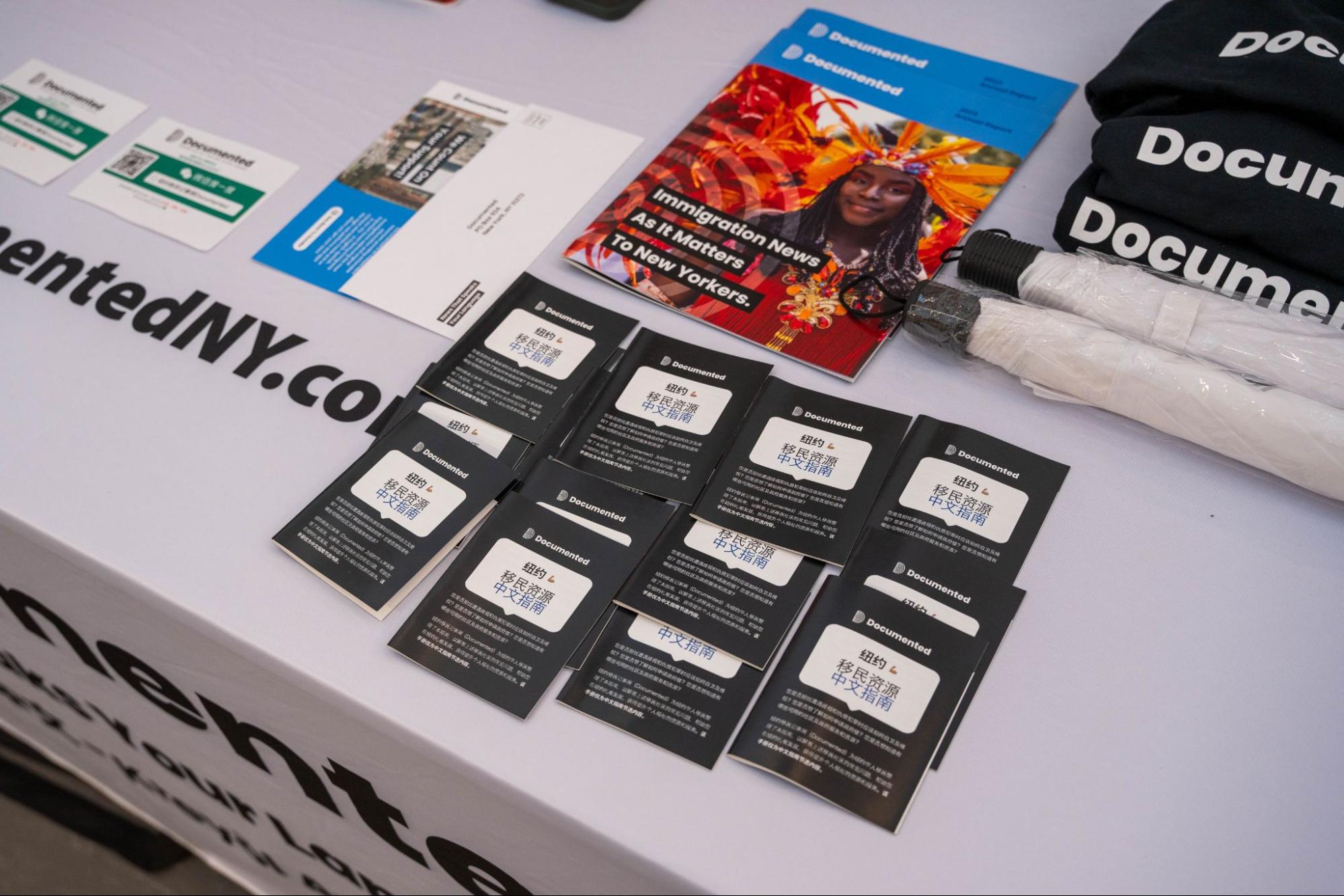
We worked with a designer and a group of ICFJ fellows to craft a solution: We decided to adapt our Library of Resources to serve this new group of immigrants. We transformed our online guides into print pocket-sized booklets in Spanish. They explained everything from where to access free internet, to shelters and food pantries. We distributed the booklets at bus stations and shelters. They were so successful that immigrants who spoke other languages started requesting adaptations. We ended up delivering booklets in French, Spanish, Chinese and English.
Another example is our current website redesign. The process has integrated immigrant voices since the start. We partnered with a renowned digital design firm. We entrust them to integrate the voices of our immigrant communities via usability tests of our platforms, to understand their pain points and user flows.
The designers worked shoulder to shoulder with our community correspondents, with Elite Truong, our Product Lead, overseeing the process. In total, we interviewed eight immigrants in Simplified Chinese, Haitian Creole, Spanish, and English, and two United States professionals who work with immigrants.
4. We take action by going back to the communities and individuals who shared their knowledge in the first place
“You’re asking people to share their needs, you’re asking them to meet with you to discuss your idea, to test your product, to give you feedback. It’s a lot of effort,” says Rommel Ojeda, Senior Community Correspondent.
As journalists, we have all been guilty of truncated stories. This is a term introduced by journalism scholar Furio Colombo referring to stories introduced to the audience as breaking news, which are never followed up on, leaving the audience without a conclusion to the events. Well, the same can happen when developing an editorial product with our communities.
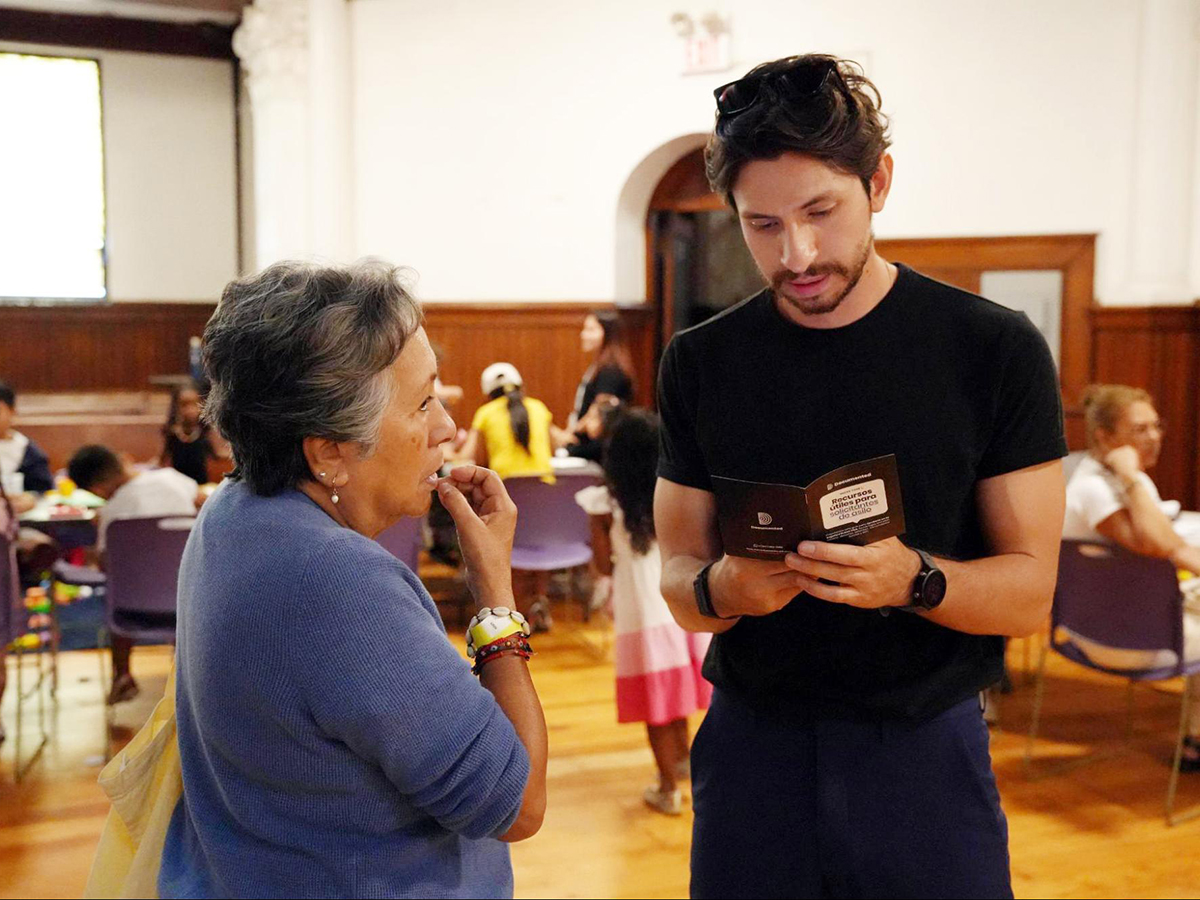
Closing the loop is a crucial step in demonstrating accountability. When community members see how their feedback shaped an investigation or the development of a new editorial product, they recognize their role in our organization. This allows them to think of themselves as actors, rather than passive participants.
By closing the loop, we show people that their time is important and that we use it by publishing an investigation, an explainer, or launching a product. We also make public how people helped shape our ideas by publishing documents or hosting events, with the aim of sending the message back to the leaders who helped us reach community members.
“It definitely builds trust, so people will come back to us after several months or even years. For example, recently, a lady with whom I spoke on WeChat, like three years ago, came back to me asking for help because she read one of our stories about wage theft and wanted to share that she was also a victim. So she was thinking about us and came back for help because we had once created content tailored to her needs. So it’s a full circle of communication. Once they have my contact information, they can contact me directly. It’s like a long-term relationship”, said April Xu, Senior Chinese Community Correspondent.
I asked Rommel and April about the stories they produced from listening to our communities. These are their answers.
Rommel Ojeda, Spanish Speaking immigrant communities Senior Community Correspondent
This guide is about the agreement between ICE and the IRS, and how it relates to immigrants filing taxes this year. It was created after I spoke with someone from WhatsApp who mentioned that he was uncertain about filing taxes this year, having heard reports that the IRS could share his information. Immigrants and IRS: Can ICE Get My Home Address From My Tax Return?
This crowdsourcing article about how immigrants celebrate Valentine’s Day away from home resulted from a call out I made asking people to share their ways to show love during the day, even when they are away from their loved ones. We received around 8 responses, photos and produced this: “No wall in spirit”: Migrants Celebrate Love Away From Home on Valentine’s Day
This is a reporting article about how immigrants and citizens have dealt with the deportation of their loved ones, making it their goal to be reunited. The story includes members from the WhatsApp community (Herrera and his wife “.B”) who contacted us after Herrera had been deported to Honduras late last year. For These New Yorkers, a New Year’s Resolution to Reunite With Their Deported Family
April Xu, Chinese immigrant communities Senior Community Correspondent
I’m especially proud of our Ultimate Lunar New Year Guide, which originally grew out of audience research we conducted in 2022. In that research, many readers told us they wanted to see more content highlighting community resources and local activities that are relevant to them. In response, I compiled a citywide list of Lunar New Year celebrations and created this guide to help readers find events across New York City. The Ultimate Guide to Free Lunar New Year Events in NYC. Since then, the guide has become an annual signature piece for the Chinese community. It consistently ranks among our top-performing articles each year, in both Chinese and English. The guide not only serves our audience by connecting them to cultural events and resources, but also provides a successful content model that we can replicate and update annually.
I also really like this piece, which grew directly from questions and news tips from our WeChat audience. Community members shared that the proposed housing rule made them feel anxious and that they wanted to push back. Unlike many articles that focus mainly on the policy itself, this piece centered the voices of those directly impacted, amplifying their perspectives within a narrative often dominated by top-down decisions. ‘This is Everybody’s Fight’: Residents Urge Pushback on Public Housing Proposal to Verify Citizenship
This article also grew directly from questions and engagement with our WeChat audience. When many news articles focus on ICE raids and policy changes, we explore the topic with a unique angle, which is inspired by the audience that we report for and with. When Unfounded ICE Alerts Go Viral: How Immigrants Navigate Fear and Fact on Social Media
How to implement a full circle of communication
To put Documented’s Gold Standard methodology into practice, try a simple “Close the Loop” exercise.
Identify one person or small group you serve and ask an open-ended question about a current challenge they are facing. We recommend the following question:
If you had your own personal reporter who could cover whatever you feel is important about (insert field of coverage). What would you assign them to?
We took this question from then Outlier Media’s Sarah Alvarez for our first ever community assessment survey in 2018. I personally think it’s a great way to understand the needs of the respondent, without asking them directly, to avoid having an answer based on what they are supposed to say.
Continue the exercise and summarize what you hear and identify the underlying need behind their answer. Is it a need for public safety, neighborhood issues, immigration related concerns or something else?
Based on this exchange, think of one response: a short explainer, a revised internal process, or another way in which you can implement their feedback.
Finally, go back to the person and show them what you created. Explain clearly how their feedback shaped the result and ask whether it addresses their needs or what is still missing.
Leave your contact information for them to get back to you if other ideas come up. This act of closing the loop transforms an interaction into a trust-building moment. It reminds people that their voices matter — and that through collaboration, real progress and change happen to benefit us all.
Cite this article
Ríos, Nicolás (2026, March 17). Building trust begins by listening — But it only grows when newsrooms give back. Reynolds Journalism Institute. Retrieved from: https://rjionline.org/news/building-trust-begins-by-listening-but-it-only-grows-when-newsrooms-give-back/