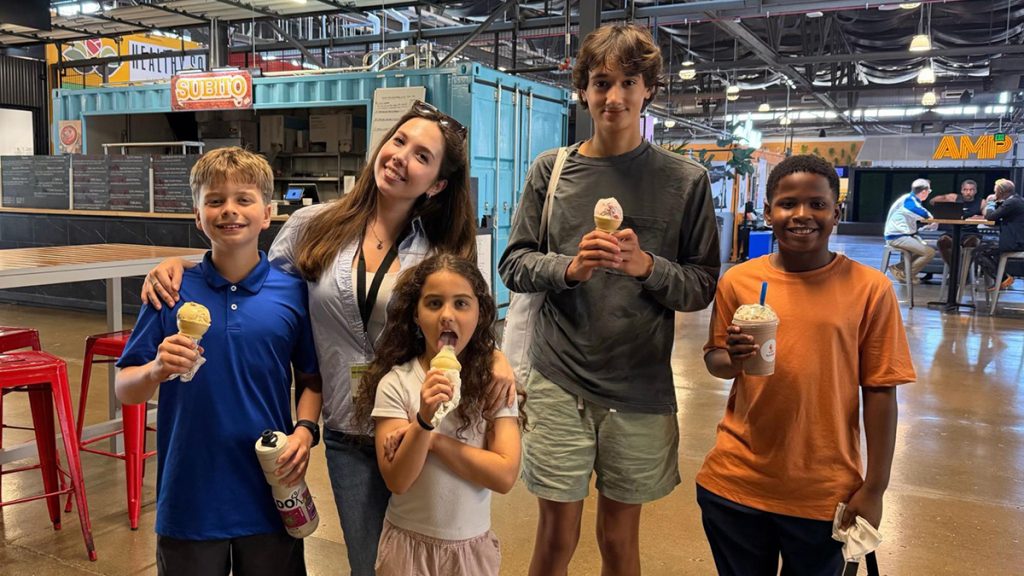
From left, Caden Falls, Elizaveta Orlova, Evelyn Falls, Simon Hayenga and Braxton Goodner pose for a photo at Mirror Indy’s office in The AMP at 16 Tech on June 10, 2026, in Indianapolis.
How to start a youth reporting program in your community

What Mirror Indy learned while launching a new summer program that helps young people report stories from their own neighborhoods
Elizaveta Orlova is a 2026 RJI Student Innovation Fellow partnered with Mirror Indy. The RJI Student Innovation Fellows will be sharing their innovative work throughout the summer in Innovation in Focus.
This summer, Mirror Indy launched a new Kid Correspondents program designed to give young people a chance to tell stories about the communities where they live. Local journalism often asks adults about what is happening in their neighborhood, but we wanted to see what would happen if kids were given the opportunity to answer those questions instead.
Young people notice different things. They spend time in different places, have different concerns and often approach conversations with a level of curiosity that adults lose over time. We believed those perspectives could create stories that feel fresh and authentic. At the same time, we wanted to experiment with a format that felt different from traditional local news. We wanted to combine community reporting with humor, personality and short-form video. The kid reporters will cover real issues and real people, but they will do it in their own voices and with their own style.
The project will include five YouTube episodes, each between three and five minutes long, along with shorter vertical videos for Instagram Reels and YouTube Shorts.
Before any reporting could begin, however, we needed to find the right young reporters.
Finding young journalists
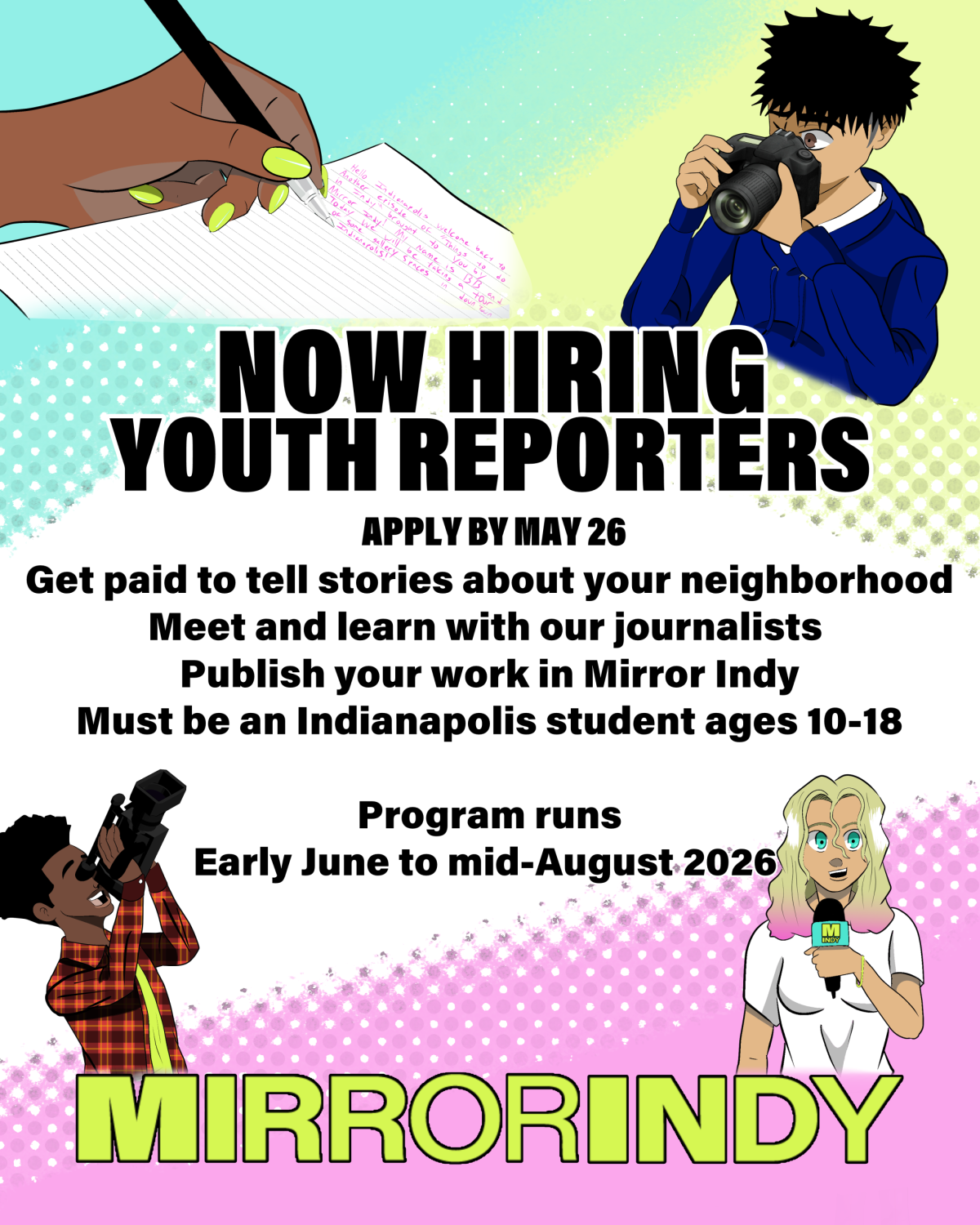
Mirror Indy published a callout on its website and shared information about the opportunity with teachers, school staff, youth organizations and other community partners throughout Indianapolis. We asked them to help spread the word to students who might enjoy storytelling, video production or learning more about journalism.
Applicants completed a Google Form where they shared information about themselves, submitted story ideas and recorded a short introductory video. The video requirement became one of the most useful parts of the process.
While written answers helped us understand what students wanted to cover, the videos gave us a chance to see their personalities. We could see who felt comfortable speaking in front of a camera, who seemed naturally curious and who might be willing to step outside their comfort zone. By the application deadline, we had received 25 applications.
The quality of the submissions surprised us. Students pitched stories about schools, neighborhood events, community spaces and issues they thought adults should pay more attention to.
One lesson became clear almost immediately: we needed to start earlier.
Although the recruitment period was successful, launching a youth reporting program involves many more steps than simply selecting participants. Applications must be reviewed, interviews scheduled and families coordinated. Once students are selected, they still need time to become familiar with the newsroom, learn basic reporting skills and build confidence on camera.
Looking beyond journalism experience
After reviewing applications, we invited 11 young people to interview. We wanted youth who were curious, willing to talk to strangers, comfortable sharing ideas and open to trying something new.
During interviews, we asked questions about their neighborhoods, story ideas, hobbies and interests. We also paid attention to how quickly they responded, how naturally conversations flowed and whether they seemed comfortable in front of a camera. Sometimes the strongest candidates were not necessarily those with the most polished answers in the original application. They were the youth who showed enthusiasm, personality and a genuine interest in learning.
Originally, we planned to select three reporters representing different parts of Indianapolis. In the end, we selected four.
Two of the strongest applicants were siblings, and it quickly became clear that they worked exceptionally well together. They brought a different energy to conversations, had strong chemistry on camera and complemented each other naturally. Rather than forcing ourselves to stick to the original number, we adjusted the plan and welcomed both of them into the program.
The final group includes reporters from different neighborhoods and age groups, giving the project a wider range of perspectives.
The first day in the newsroom
Once the reporters were selected, the next challenge was helping them feel comfortable in the newsroom. Their first day was intentionally designed to be less about work and more about building relationships. Youth reporters toured the office, met Mirror Indy staff members and learned more about how the organization operates. They also met each other for the first time.
Creating those connections is important. Reporting requires confidence and confidence is easier to build when they feel comfortable with the people around them. We spent time discussing the goals of the program, explaining what production will look like over the summer and answering questions about upcoming assignments.
The first day also reminded us that youth programs are not only about teaching skills. They are about creating an environment where they feel comfortable asking questions, sharing ideas and making mistakes. Before asking them to interview strangers or appear in videos, we wanted them to feel like they belonged.
Starting small
The reporters are currently working on introductory videos that will be published on Mirror Indy’s social media channels. These videos allow the youth reporters to practice speaking on camera, introducing themselves and becoming comfortable with the production process before moving on to larger reporting projects.
At the same time, they help audiences get to know the reporters before the first episodes are released. The assignment serves as a low-pressure introduction to video journalism while also helping establish each reporter’s personality and voice.
What comes next
Over the coming weeks, the youth reporters will begin interviewing community members, exploring story ideas and producing videos about their neighborhoods. Some stories may focus on local issues. Others may highlight interesting people, community events or places that matter to young residents.
The format will continue to balance information with personality. We want the stories to be useful and meaningful, but also engaging and fun to watch. The biggest lesson so far is that young people bring perspectives that traditional newsrooms often miss. They ask different questions, notice different details and approach conversations in new ways.
For local journalism organizations interested in creating a similar program, the advice is simple: start recruiting earlier than you think you need to, focus on curiosity rather than experience and give participants time to become comfortable before expecting them to report.
Most importantly, trust young people. They already have stories to tell. They just need a newsroom willing to hand them the microphone.
Cite this article
Orlova, Elizaveta (2026, June 23). How to start a youth reporting program in your community. Reynolds Journalism Institute. Retrieved from: https://rjionline.org/news/how-to-start-a-youth-reporting-program-in-your-community/