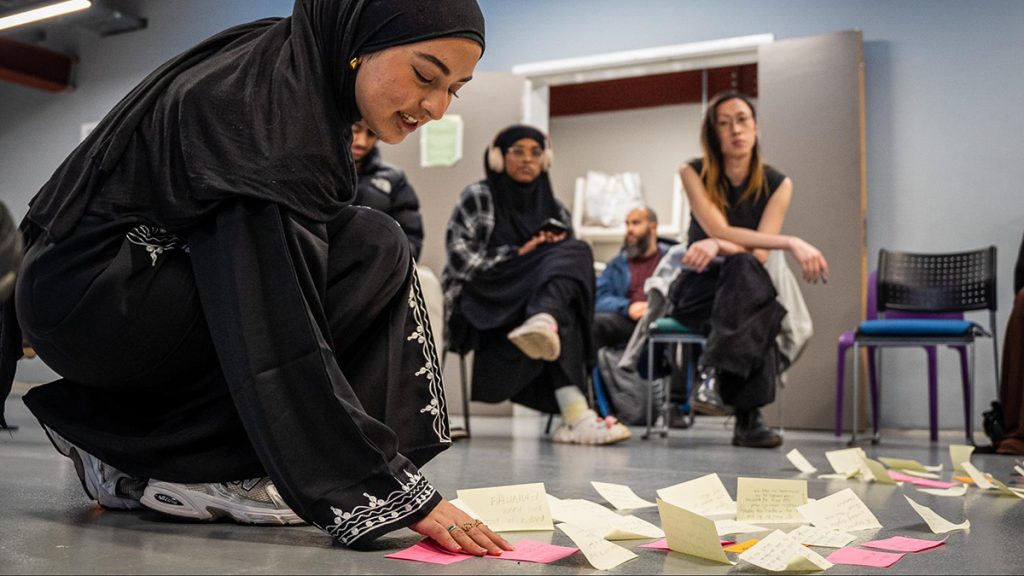
News for All project workshop, Cardiff Photo: Gavin Porter
Journalism keeps asking the wrong question

What happens when you stop asking, “How do we save journalism?” and start asking what people actually need from it
What happens when you listen deeply to marginalised communities, and ask them what they think of the journalism they’re getting?
More often than not, they’ll tell you uncomfortable truths like:
That harsh reality — that journalism often has a negative, rather than positive, impact on people’s lives — is what community members in Grangetown, Cardiff, told me when I spent 6 months listening to what they think about news, and asking what they really want from journalism. It highlighted for me how, when we think about the future of journalism, we’re often asking the wrong questions.
The question that the industry asks itself is usually some version of, “How do we save journalism?” For me, it makes much more sense to start from the other end of the problem, by asking what it is that people actually need from us. If we get that right, then the rest will follow.
The customer is always wrong
I’m frustrated by many of the conversations around so-called, “news avoidance.” If people stop buying cars, then auto engineers don’t think, “Hey guys, I think we’ve got a car avoidance problem, we need to give folks a car literacy campaign so they understand how great our cars are!” What they actually say is, “Maybe our car is kinda crappy, perhaps we should think about making a better car?”
Blaming “news avoidance” is essentially journalism saying, “the customer is always wrong.” We can all see how well that’s going.
A failure to ask the right questions was always going to lead to an existential crisis for the industry, but the impact of AI makes it even more urgent, but perhaps more difficult, to focus on what’s really important.
The AI accelerator
I don’t have a problem with AI in principle, but I do have a problem with unaccountable private companies deciding who gets what information and how. This is not just an AI problem of course — centralisation of media power is part of our current reality, not just a hypothetical future harm.
AI overviews and agents are fundamentally reshaping how citizens discover and experience news online. They’ll be able to get most of what they need without ever interacting with a news website.
In market after market, a handful of commercial owners already control most of the news people see, shaping narratives in their own interests, rather than the interests of the people and communities they’re supposed to be serving.
Time for hope
All that means we’re well past the point where tinkering at the edges of the current model is going to solve anything. Existential problems need radical solutions.
I didn’t become a journalist because I wanted to save journalism, I became a journalist because I wanted to be part of making the world a better place.
If we want to be part of healthy societies where people have the information they need to make good decisions, for themselves, their families and their communities, then the future of journalism will have to look very different from the journalism of the past. But that’s why I have hope.
Perhaps ironically, that hope lies in economic and technological determinism. On the economic side, the business model of journalism has traditionally depended on two things that no longer exist – information being scarce (you needed a newsroom to know what was happening) and distribution being expensive (you needed a printing press or broadcast license to reach people). The internet, social media and now AI mean that the things journalism was charging for have collapsed.
What that means is we have to reconnect with the fundamental purpose of journalism, by reimagining its practice – questioning the habits and formulas of the past, and assessing whether they’re actually fit for purpose at this critical inflection point.
Connection, not content
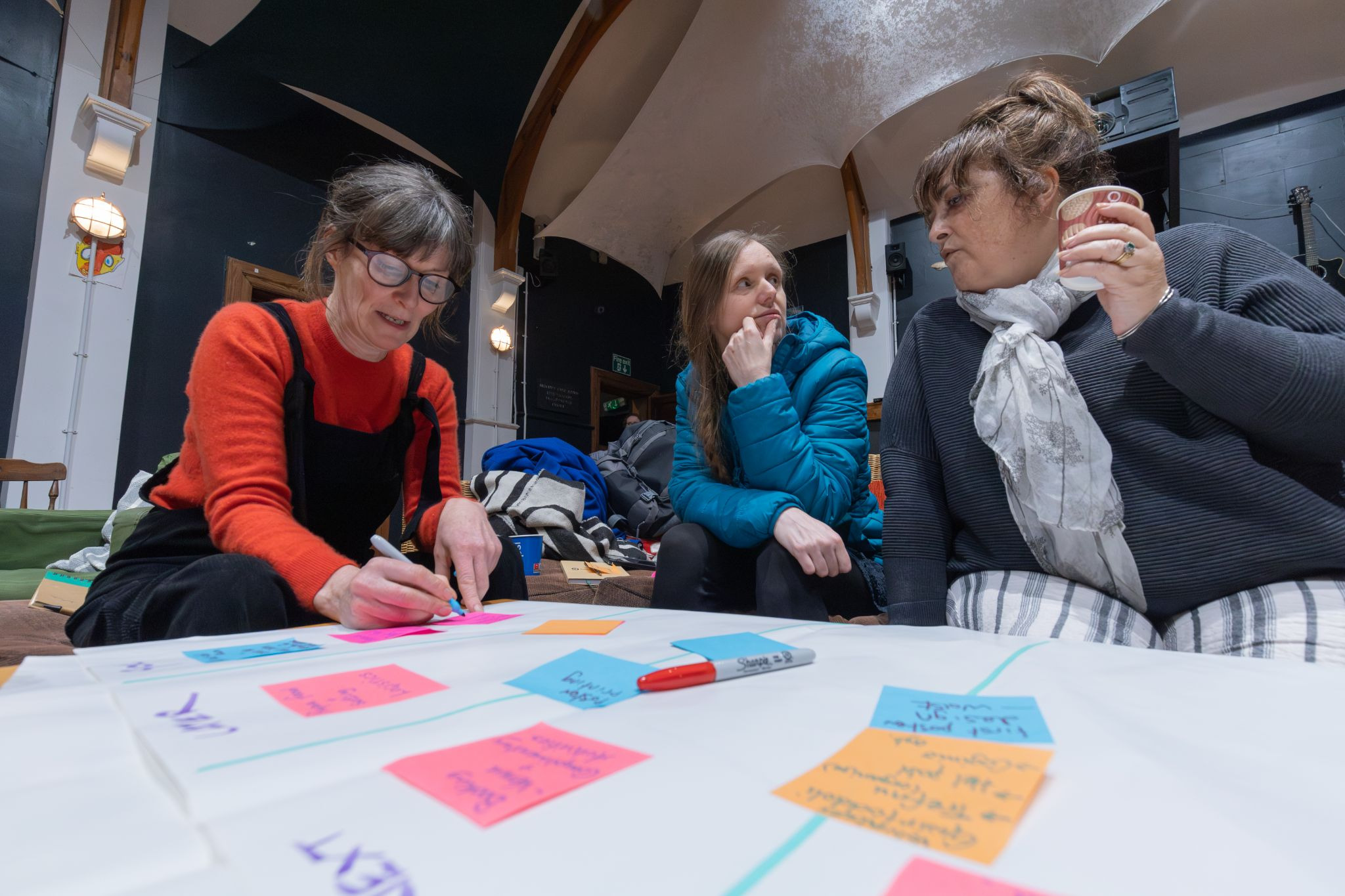
The lens of journalism innovation has traditionally focused on outputs, often simply following fashions around the platforms or formats that are in vogue. But when you listen to people and communities, they’ll always tell you that they’re much more interested in the input side – how journalists are connecting with them, how stories are surfaced, researched and chosen, who is telling their stories and how they’re told.
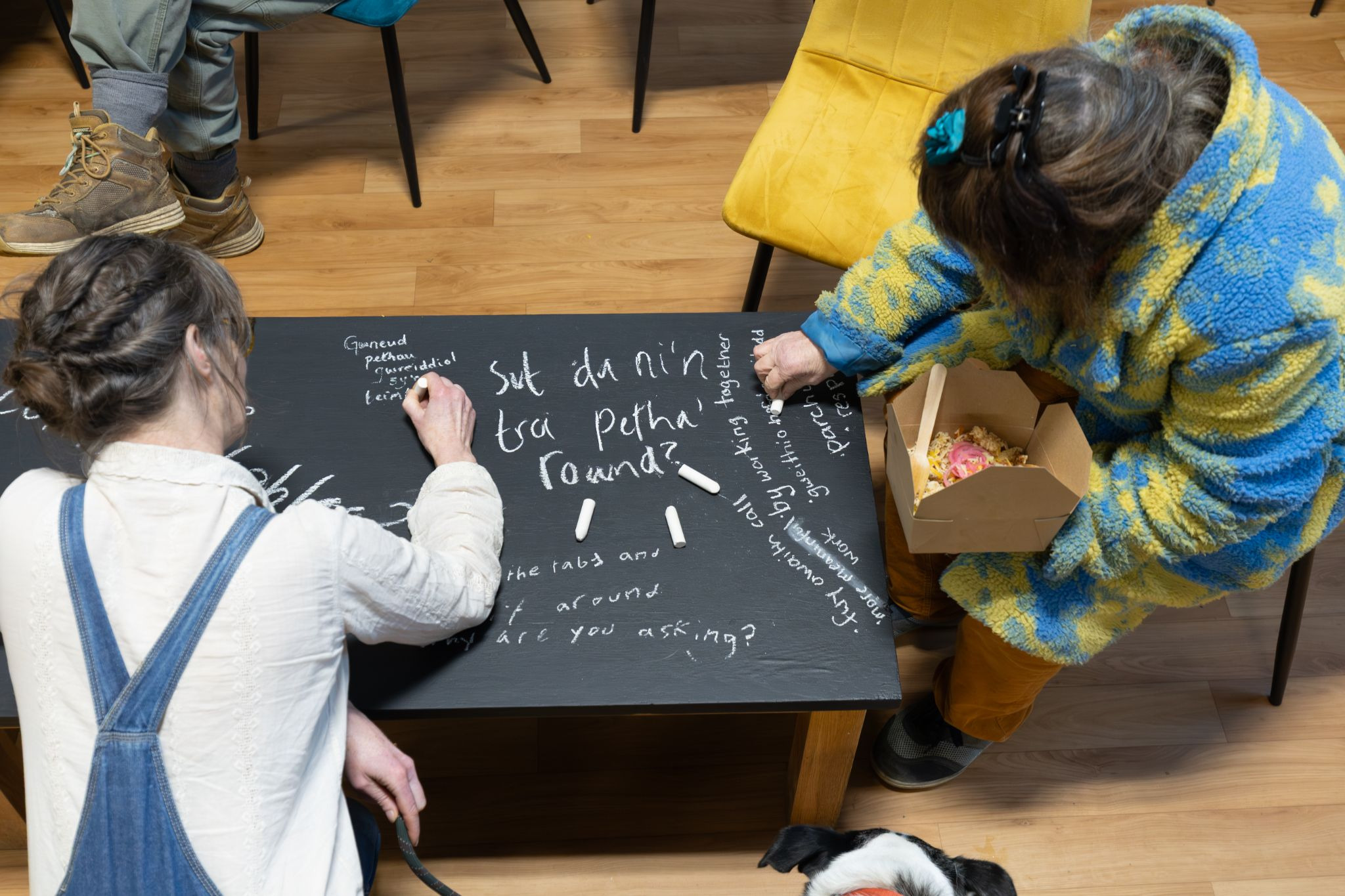
They see this input-side innovation as much more fundamental and much more important. Put simply, if a story is attacking or misrepresenting them, it doesn’t really matter what format it’s in, or whether it’s on Instagram or Tik-Tok. It’s still harming them. The challenge we’re facing is a culture challenge, not a technology one. If the stories are wrong, then however quickly or cheaply they can be produced in the future, they’ll still be the wrong stories.
It’s also clear that there’s not a single person in the world crying out for more, cheaper journalism. In fact, people are increasingly saying that the problem isn’t that they have too little information, but that they have too much.
In a world where misinformation and disinformation are rife, what they want is a processing layer, where they can come together to figure out who or what to trust.
So, if we’re asking where we can add value, the answer is staring us in the face, if we choose to look. Our value as journalists, and journalism, inevitably lies in the things that machines can’t do and will never be able to do. That’s in our uniquely human characteristics – what we might summarise as connection, collaboration and care.
Happily, that precisely lines up with what citizens want from us. Across years of deep listening, people have repeatedly told me they want more connection, not more content. They want journalists embedded in communities, rather than parachuted in, forums where they can question editorial decisions directly. They want their journalists to be facilitators rather than gatekeepers.
An active audience, a passive industry
A clear pattern emerges when journalists spend time listening, even when it’s uncomfortable – and it’s a pattern that cuts against how we’ve long thought of audiences. Our community in south Wales that compared journalism to policing weren’t confused bystanders. They’d made an informed and educated decision about something that was harming them, and then acted on that decision. The people who reject the label of “news avoidance” aren’t failing to engage because they don’t care, they’re actively choosing not to engage, because they do care. The communities asking for forums where they can question editorial decisions directly aren’t asking to be served better content, they’re asking to be part of the conversation.
None of that is passive. By any reasonable definition, audiences today are active: they choose, filter, question, opt out, talk back. And yet journalism, as an industry, is still largely built as if none of that were true – as if the job is still to decide, produce and deliver, and the audience’s role is simply to receive.
That’s the disconnect that underlies everything else. Not that journalism has the wrong content, or the wrong platforms, or hasn’t discovered the right format yet – but that it’s built for an audience that stopped existing a while ago, and it hasn’t yet figured out how to build for the one that’s actually here.
So, if our aim is to start asking the right questions, rather than the wrong ones, we might start with these reframes:
- What would change if we asked “What do people need from journalism?”, rather than “How do we save journalism?”
In my research, I’ve previously framed the purpose of journalism as “Orientation” — Journalism should help us understand the world, locate us in our environment and enable us to meaningfully interact with it. Journalism should help us form views and take action which are consistent with the needs and interests of ourselves, our families and our communities.
That sounds obvious when you say it, but when you think about how much journalism actually fulfils those needs, things get a bit more tricky. So what would it look like if we started assessing our journalism against the test of orientation? - How would our engagement change if we started with “What’s in it for them?” rather than “What’s in it for us?”
I use “What’s in it for them?” as a starting point for all the community listening I do. I ask myself, “Why would anyone come to this event, what do they get out of it?” rather than focusing on how my organisation or research might benefit. The answer could be as simple as a delicious communal meal (more connection, not more content, remember!) but of course the paradoxical outcome is that I always get better results for the work by centering people rather than the project.
- What would change if we asked, “What am I doing today that earns trust?” rather than “Why don’t they trust us?”
It’s really not brain surgery. The best way to build trust is to do trustworthy things. That might mean showing up for people and communities when there’s nothing in it for us, just to show that we care. I’ve volunteered at community events, or given my time for free, to build relationships founded on mutual exchange. Trust has always had to be earned, one action at a time. - What would change if we asked, “What skills and qualities will have distinct value in the future?”, rather than simply, “How do we adopt AI?”
The 600 word summary of a press release was never really the valuable part of journalism, even if it’s what many of our careers have been built on. The value was always in our uniquely human qualities and connections. Those distinctive characteristics – the things a machine will never be able to do – are what will be scarce, and therefore have value, in the future.
I started this piece with a community telling me that journalism feels to them like oppression, but that’s not where I want to leave you. Because everything else they told me – what they actually want, what would earn their trust, what a good newsroom would actually do — isn’t really a mystery. We already have the answers.
Communities have been telling us what we need to do for years, but maybe we just haven’t been listening. That’s the work ahead of this series. Not saving journalism, just, finally, listening to what it’s for.