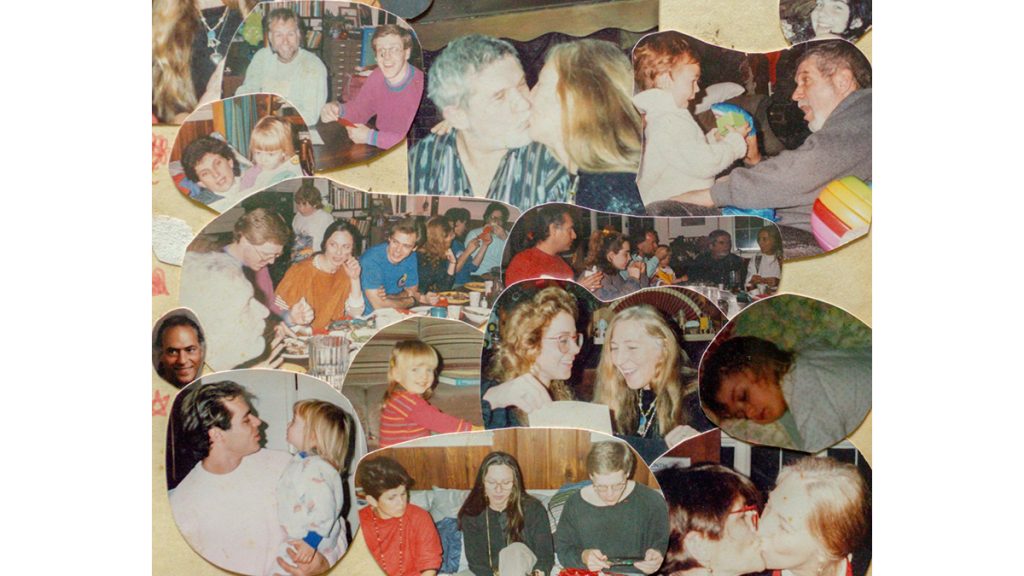
Collage work during a follow-up visit after photographing together during a journalism assignment in summer, 2025. Image: Eve Baer and Sarah Blesener
Participatory ways of working Pt II


Not just documenting what happened, but how we survive
Exiting the space: Mastery Questions
In our first article, we reflected on how the experiences and lived wisdom of the people we’ve had the privilege to spend time with and photograph have stayed with us long after the encounter.
Through returning to our old field notes and journals and rediscovering the advice they’ve shared, we’ve found that, in difficult moments, their words become a source of guidance and support, critical reminders to not solely focus on trauma, but also on resilience.
How can we shift the tone to documenting not just what “happened,” but how someone survived?
Judith Herman writes in her book, Trauma and Recovery, “The sharing of the trauma story therefore serves a purpose beyond simple ventilation or catharsis; it is a means toward active mastery.”
A “mastery question” is a way of focusing on the knowledge an individual has gained from surviving hardship and trauma. By asking questions of mastery, we honor the wisdom and resilience of participants. These inquiries not only provide opportunities for reflection and sharing but also empower individuals to support and uplift others who may be on a similar journey.
Before leaving a session, and encouraged throughout, try using the below sample mastery questions
- I work with many individuals with similar experiences, many not as far along in their healing process as you are. I wonder if you have any advice I could pass along to them?
- What helps you cope?
- For the next person I meet, who isn’t sure what to expect walking into a room like this and engaging in a photo session, what advice would you give them to help the process?
- You must have learned so much through this experience. What advice would you give to other individuals who are currently in a similar situation?
- What do you have planned after this session to help take care of yourself, after sharing so much with me?
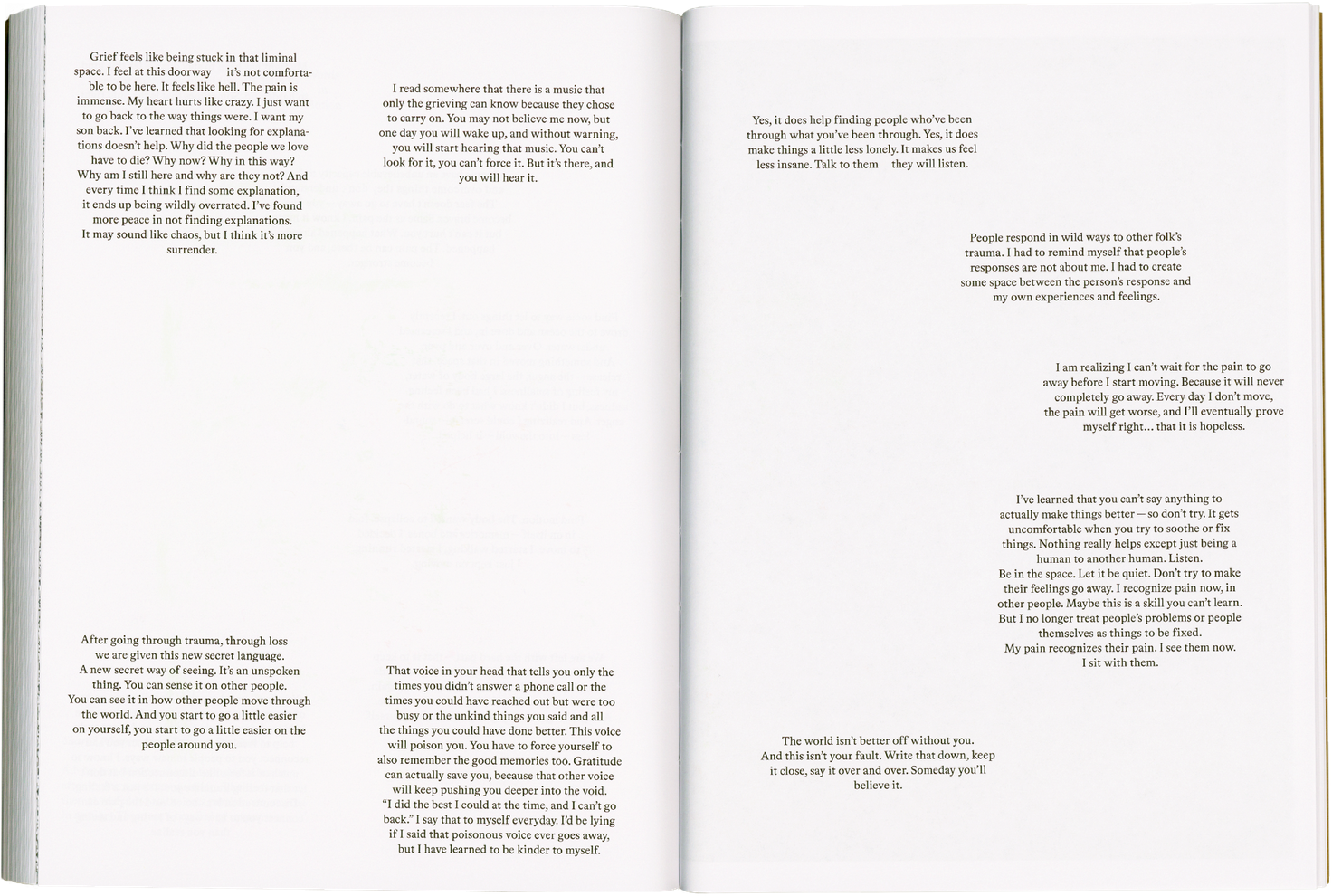
Selection of advice and wisdom shared from participants after asking a mastery question
People have an unbelievable capacity to face and overcome things they don’t understand. The fear doesn’t have to go away—you just become braver. Same as the pain. I know it hurts, but it can’t hurt you. What happened already happened. The pain can be there, and you become stronger.
We are left with the hard part—that is to keep on living. It doesn’t get better but it gets a little bit easier. Move slowly. Try to pray a little again. Try to not hate the people you know you love. And you’ve got to stop going on blaming yourself.
That voice in your head that tells you only the times you didn’t answer a phone call or the times you could have reached out but were too busy or the unkind things you said and all the things you could have done better. This voice will poison you. You have to force yourself to also remember the good memories too. Gratitude can actually save you, because that other voice will keep pushing you deeper into the void. “I did the best I could at the time, and I can’t go back.” I say that to myself everyday. I’d be lying if I said that poisonous voice ever goes away, but I have learned to be kinder to myself.
After going through trauma, through loss, we are given this new secret language. A new secret way of seeing. It’s an unspoken thing. You can sense it in other people. You can see it in how other people move through the world. And you start to go a little easier on yourself, you start to go a little easier on the people around you.
Find motion. The body wanted to collapse, fold in on itself —memories and bones. I decided to move. I started walking, I started running. I just kept on moving.
People ask, “How are you doing?”
I’ve learned to say: “I’m carrying it.”Because that’s what it is— something you carry with you. It doesn’t go away, but you find ways and people to hold it with you.
Regrets are part of the grieving process; try to identify them, but not dwell on them. You may have planned to learn a skill, travel to a destination or attend an important event with the one you lost. Instead of brooding over those lost opportunities, honor their memory by mastering that skill, attending that event, or visiting that destination.
Yes, it does help finding people who’ve been through what you’ve been through. Yes, it does make things a little less lonely. It makes us feel less insane. Talk to them—they will listen.
Loss rewires everything.
I don’t try to explain the pain anymore.
If you know, you know.
If you don’t, I hope you never have to.
And if you’re learning, just know you’re not alone. It’s like a light echo.
Their light is still reaching you, just in different ways now.
Invitation
What helps you keep going?
What have you learned about surviving what you’ve been through?
What has helped you? What would you tell someone who’s just beginning to face their own story
We invite you to share your own advice and mastery question responses that help you move through difficult times. A collection of responses will be shared as part of the Enter/Exit project.
Cite this article
Jacklin-Stratton, Jennifer; and Blesener, Sarah (2026, Feb. 5). Participatory ways of working Pt II. Reynolds Journalism Institute. https://rjionline.org/news/participatory-ways-of-working-pt-ii/