
Tag: School of Journalism
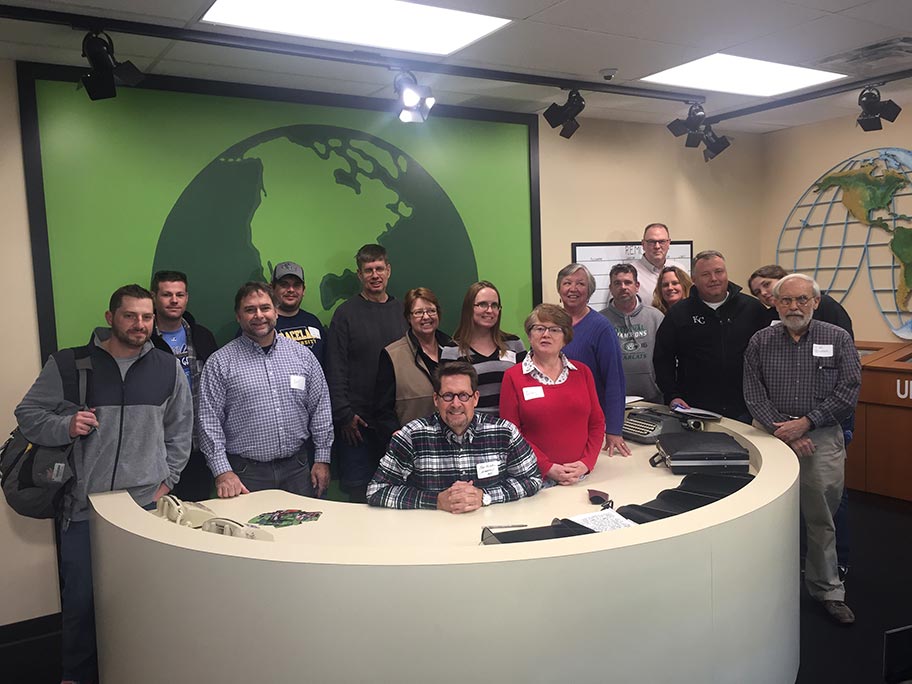
Missouri School of Journalism and MU Extension partner to deliver video expertise to journalists
Kay Foran The Missouri School of Journalism and the University of Missouri Extension recently partnered to deliver video strategies to journalists in northwest Missouri. The training was part of the School of Journalism’s ongoing outreach and service to community news organizations in Missouri and nationwide. Nearly 25 newspaper, radio and television staff members and MU … Continued

KOMU-TV uses Facebook Live to involve audience in reporting process
With Kent Collins A team at a Missouri television station has combined its investigative reporting efforts with its public affairs initiative to engage viewers in the reporting process. The main tool? Facebook Live. After reporting a story about illegal drugs found at an in-home daycare — the site of earlier child endangerment charges — the … Continued

One of five RJI Student Competition finalist teams includes Truman State participant
Five teams of students will begin work on developing technology platforms and apps to address journalism challenges for the 2018 RJI Student Competition. Working alongside one of the teams is a Truman State University student — the first non-University of Missouri student to participate in the 11-year-old competition at the Donald W. Reynolds Journalism Institute. … Continued

RJI announces spring 2018 Student Innovation Fellows
Four Missouri School of Journalism students will bring their skills and passions to Washington, D.C., and New York City newsrooms as 2018 Reynolds Journalism Institute Student Innovation Fellows.

Announcing the Fall 2018 RJI Student Innovation Fellowships
FAQ Q. What is an RJI Student Innovation Fellowship? A. The Reynolds Journalism Institute is partnering with leading news organizations to support Missouri School of Journalism students who work 30 hours per week on-site during the spring and fall semesters on new storytelling techniques, audience engagement strategies, delivery platforms, revenue opportunities and the like. Q. What … Continued

Survey: Journalists’ most urgent training needs are mobile, data and video
Respondents say they’d try bite-size lessons on their phone to learn digital skills.
RJI Fellow receives investment from Missouri accelerator fund for chatbot tool
GroundSource, a community engagement platform founded by RJI Fellow Andrew Haeg, recently received a $50,000 investment from the Missouri Innovation Center Accelerator Fund. Haeg is completing an institutional fellowship in August with the Donald W. Reynolds Journalism Institute. He spent a year developing bots to deepen engagement at various news outlets. The funds will allow … Continued

Pictures of the Year International to celebrate milestone at Newseum; POYI director Shaw to retire
“Pictures of the Year: 75 Years of the World’s Best Photography,” an exclusive groundbreaking photography exhibit featuring seven decades of award-winning images from the archives of Pictures of the Year International, will be unveiled Friday, April 6, 2018, at the Newseum in Washington, D.C. The images depict the people and events that have defined our … Continued

What is the role of a journalist in a post-objectivity world?
Editor’s note: Tom Warhover, Missouri School of Journalism associate professor, was part of a panel discussion titled “Objectivity in Journalism” June 6 at the Hammer Museum in Los Angeles. He was joined by political theorist Ainsley LeSure; Victor Navasky, editor emeritus of The Nation; and journalist Lewis Wallace, a Marketplace reporter who was fired after publishing the blog post “Objectivity is dead, and I’m okay with it.” These are Warhover’s opening remarks.

Edward McCain: Goals of the conference
Video of Edward McCain discussing the goals of Dodging the Memory Hole 2016: Saving Online News.