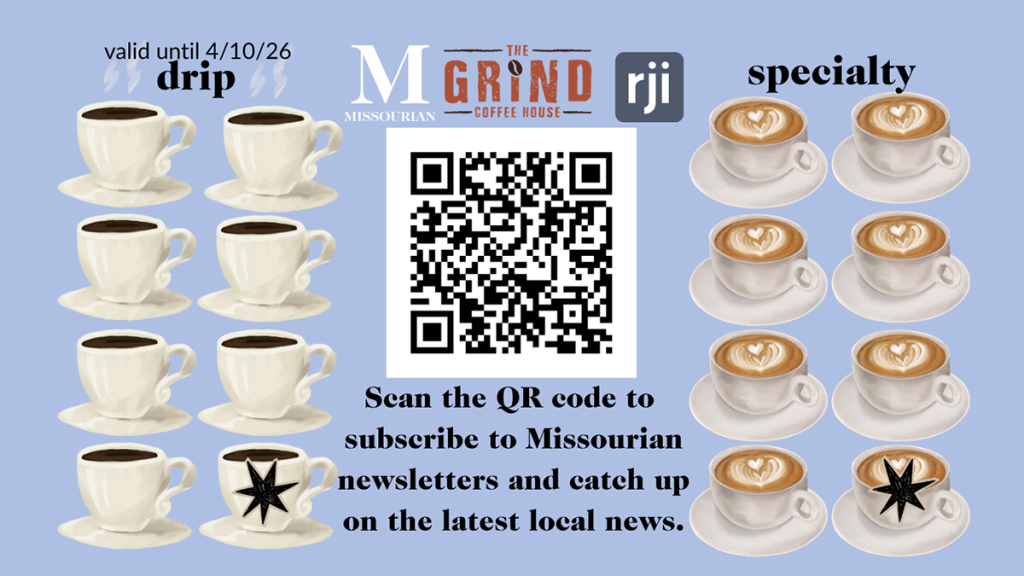
These punch cards aimed to draw The Grind customers to scan a QR code leading to the Missourian newsletter homepage.
How to partner with a local business to grow your newsletter subscribers

We made coffee punch cards to incentivize customers to subscribe to a newsletter
The Missourian — Columbia, Missouri’s local newspaper based at The University of Missouri — serves a large variety of audiences but is currently focused on gaining subscribers within the 30-45 year age range for their newsletter. With this goal in mind, Innovation in Focus helped them brainstorm ways to reach that audience and decided that the best strategy would be to meet people somewhere they already frequent: local coffee shops.
Aiming for something interactive and in-person, we decided to create punch cards that included a QR code leading to the Missourian newsletter. That way, every time someone used the punch card, they would be reminded to scan the QR code and navigate to the newsletter.
Resources to replicate this experiment
- Tools
- Templates and guides
We also wanted to benefit local business and relationships so we reached out to The Grind, which has four locations throughout Columbia. They agreed to collaborate with this project, and in return The Missourian offered to put an ad in three of their newsletters, a value of $500, and one on the website. We hoped that this collaboration might bring a new customers into the Grind as much as it brings new subscribers to the Missourian.
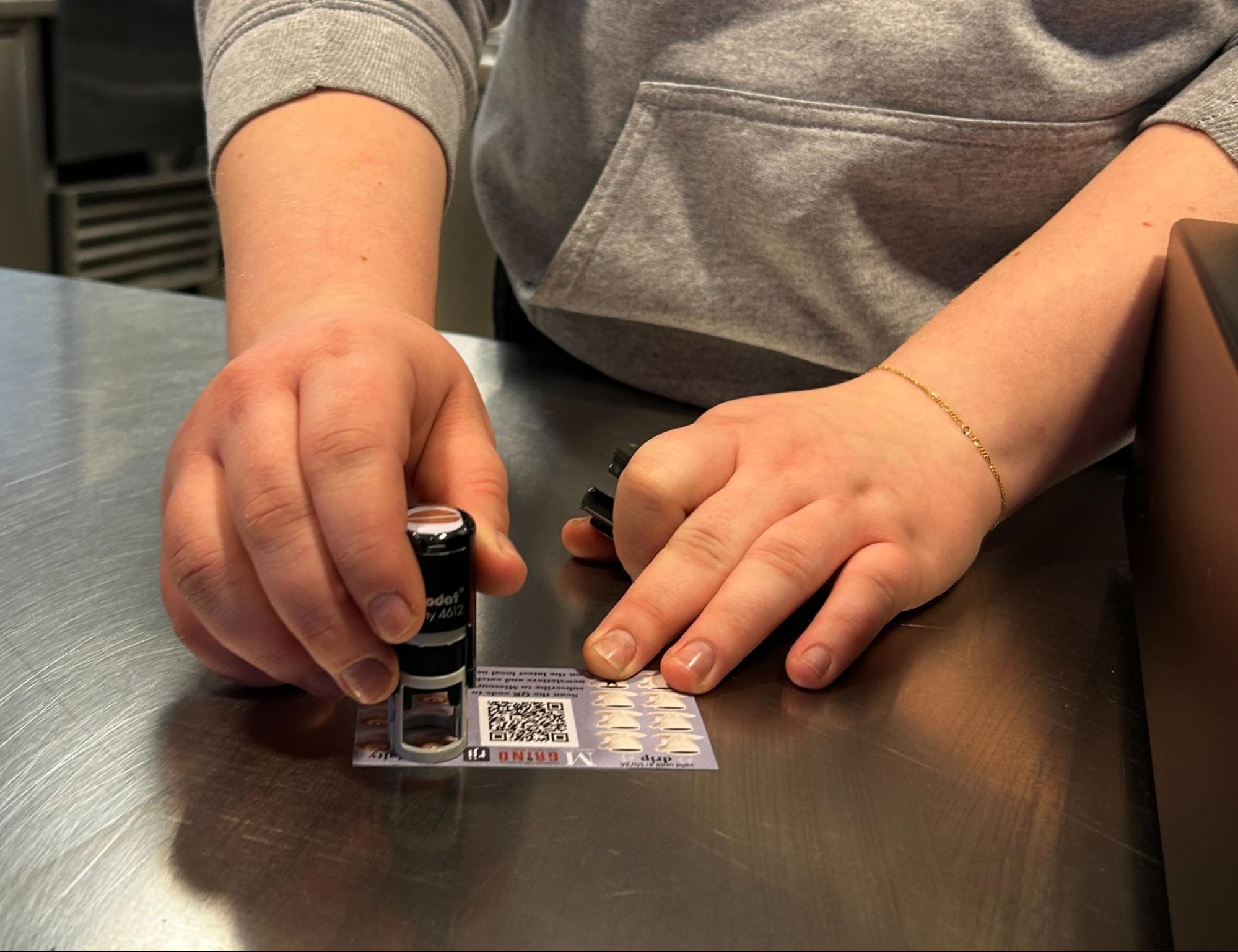
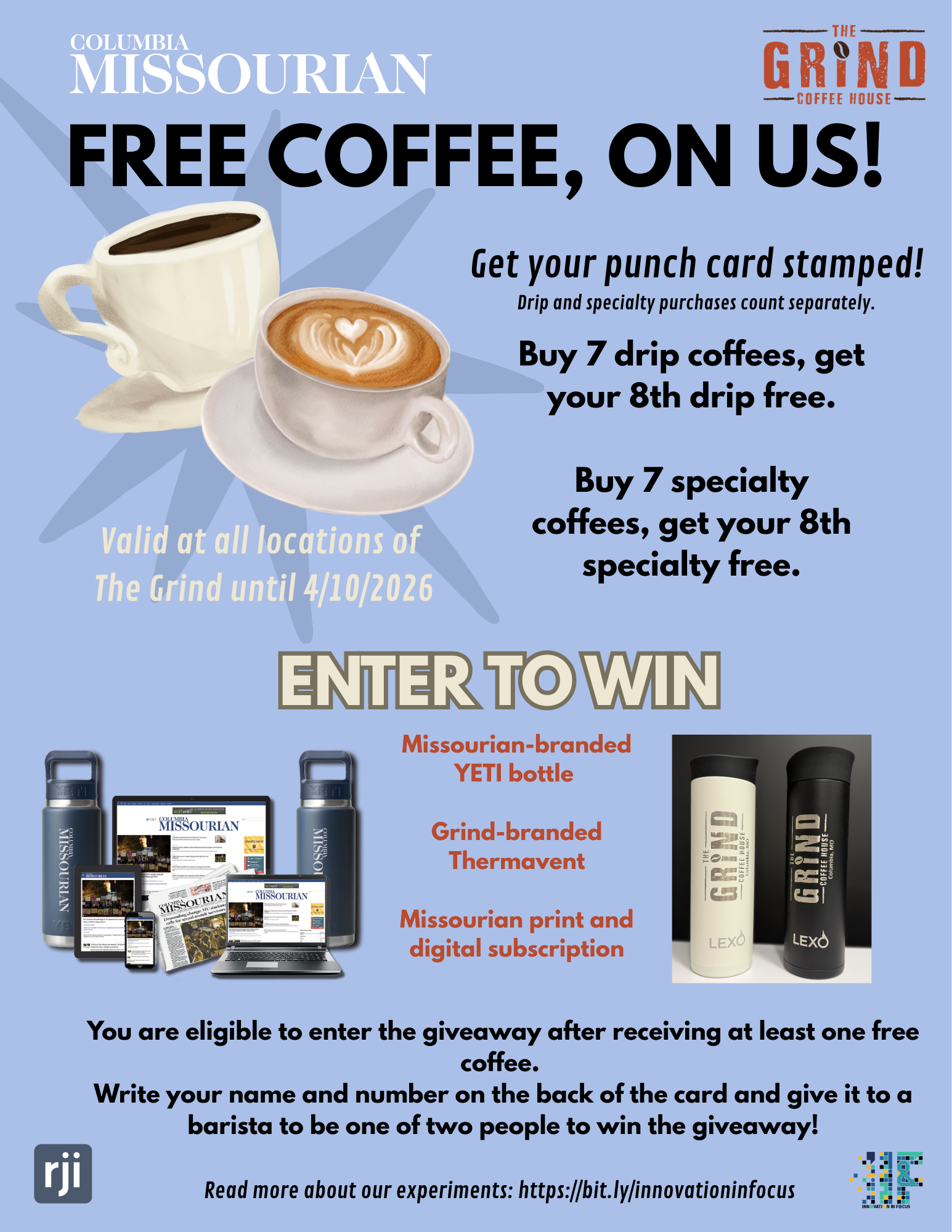
We used two different incentives to motivate customers to use the punch card. First, they could get a free coffee after making seven purchases of either drip or specialty coffees. Our initial conversation with The Grind was helpful to determine how many cups of coffee would warrant a free one. They also suggested that drip and specialty coffees should count separately since customers usually stick to one or the other.
The second incentive was a giveaway that customers would be eligible to enter after earning at least one free coffee. They entered by writing their name on the back of the card and handing it to a barista. For this giveaway, the Missourian offered up two YETI water bottles with their branding and a free yearlong print and digital subscription. The Grind offered two branded ThermAvants, which are tumblers designed to keep your coffee hot.
Distribution strategy
We spent two weeks designing, printing and distributing the cards, setting a 6-week deadline to allow time for measuring the impact data. We printed 1000 cards and then dropped 25-50 off a time to local businesses, gyms, clubs and other hubs where we knew people in our target age range gathered. We kept track of this in a spreadsheet so different people from the Reynolds Journalism Institute and the Missourian could update it every time more cards were dropped off.
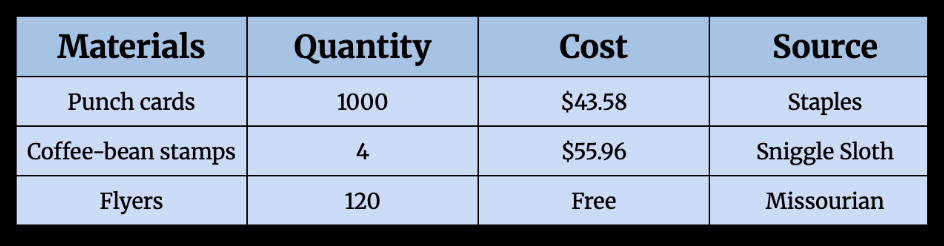
Along with printing out 1000 punch cards and 120 flyers, we also purchased four small coffee bean-shaped stamps from Sniggle Sloth to use at each location of The Grind.
Designing the cards
One concern we had was that the small punch card wouldn’t convey all the information we wanted about usage and the giveaway, so we created a flyer with more details. We left these in small quantities at most of the places the punch cards were distributed.
How we tracked the results
For data purposes, The Grind had baristas log it into their Point of Sale (POS) system every time someone used the punch card. While not every barista consistently recorded this data, we know that people were using the cards based on the number of punch cards picked up throughout town and redeemed at each shop.
As of March 31, they had nine people turn in completed punch cards to redeem free drinks. They suspect that that number will double in quantity as the punch cards near their expiration date of April 10. On April 10, both the Missourian and The Grind will reveal the two winners of the giveaway and present them with the prize.
On the Missourian side, they saw 37 new signups for their newsletter since Feb. 27, when the project was launched, and 13 people visited the welcome page from the QR code. We used a UTM code at the end of that URL to track how many people were visiting from the cards.
One tweak we will make in the future is emphasizing that the newsletter is free to encourage more scans and sign-ups. But the hope is that the collaboration with the local coffee shop will also result in brand recognition and trust that will last longer than this experiment for both the coffee shop and the newsroom in our community.

Sign up for the Innovation in Focus Newsletter to get our articles, tips, guides and more in your inbox each month!
Cite this article
Madiha, Ishrat (2026, April 10). How to partner with a local business to grow your newsletter subscribers. Reynolds Journalism Institute. Retrieved from: https://rjionline.org/news/how-to-partner-with-a-local-business-to-grow-your-newsletter-subscribers/