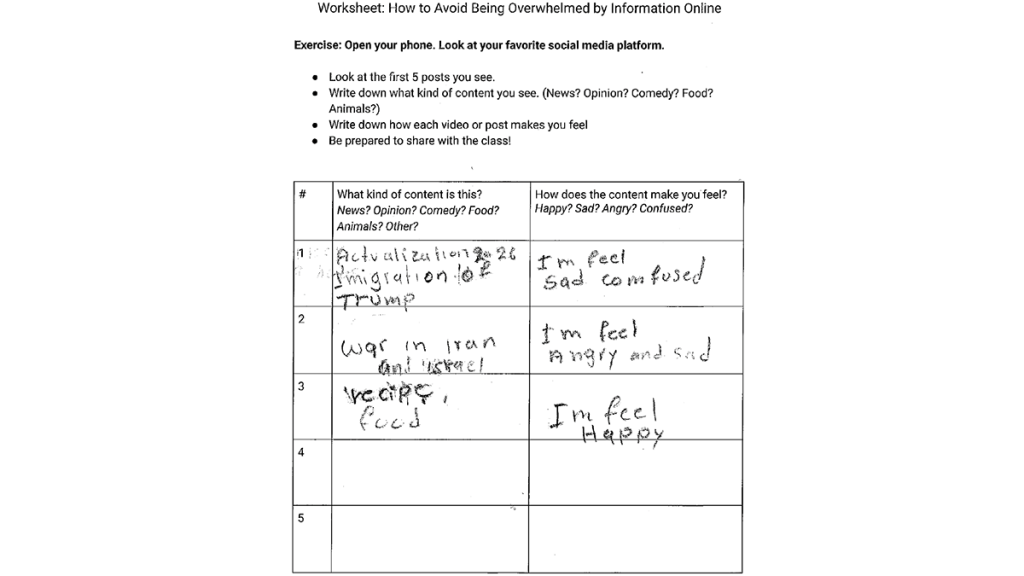
A worksheet from a misinformation workshop
How to work with librarians and ESL teachers to reach communities

A blueprint for finding ways to collaborate with librarians and other civil servants to bring quality information to hard-to-reach communities
An update about immigration policies. News about the wars in Iran and Israel. The recipe of a delicious meal. This is how one ESL (English as a Second Language) adult student described their social media feed in March of this year. They had examined their feed as part of a workshop I did with the Queens Public Library and the adult ESL program of the department of education. In the workshop, we were working together on navigating the internet and social media.
For the past decade I’ve spent a considerable amount of time reporting on mis- and disinformation and in recent years, I’ve been looking at this issue in immigrant communities. The workshop was one in a series that I did with the library and the department of education was a way for me to bring this reporting to immigrants in New York, many of whom are Spanish speakers first and foremost, and a way for me to learn more about their information needs.
This content was part of a social media audit we did. The prompt was simple. Look at the videos in your feed, describe what you see and tell me how those videos make you feel.
As our information ecosystems are flooded with synthetic information and as our social media feeds become a place where politicians, influencers, trolls and other strangers try to push narratives and opinions on us, I believe that human connection becomes ever more important. Online we become subject to manipulation through content we cannot help but click on. Offline, in spaces like the library, we have more agency in what information we take in and can seek help we need with trusted messengers like yourselves.
There’s no easy way out of the knowledge crisis we’re in but I hope together we can chip away at a solution for our communities.
1. Information that people can use, not information that gets them emotional
About 20 years ago something happened that changed the ways in which information was gathered, put together and then distributed. Google, Facebook and many other social platforms started switching our feeds and timelines from one that was organized chronologically to one that became personalized. Instead of seeing things that our friends most recently posted we started seeing things that catered to us based on what we had clicked on, what our friends liked, and what content had solicited the most outrage or enthusiasm.
And thus the attention economy was born. Twenty years of shaping our work for an algorithm has made us very good at getting people to click on our links. But it has also made us produce work that besides being entertaining, is not always useful.
So at Documented, my colleagues April Xu and Ralph Thomassaint Joseph went back to basics. They wanted to find out what information people actually needed, not just stories people liked to click on. This entailed really listening deeply to the community: they did surveys of our communities. They went to events put on by and for immigrants. They went to community board meetings, church gatherings and other community events.
What they learned is that across many different immigrant groups the needs are pretty basic: How do I find housing? How can I find a stable job? How do I find a good immigration lawyer? How is my community doing? And more recently: How do I build a safety plan if I’m worried about ICE deporting me?
And so those are the kinds of stories we do at Documented.
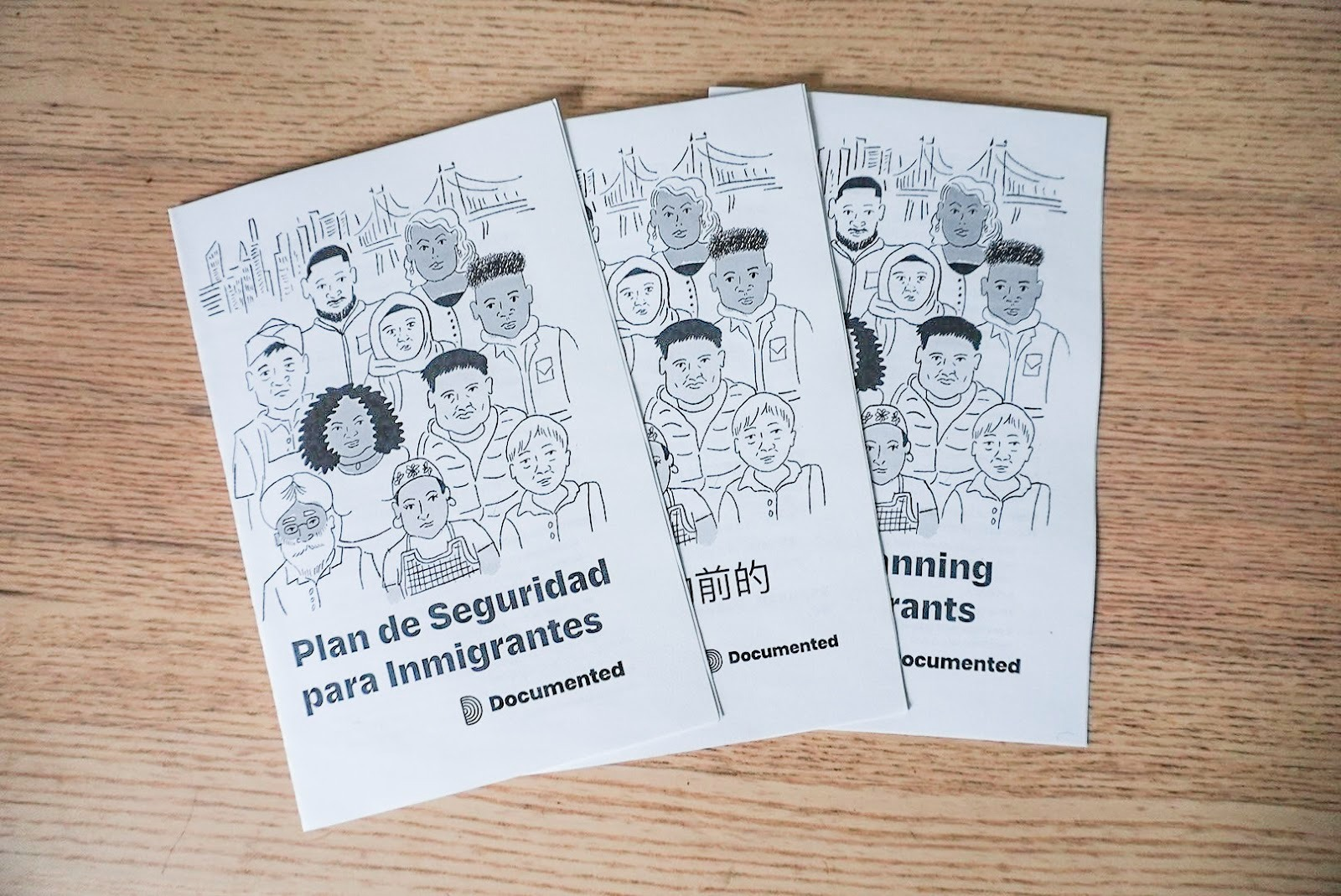
We listen, we hear people’s questions and respond with simple guides and, when they point us to bigger stories, we report out their concerns.
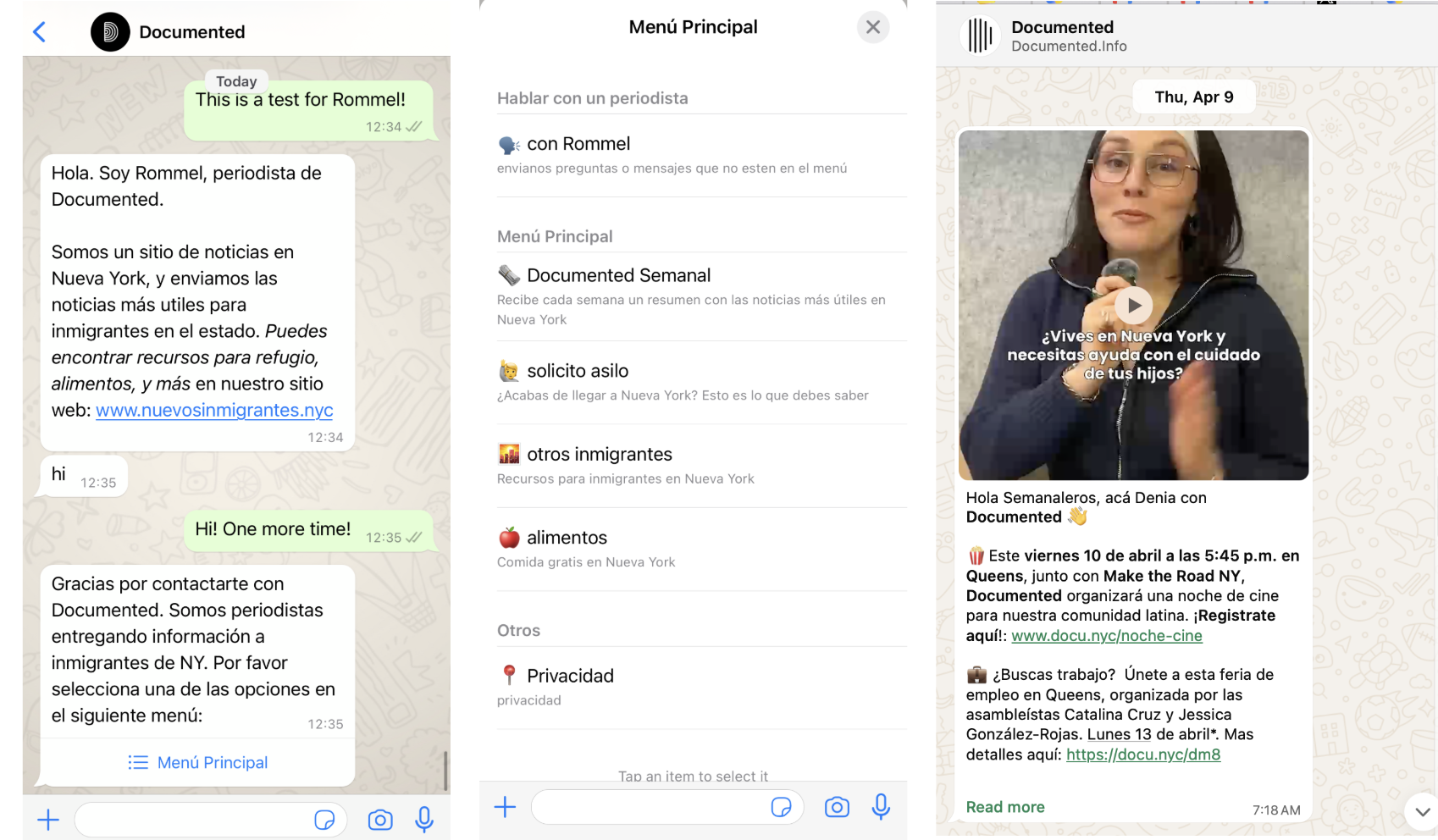
We bring those guides where they are needed: to a WhatsApp group my colleagues have built or to our followers Instagram and TikTok, where we turn these guides into videos on channels where our audiences are. And of course to places where people are in person: into ESL classrooms, to the local taqueria and library branches.
The key here is that we have to continue listening to our communities, to check in and to continuously ask: what is it you need in this moment of time? And then we have to respond accordingly: we have to dig up the guides we know already exist. We may need to smarten up about new things that are impacting our communities’ lives, from the latest immigration policies to the newest developments in AI.
Algorithms won’t be able to help them navigate this moment. But many people, from librarians to journalists, already are.
2. People want to be empowered, not convinced
Instead of trying to talk people out of their opinions, researchers and academics have actually found that helping people understand how they are being manipulated is much more helpful.
One lesson that we’ve implemented in our workshops is about the nature of information that algorithms amplify. It’s information that solicits strong emotions, makes you laugh out loud or shake your fist.
And to use a junk food analogy, maybe we should start thinking about our media diet like an actual diet: if algorithms select only very addictive but terrible kinds of information for us, then being proactive and making proactive choices about the media we consume is much more healthy.
Taking this concept of empowerment further, we not only suggest that people select better information, we also teach them methods to better investigate the information they do encounter that is crucial for their daily lives.
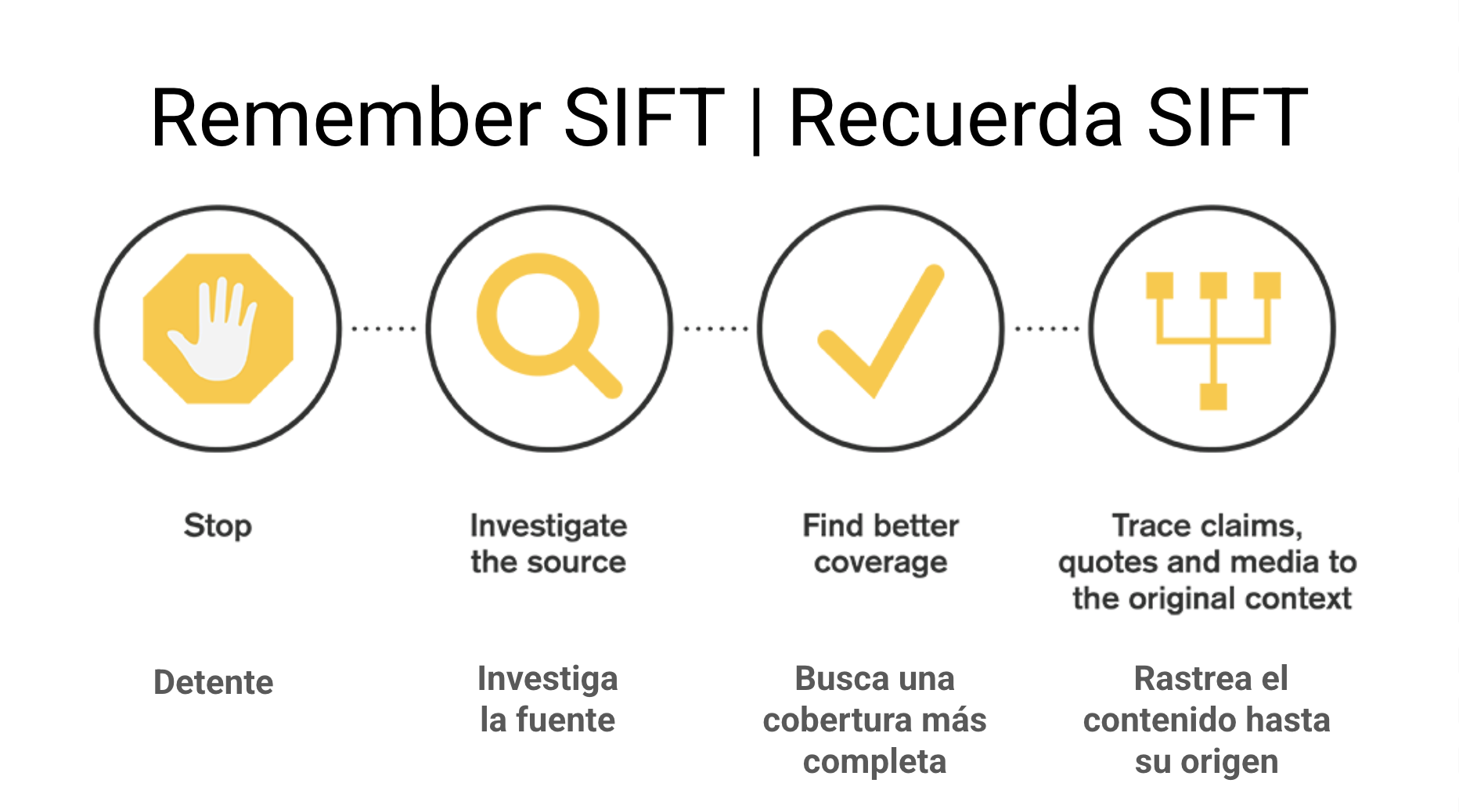
When our students see a piece of information that makes them suspicious, we tell them to:
- Stop before making any decisions
- Investigate the source to Find better coverage from more reputable organizations
- Trace back where the original photo or claim may have come from when possible
We asked our students to tell us about one thing they had learned that they wanted to use.
Many mentioned that learning about how the internet worked was helpful.
“Information from social media is not entirely reliable if it does not meet certain authentication requirements,” wrote one student.
“I learned that I must care about what I see [on the] Internet because the algorithm[s] manipulate later my interest[s],” wrote another.
And perhaps more importantly they said that they learned how to protect themselves.
“The [important] thing I learned was always to verify the information resources,” wrote a student.
“This workshop helped me to find correct and verified information, look for official pages and news,” wrote another student.
In many ways, algorithms have pushed many of us further apart. We each live in our own information bubble and it’s made us think that our beliefs are superior to that of others. And so instead of feeding into the division that is sown by much of this technology, I say, let’s lean into caring for our communities first.
Let’s make sure they have the tools to understand how we all are being manipulated and let’s make sure they have the knowledge to protect themselves.
3. It took years for algorithms to influence our communities. Gaining their trust will also take time.
Very few mainstream news organizations or government entities were putting in the effort to cater to Spanish speaking audiences. And so, for many years, influencers, youtube channels, and other social media accounts were the only ones regularly and consistently catering to Spanish-speaking communities in the U.S.
Over time, many immigrants built parasocial relationships with these online personas. They feel cared for by influencers. They feel like they know the person that is speaking to them from a screen. They feel like they can trust them to give us the best and most useful information.
And if it took this many years for our immigrant communities to become smitten with these online personas, then it may take quite some time, care and consistency for us to win that trust back.
My colleagues at Documented have done this so beautifully. In 2019 they started a WhatsApp group to start the process of building trust with the Spanish-speaking community in New York. After flyering in Latino neighborhoods they were able to sign up roughly 250 people. Over the years, the Latino community correspondents would write weekly short news letters and eventually the work, most notably that of my colleagues Rommel H. Ojeda and Denia Pérez, have brought together more than 8,500 people in this group.
And we’re not the only ones who have spent a lot of time building trust among communities. There are social workers, mutual aid groups, teachers, and once again, librarians like you, who have done the tedious work of bringing together immigrants to access important services, to learn, and to improve their lives.
And we don’t have to do this work alone. We should combine our efforts as much as we can. There are many of us who care about immigrant communities and many of us have overlapping objectives: help our communities receive better information in this very chaotic environment.
I know it sounds corny and to some cynics perhaps a little naive, but I believe that many problems that were created by technology actually require analog solutions. We’re tackling a systemic problem: social media and algorithms have completely warped and blurred our views of reality.
But I believe that it’s collective action like this that centers care and empowerment that’s ultimately going to change the tide, one small neighborhood at a time.
Here are materials to help you conduct these workshops in your community
Workshop 1: How to Avoid Being Overwhelmed by Information Online
Receiving information online is overwhelming. We’re constantly being bombarded with information of varying levels of quality, which means that every day, people increasingly have to find ways to navigate this overwhelming amount of information better. What are algorithms? And how do they impact our worldview? This workshop gives participants an introduction to better understanding how social media platforms work. Through an audit of each other’s social feeds students will better understand how even each other’s perception of their environment may be manipulated through algorithms. View the slides here.
Workshop 2: How to avoid misinformation
Mis- and disinformation have long been a problem but the advent of generative AI have made it even harder for everyday people to distinguish between what’s good, actionable information and what is AI slop. This workshop helps students understand what online actors may be manipulating their feeds. Together we will also learn about best practices on how to protect yourself and your loved ones from mis- and disinformation. View the slides here.
Workshop 3: How to avoid scams
Online scammers have become a huge problem online: they are more sophisticated, extract billions of dollars from their victims and take advantage of some of the most vulnerable groups, including immigrants who worry about their status in the U.S. This workshop is an introduction to scams online that target immigrants and will present participants with actionable ways to protect themselves. View the slides here.
Workshop 4: Online Safety for Immigrants
Data sharing between law enforcement and other government agencies like ICE and digital surveillance has become a big concern for immigrants. This session focuses on the realities of today’s political climate and where immigrants face increased surveillance, targeting, and risk. Together, we will explore practical approaches to protecting our data, communications, and people. View the slides here.
Additional materials
This article is an adapted version of a keynote that Lam Thuy Vo gave at the REFORMA Northeast Annual Joint Mini-Conference. REFORMA Northeast is the regional chapter of REFORMA: The National Association to Promote Library and Information Services to Latinos and the Spanish-Speaking, an affiliate organization of the American Library Association.
Cite this article
Vo, Lam Thuy (2026, July 8). How to work with librarians and ESL teachers to reach communities. Reynolds Journalism Institute. Retrieved from: https://rjionline.org/news/how-to-work-with-librarians-and-esl-teachers-to-reach-communities/