More states back local journalism with tax credits this session

This update is part of RJI’s work exploring Public Policy and Journalism. Click the link for our full list of state level journalism legislation.
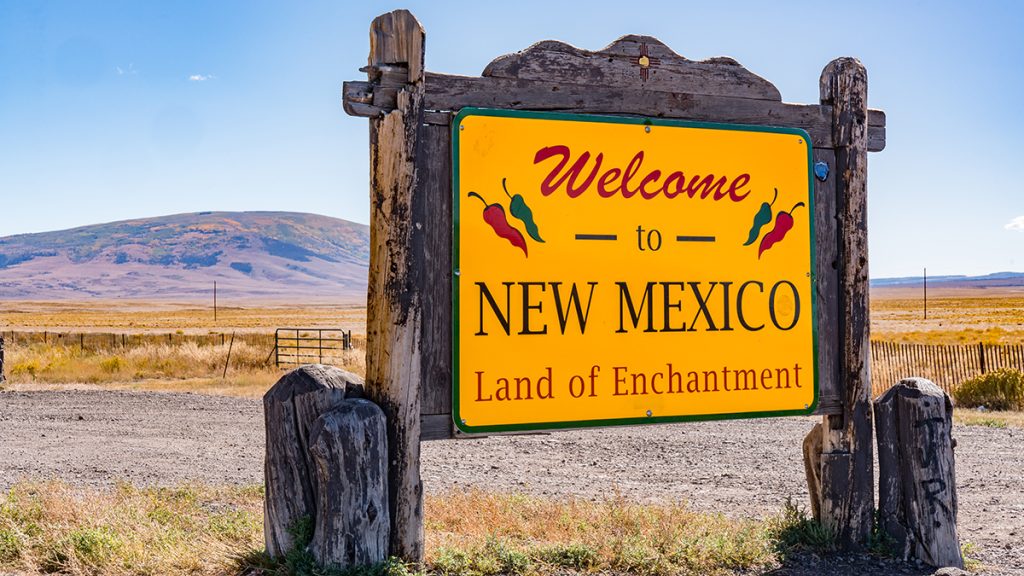
In New Mexico, a local journalism tax credit was years in the making
As state legislatures across the country face tight budgets and competing priorities, local journalism is gaining traction.
This legislative session, more states are introducing and passing policies aimed at supporting local newsrooms, from direct funding to workforce programs. One approach is emerging more frequently: tax credits.
Even as lawmakers make difficult decisions about where to spend limited resources, local journalism is increasingly being treated as something worth investing in, not just as an industry but as a public good.
That shift is especially clear in New Mexico, where lawmakers passed Senate Bill 151 earlier this year, a measure designed to support local newsrooms through targeted tax credits.
After stalled federal action, states have taken the lead in experimenting with ways to support local journalism. These efforts are not limited to one region or party and, in many cases, have drawn bipartisan support.
There is also growing awareness of the consequences of losing local journalism.
“It’s becoming clearer what’s been lost,” said Gene Perry, senior policy manager at Rebuild Local News. “The disappearance of local news is affecting communities economically and civically. People don’t have access to local information, so engagement drops.”
That awareness is pushing policymakers to act, even in states working within tight budget constraints.
Across the country, lawmakers are advancing a range of proposals to support local news. In states like California and Illinois, legislation has explored tax credits, state advertising set-asides and funding programs aimed at sustaining local journalism.
“It’s becoming clearer what’s been lost. The disappearance of local news is affecting communities economically and civically. People don’t have access to local information, so engagement drops.”
Gene Perry, senior policy manager, Rebuild Local News
In New Mexico, the local journalism tax credit was included as part of a broader tax package during a short legislative session where lawmakers were balancing major priorities such as health care and housing.
“This bill has been in development for two to three years,” said state Sen. Carrie Hamblen, a Democrat whose district includes parts of Las Cruces. “We prioritized health care and housing, but also included smaller policies like the local journalism tax credit.”
The legislation was shaped over time through conversations with publishers and industry groups, many of whom had been raising concerns about the sustainability of local newsrooms. The final structure of the bill reflects those conversations, focusing on supporting newsroom jobs while ensuring that participating outlets consistently produce original reporting.
“We worked with publishers to set standards,” said Patrick Dorsey, publisher of the Santa Fe New Mexican. “Outlets must produce at least three stories per week to qualify. That ensures real journalism, not occasional blogging.”
The requirement is intended to ensure participating outlets are consistently producing original reporting, particularly coverage tied to the communities they serve.
For Dorsey, the need for the policy was clear based on what he was seeing across the state, particularly in rural communities.
“Here in the state, being such a rural state and printing so many small papers, I could see the struggle,” he said. “There were newspapers folding.”
Those pressures are playing out in real time for publishers.
For Hamblen, the policy is not just about financial support but about maintaining the ability of local newsrooms to consistently cover the communities they serve.
“In Las Cruces, our daily paper was taken over by Gannett and declined significantly,” Dorsey said. “The remaining weekly paper can’t provide timely coverage.”
“In Las Cruces, our daily paper was taken over by Gannett and declined significantly. The remaining weekly paper can’t provide timely coverage.”
Patrick Dorsey, publisher, the Santa Fe New Mexican
Costs continue to rise, from newsprint to transportation, while revenue has become increasingly dependent on large tech platforms.
“Even when we sell ads ourselves, we rely on those platforms, which take a cut,” Dorsey said.
At the same time, consolidation has reshaped the industry. In some cases, that has led to what he described as “ghost newspapers,” where local reporting is minimal or nonexistent.
“Maybe one reporter, with an editor in another state overseeing 20 papers,” he said.
For smaller outlets, especially in rural communities, that pressure is even harder to absorb.
The idea of using tax credits to support journalism has been around for several years but gained momentum during and after the COVID-19 pandemic.
When federal efforts stalled, states began adapting the concept at the local level. At the same time, the economic model behind local journalism has shifted.
“A major factor is the shift in advertising revenue,” Perry said. “Money that used to go to local newspapers now goes to companies like Facebook and Google.”
That shift has pushed policymakers to think differently about how to sustain local news. In New Mexico, most of the pushback around SB 151 was not about the journalism provision itself but about the larger tax package it was part of.
“A major factor is the shift in advertising revenue. Money that used to go to local newspapers now goes to companies like Facebook and Google.”
Gene Perry, senior policy manager, Rebuild Local News
There is still debate about best approaches, but there is growing agreement that action is needed across the country. These policies reflect a broader shift in how local journalism is being understood. The issue is no longer just about keeping newspapers in business. It is about what happens when communities lose access to reliable local information.
“We know the data: When newspapers disappear, fraud goes up, borrowing costs go up and community cohesion declines,” Dorsey said.
At a national level, the scale of the problem is significant. According to a 2025 report from Muck Rack and Rebuild Local News, the number of local journalists has declined by an average of 75% since 2002.
In New Mexico, the impact is already visible. Dorsey pointed to limited reporting on a major data center project with potential environmental consequences, where consistent coverage has been difficult to maintain.
“There are serious concerns about water usage, but coverage is limited,” he said.
Without sustained local reporting, stories like that can easily go undercovered. Policies like SB 151 are still new, and it will take time to measure their impact. In the short term, Perry said they can provide stability and give news organizations time to adapt. Long term, the solution will likely be more complex.
“There likely won’t be a single solution,” he said.
Supporters hope the bill will help retain journalists, stabilize local outlets and strengthen the pipeline into community-based reporting.
“I hope it keeps locally trained journalists in the state and supports community-based reporting,” Dorsey said.
As more states introduce similar policies, each one adds to a growing understanding of what works. For now, local journalism is increasingly being seen not just as a struggling industry, but as something communities depend on and something states are willing to invest in.
Cite this article
Bunch, Maggie (2026, May 7). More states back local journalism with tax credits this session. Reynolds Journalism Institute. Retrieved from: https://rjionline.org/news/more-states-back-local-journalism-with-tax-credits-this-session/