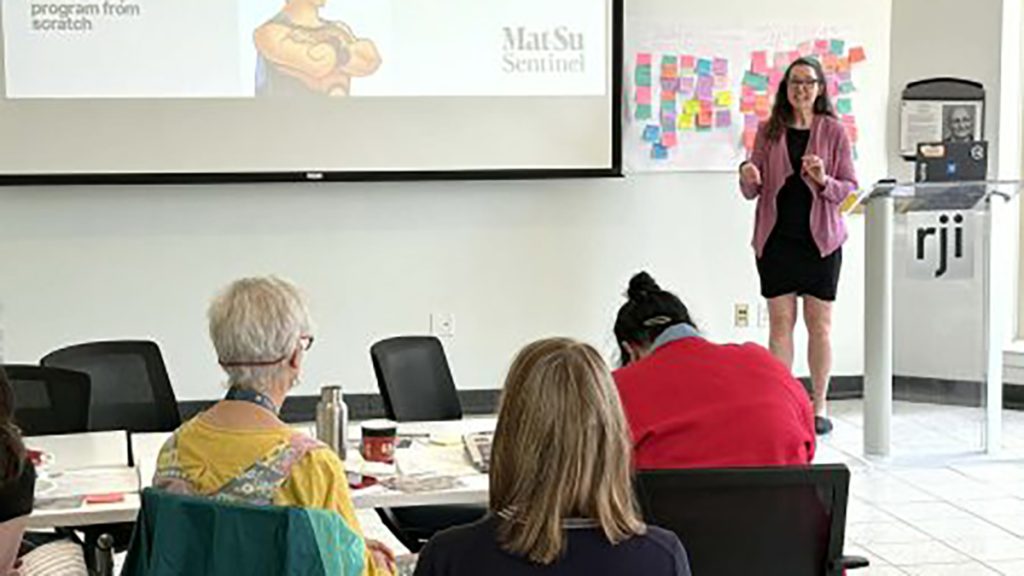
Rural Revenue Transformation Workshop draws rural news leaders together to generate ideas and put them into practice

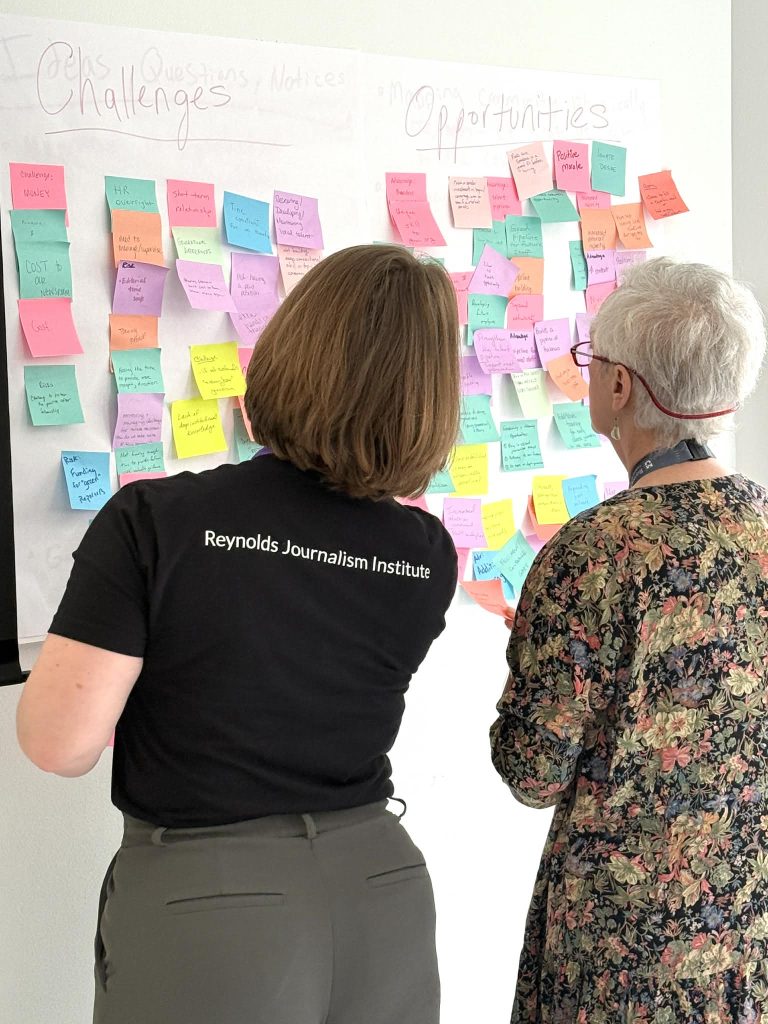
News leaders from all over the country gathered this April at the Reynolds Journalism Institute (RJI) to tackle the revenue challenges facing rural news. The Rural Revenue Transformation Workshop provided a space for news leaders from Appalachia to Alaska to brainstorm innovative, actionable approaches to making news more sustainable.
Attendees reported that the workshop came as a breath of fresh air; while the industry is deeply aware of the news desert crisis and its continued impact on news accessibility in the small and rural towns of America, conferences and other industry events can pose cost and transportation issues for rural news professionals and might not feature many presentations or products that specifically fit rural needs.
For the Rural Revenue Transformation Workshop, RJI Director of Innovation Kat Duncan tried something different: a workshop built around the necessities of rural journalism and its audiences. Duncan prioritized attendees from organizations that were both geographically rural and not part of larger organizations that could help mitigate revenue issues. Hotel rooms and two meals a day were provided for all attendees, and some travel scholarships were awarded to make the workshop as accessible as possible.
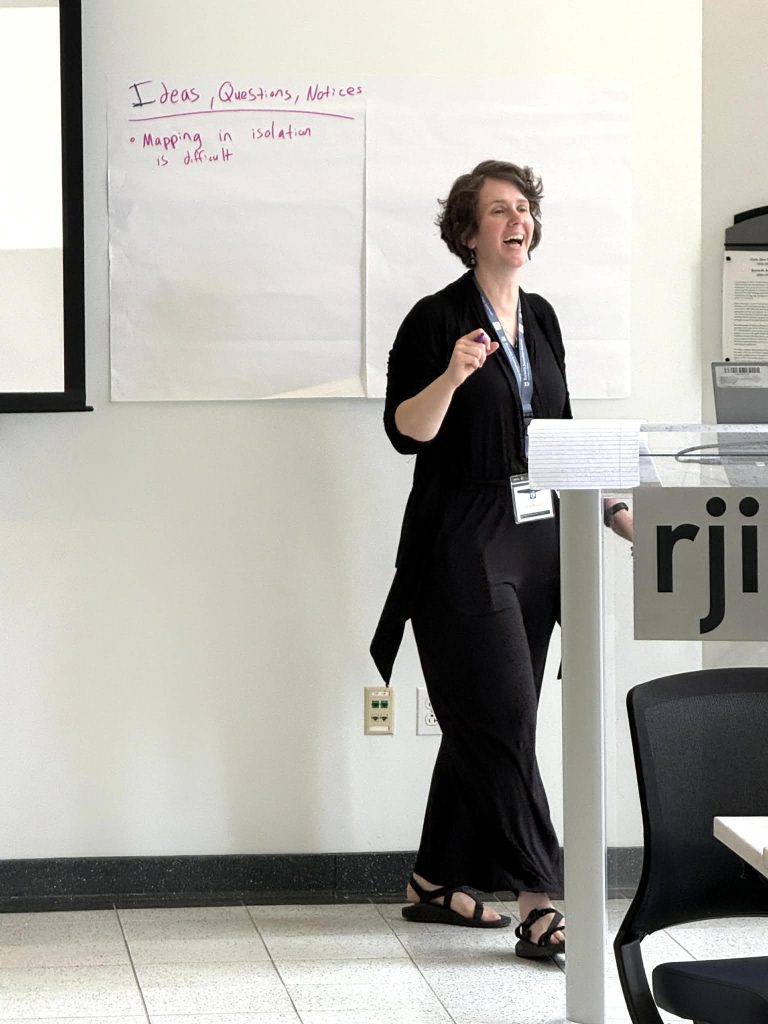
“Rural news leaders shared with me how typical suggestions from conferences and training for revenue generation don’t work for them and how frustrating that is,” Duncan said. “They get told to build TikTok campaigns and galas, festivals and paywalls, when these options aren’t solutions for rural communities and their information leaders. I built this workshop to help them build solutions and support to reach their communities and a sustainable future.”
“The news crisis ground zero is in rural and small-town America. We are far more likely to be news deserts. We’re far more likely to be served by ghost papers. Understanding our unique challenges and finding a way to address them is really important.”
Corinne Colbert, co-founder, Athens County Independent
That approach was much appreciated by attendees.
“The news crisis ground zero is in rural and small-town America,” said Corinne Colbert, co-founder of the Athens County Independent in Ohio, who helped inspire the workshop after conversations with Duncan about what an ideal rural news conference could look like. “We are far more likely to be news deserts. We’re far more likely to be served by ghost papers. Understanding our unique challenges and finding a way to address them is really important.”
Colbert further praised the workshop for being “rooted in the actual work that journalists do and providing practical solutions and ideas” and “getting actual journalists to test ideas and then share those ideas out.”
Speaking of practical solutions, one of the workshop’s most popular presentations came from Anna Marie Martin, a grant writing consultant who walked attendees through strategies to land more grant funding.
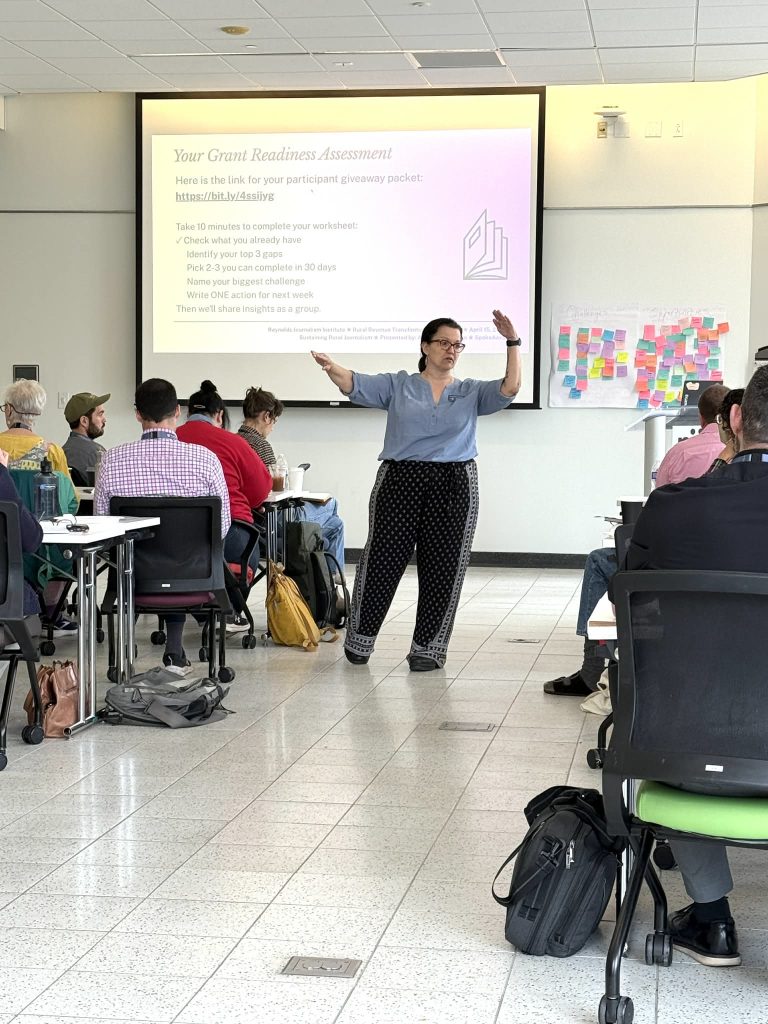
For RJI, setting up attendees for success in the future is just as important as the short-term workshop experience. Cue Martin’s 37-page toolkit handed out to everyone at the workshop as a guide to grant fundraising, allowing attendees to go back to their newsrooms with a handy reference tool for themselves and their colleagues.
Ray Cooney — president, publisher and editor of The Commercial Review in Indiana — found that despite his publication’s for-profit status, the grant fundraising strategies were indispensable (grants directed at for-profit newsrooms can be significantly harder to come by than those for nonprofits, for whom grants often constitute a major chunk of revenue).
“It’s rare to say that none of it was fluff, but none of it was fluff,” Cooney said of Martin’s toolkit. “It was all useful information that I can take forward for the newspaper.”
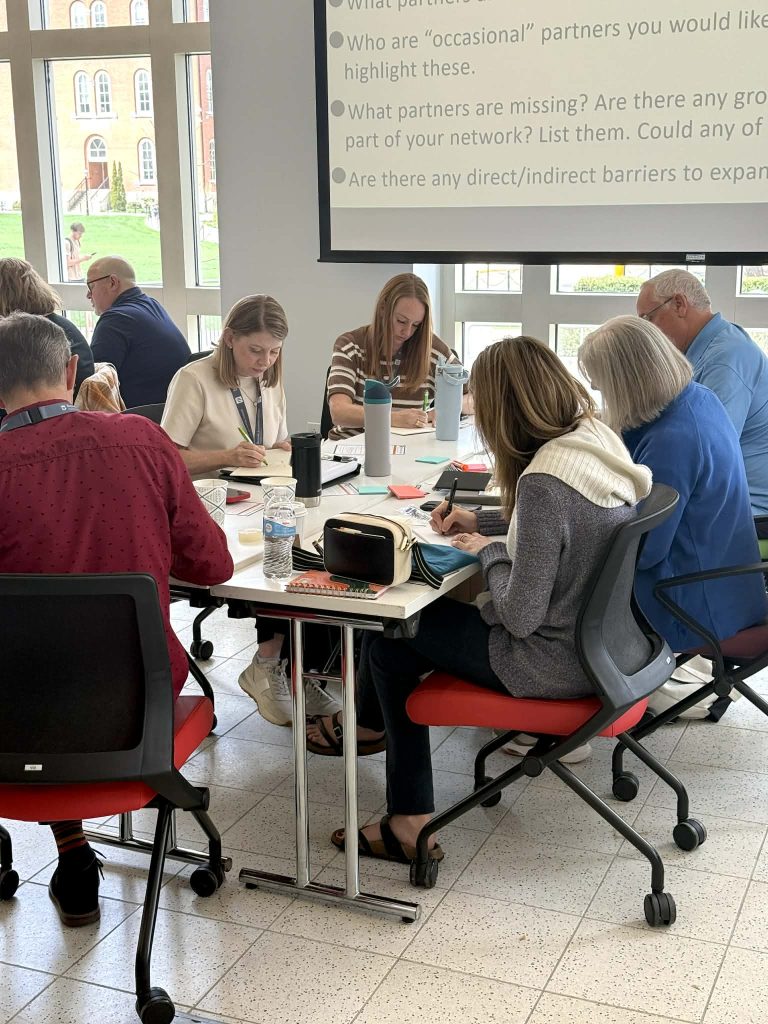
Other sessions explored finding and retaining talent for rural newsrooms, cross-sector collaborations, mixed methods mapping for rural communities and more. Each session included hands-on activities that gave the attendees resources and skills to take home with them.
Navigating ‘choppy seas’
The workshop proved to be about more than the nitty gritty of problems and solutions. Several attendees were struck by how a few days in the company of kindred spirits helped alleviate some of the feelings of isolation that can come with rural reporting. Tim Stauffer, editor of the Iola Register in southeast Kansas, was glad to have the opportunity to commiserate with others who are producing news in towns like his, a town he describes in a way that could just as easily describe rural news more broadly: “a well-run sailboat in a very choppy sea.”
“As news deserts become increasingly a thing, I just don’t have a lot of thought partners,” Stauffer said. “There are not a lot of people in rural journalism anymore. And so it’s nice to meet people that you can follow and get a handle on. What are they doing? What ideas can I steal or adapt?”
Amy Bushatz, founder of the Matsu Sentinel in Alaska, had a similar reaction to meeting peers who could relate to what she usually considers “Alaska stuff,” such as 70-mile-per-hour winds and extreme connectivity issues that present periodic obstacles to getting the news out.
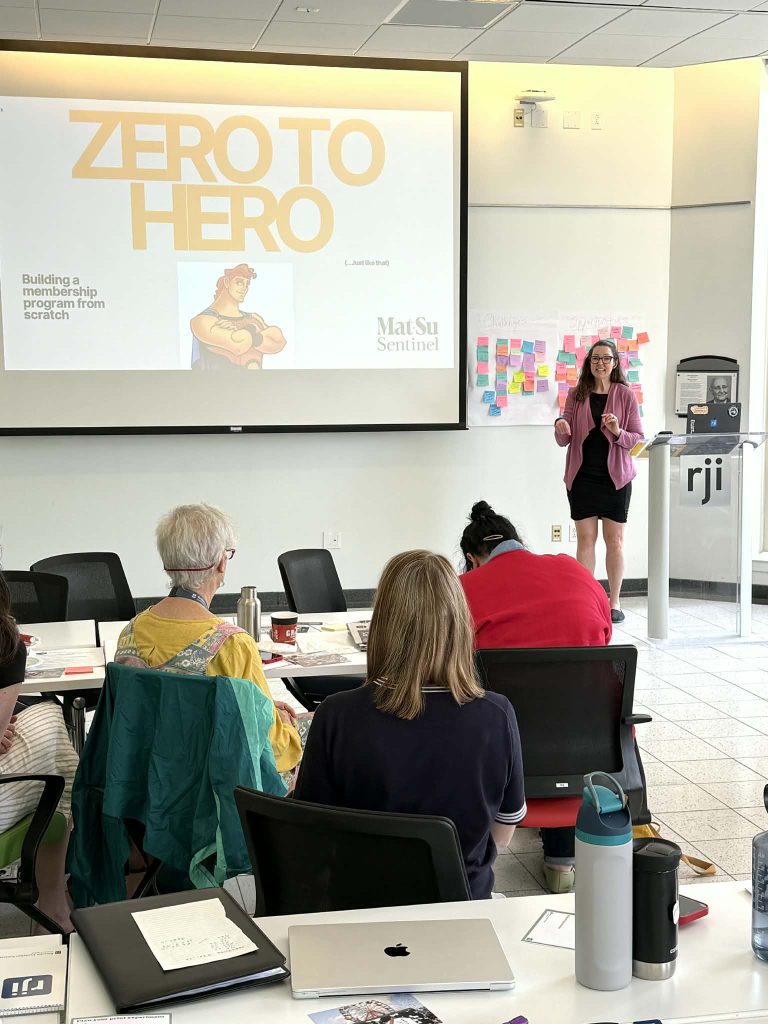
“Running a rural newsroom is really lonely,” she said, “so it was fun and helpful and comforting to see that yes, we have unique challenges because we’re in Alaska, but many rural newsrooms nationwide have their own versions of that.”
This wasn’t the only form of support the workshop provided. At the end of the workshop, RJI surprised participants with $500 in funding to implement an experimental revenue idea, encouraging attendees to return to their newsrooms with a plan for implementation based on what they learned at the workshop.
“Running a rural newsroom is really lonely, so it was fun and helpful and comforting to see that yes, we have unique challenges because we’re in Alaska, but many rural newsrooms nationwide have their own versions of that.”
Amy Bushatz, founder, Matsu Sentinel
Some of those ideas are already percolating:
- Cooney is thinking about tying into the America250 festivities set for later this year in honor of the 250thanniversary of the Declaration of Independence, possibly by selling limited edition postcards that would double as a marketing tool.
- Colbert’s team is considering a quarterly “best of” print edition or a practical map of flood routes for her community in southeast Ohio.
- Bushatz is experimenting with printing original news photography on note cards to send to specific donors as part of a birthday fundraising campaign.
Attendees also came away impressed by the earnestness with which RJI and the School of Journalism are addressing the needs of rural journalism.
From Stauffer, a University of Kansas graduate:
“I was very impressed with the University of Missouri’s commitment to rural journalism. I think that’s part of the solution; to work with these universities, with their expertise and their ability to experiment and collect data. Because I don’t have time to survey 40 other papers across rural America and see what they’re doing. I do feel like this is a good model for other states to follow.”
As the news leaders returned to their respective corners of the country — marking the end of what was, for some, their first “vacation” in years — they left RJI with what they described as a renewed sense of mission and the motivation to innovate.
Like all veteran journalists, Cooney filtered that feeling through some of the mentorship he has picked up over the course of his career. He recalled a Hoosier State Press Association seminar given by Thomas French, a Pulitzer Prize-winning journalist and educator, more than a decade ago.
“He used the phrase, ‘don’t become a journalism zombie,’” Cooney said. “That simply means, as you get into your career, it can be easy to just do the same thing every day. Even before coming to RJI, we’ve tried to get out of that limbo of just trying to get the paper out and do more with our local schools and local personalities. In a small community, that is really well received.”
RJI Executive Director Randy Picht visits with Tim Stauffer from The Iola Register, Corinne Colbert from the Athens County Independent and John Montgomery from Issue Media Group, three of the dozens of people who attended the very first Rural Revenue Transformation Workshop on April 13–14, 2026, at the Reynolds Journalism Institute.
Cite this article
Fitzgerald, Austin (2026, April 28). Rural Revenue Transformation Workshop draws rural news leaders together to generate ideas and put them into practice. Reynolds Journalism Institute. Retrieved from: https://rjionline.org/news/rural-revenue-transformation-workshop-draws-rural-news-leaders-together-to-generate-ideas-and-put-them-into-practice/