![Executive Director of the Columbia Missourian Elizabeth Stephens [left] and Innovation in Focus Editor Eden Dinneen [right] create the Missourian’s first ad campaigns together with Google Ad Grants.](https://rjionline.org/wp-content/uploads/sites/2/2026/08/iif26081105-1024x576.jpg "Executive Director of the Columbia Missourian Elizabeth Stephens [left] and Innovation in Focus Editor Eden Dinneen [right] create the Missourian’s first ad campaigns together with Google Ad Grants.")
Executive Director of the Columbia Missourian Elizabeth Stephens (left) and Innovation in Focus Editor Eden Dinneen (right) create the Missourian’s first ad campaigns together with Google Ad Grants.
Testing Google Ads Grant program to grow local audiences

Exploring how free search advertising may increase readership and newsletter subscriptions
In an effort to grow their audience, the Columbia Missourian explored using the Google Ad Grants program. Through this program, Google offers eligible nonprofit organizations up to $10,000 a month in-kind Google Search ad credits.
Together we built the newsroom’s first Google Search Ad campaigns to see what works for Missourian communities, encountered a few surprises and learned what may help other nonprofit newsrooms before getting started.
Requirements to register:
- Be registered as a charitable organization 501c3 in the US
- US based organizations must be registered with the IRS as exempt from federal income tax
- Agree to the Google for Nonprofits Additional Terms of Service
You can read more about who’s eligible here.
Resources to replicate this experiment
- Templates and guides
Defining success
Before building the campaigns, we defined what success would look like. Since neither the Innovation in Focus team nor the Missourian had experience with Google Search Ads, we started by researching realistic benchmarks for a newsroom launching its first campaign. We landed on three goals:
- Increase monthly sessions by 10,000
- Grow newsletter subscribers by 20 more signs up per month
- Expand awareness beyond loyal readership
Choosing what to promote
Rather than putting our entire budget behind one campaign, we decided to spread it across several different campaign topics. We built obituaries and sports campaigns based on what already performs well on the Missourian’s website. Other campaigns focused on opportunities to grow newsletter subscriptions or capitalize on a timely topic such as Missouri’s primary elections in August.
We also wanted to see whether Google Ads could help introduce readers to the Boone County Journal, a publication recently acquired by the Missourian team.
We ultimately divided the budget like this:
- Obituaries – The Missourian: $2,000
- Sports – The Missourian: $2,000
- Elections – The Missourian:-$1,000
- Ashland and Hartsburg News – Boone County Journal: $2,000
- Missourian Newsletters: $2,000
- BCJ Newsletters: $1,000
Building our first campaigns
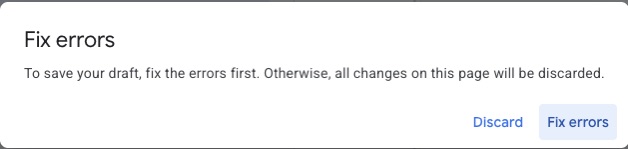
New users may have to wait up to a week before Google allows them to create campaigns. I learned this the hard way after drafting campaigns that couldn’t be saved. I recommend writing campaign copy in a Google Doc to avoid losing your work if you run into issues.
Initially, we thought setting up a campaign would be straightforward but building our first campaign took over an hour because the platform isn’t intuitive for first-time users.
When we put in our keywords, Google continued to prompt us to continue adding more. We found Google’s suggestions generic. When we didn’t add Google’s suggestions, Google would flag our ad for not having enough keywords. When we added Google’s suggested keywords, Google would then recommend cutting down our keywords.
For example, the keywords I put into our obituaries campaign were flagged for violating Google’s specific rules around ad campaign language related to death. However, our partner newsroom had no issues launching the campaign with the same keywords on their computer.
The campaign also asks you to create callouts, sitelinks, headlines and descriptions. The platform doesn’t show the purpose of the callouts and sitelinks and how they will be shown in your ad, so we did some research outside of the platform to determine our strategy. We only used sitelinks on our newsletter sign up advertisements because the rest of the advertisements direct the viewer to one landing page.
The callout feature highlights your nonprofits services. We didn’t use it because we didn’t think it was relevant to a newsroom as our services are providing the reporting our advertisements were built around.
Trying to understand Google’s suggestions and troubleshooting issues was a challenge initially. As we set up more campaigns, we became more efficient at building them.
Geographic targeting
We intentionally limited location targeting to Missouri and the surrounding states because we wanted to reach readers who were most likely to engage with our local reporting. For obituaries, we kept our target area just to Columbia, Missouri. Sports was the only exception. There, we broadened our targeting nationwide because we know Mizzou sports has wider appeal.
Google also requires you to maintain a 5% click through rate to keep showing your ads so we tried to be specific here so we could maintain that CTR.
We chose “Clicks” for our editorial campaigns because we were monitoring website sessions. As for our newsletter campaigns, we choose conversions to see if visitors pressed our newsletter sign up links. Conversions in Google Ads show a specific action a user takes after seeing your ad, such as signing up for a newsletter or becoming a subscriber.
Suggested headlines
We thought Google’s suggested headlines would save us time, but rewriting them proved to be a better fit for us to keep to the Missourian voice. We found that their suggested headlines sounded more like marketing than journalism.
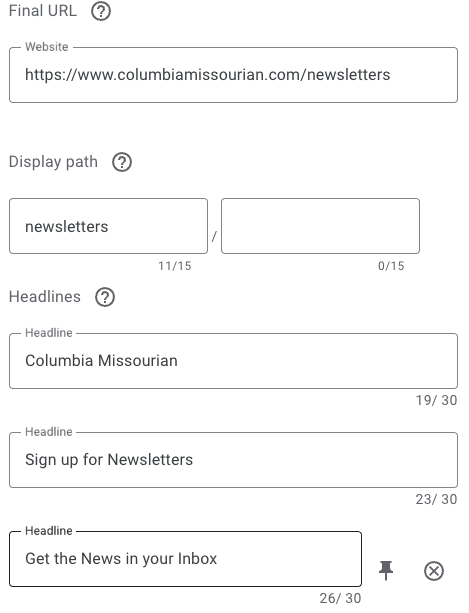
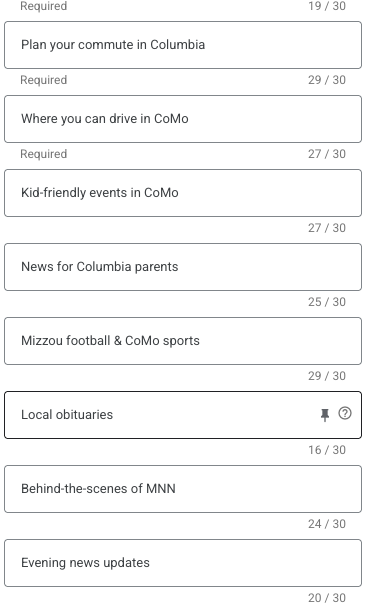
The left hand photo showed the first headlines we used in our newsletter ad campaign. The right side shows the headlines we used after two weeks of the experiment that showcase the value of our newsletters.
After two weeks of ads, we decided to change our newsletter headline language from “Subscribe to our newsletters” to “Plan your commute in Columbia” to showcase the different offerings the newsletters provide. We decided to make those changes after hardly getting any engagement from our ad and were happy to see an increase in clicks from these tweaks.
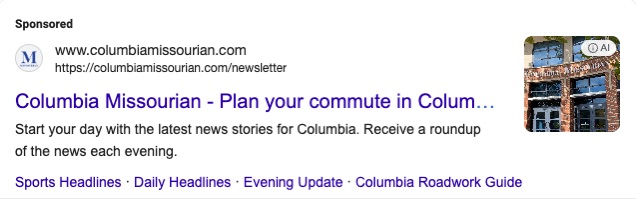
During our experiment, the Missourian saw 79 new newsletter subscribers. In May they had 29 new newsletter subscribers and in June they had 39. After looking at the conversion data, we saw that 60 of their new newsletter subscribers came from Google ads.
Photos
We saw a bump in advertisement click rate after adding photos and the logo to our campaigns. We avoided the AI generated images and chose staff photography to keep it authentic and relevant.
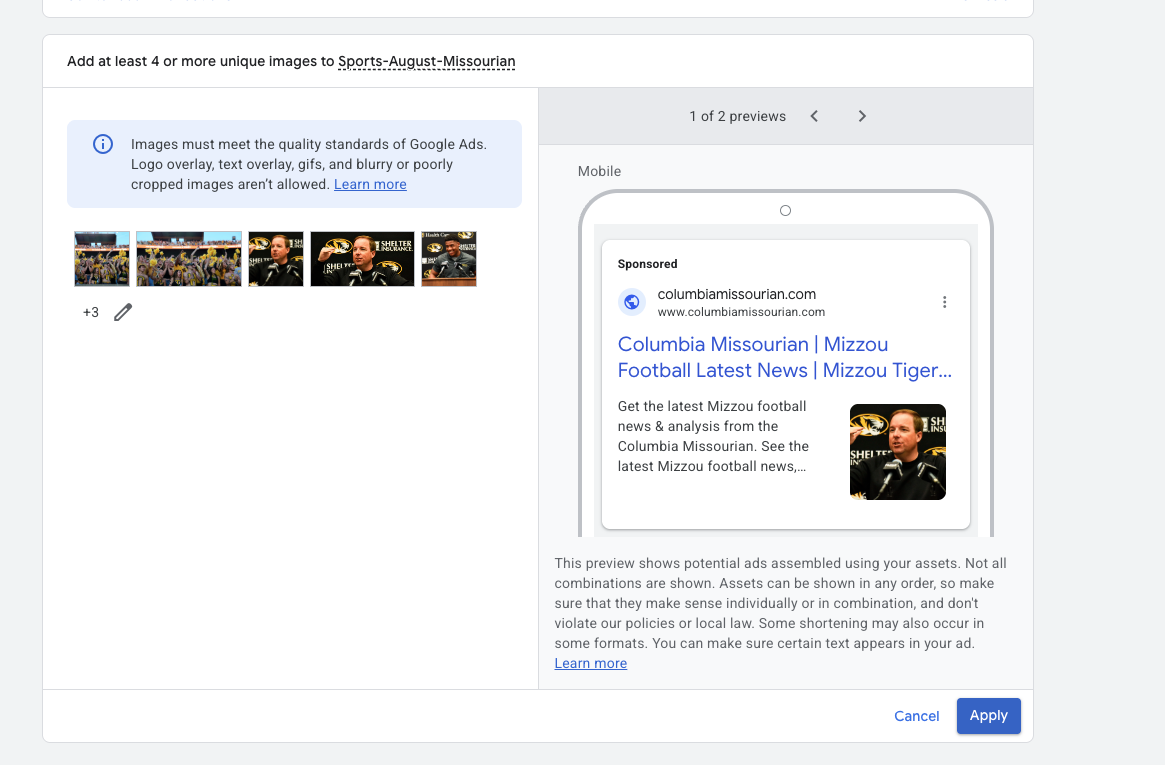
We never added a callout but did add sitelinks when we thought it would help.
Results after a month of using Google Ads
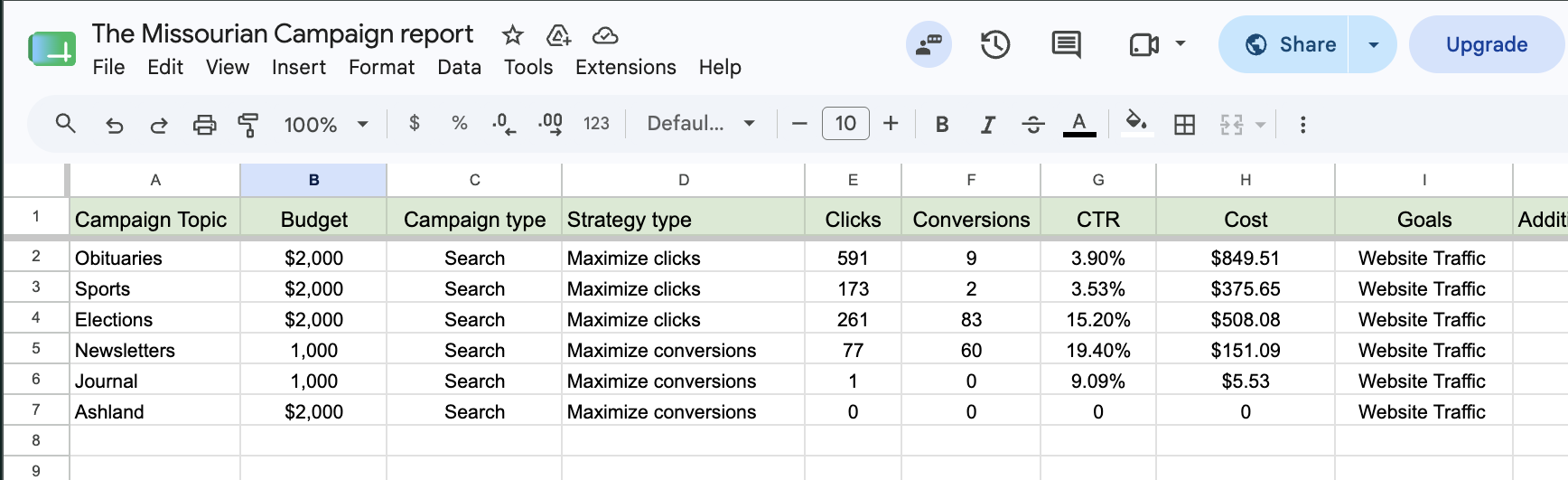
Going into the experiment, we assumed sports would perform the strongest because it typically brings a lot of traffic to the Missourian’s website.
Instead, obituary campaigns outperformed every other ad. The result reminded us that search behavior isn’t always the same as newsroom traffic. People might consistently be searching for more information on someone they know who’s died and they can then find their obituary on our site.

Our elections campaign received significant traction during primary election week. In the future, we would run that ad for a shorter period of time around an election date.
Final lessons learned
At first, we thought about building campaigns around timely events like the county fair. After launching our first campaigns, we realized evergreen topics offer greater long-term value and are worth the time it takes to set up the campaign that you can run throughout the year.
We are happy we created the elections campaign because we can modify it for future elections in Missouri. It brought in a lot of clicks on election day and they hope to see more engagement in November.
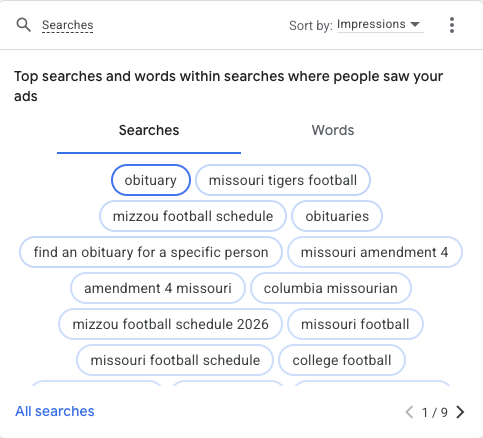
Make sure you look at the overview of your ad analytics. Google breaks down a lot of insights and you can learn more about your audience and what they’re looking for.

Sign up for the Innovation in Focus Newsletter to get our articles, tips, guides and more in your inbox each month!
Cite this article
Dinneen, Eden (2026, Aug. 12). Testing Google Ads Grant program to grow local audiences. Reynolds Journalism Institute. Retrieved from: https://rjionline.org/news/testing-google-ads-grant-program-to-grow-local-audiences/