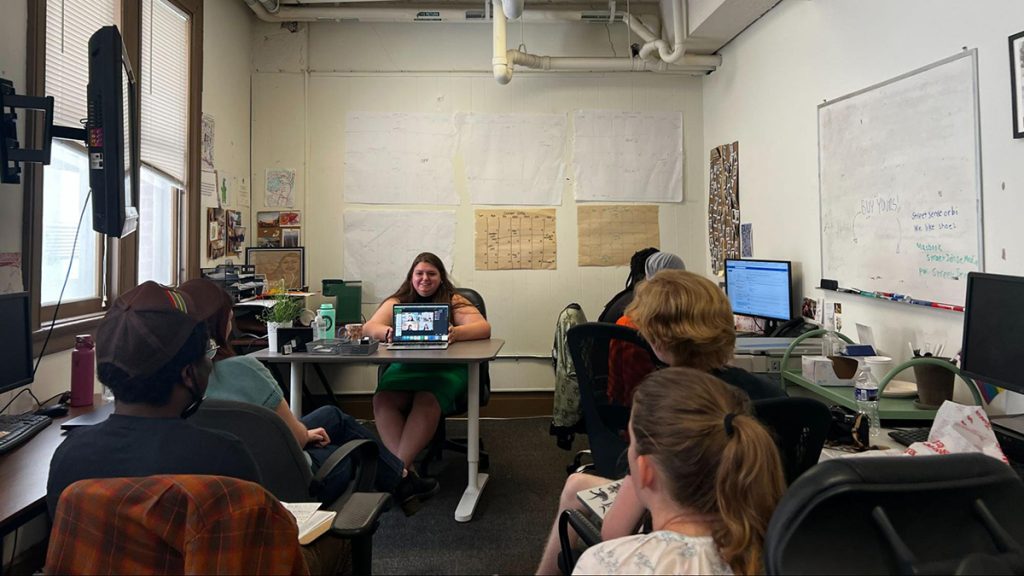
Editor-in-Chief Annemarie Cuccia leads a meeting with interns at Street Sense Media’s headquarters in D.C. Photo: Madi Koesler | Street Sense Media
Where to look to for funding for your newsroom internship program

We worked with Street Sense Media to find varied funding to make its internship program more sustainable
Interns contribute a lot of reporting for Street Sense Media, a nonprofit street paper whose mission is to end homelessness in Washington D.C. They work to elevate voices of lived experience of unhoused individuals. The newsroom is run by two editors and typically has around nine interns who cycle in and out in the fall, spring and summer.
Deputy Editor Donte Kirby was on the hunt to find funding opportunities to pay for interns and widen their pool of intern applicants. The newsroom typically receives around 20 applications each internship cycle. But currently, they don’t have consistent, dedicated funding for their internship program and most of their applicants hail from Georgetown University.
We tackled two issues in the experiment together:
- Find more funding opportunities for their internship program.
- Get Street Sense ready to start pitching their program to more universities and organizations with funding opportunities for interns.
Resources to replicate this experiment
- Templates and guides
First it’s time to get organized
We created the following organizational items to help Street Sense widen its applicant pool and streamline its internship program pitch to potential funding partners.
- A master internship tracking list
- A one-pager explaining Street Sense Media’s internship program and value proposition
The master list gave us a clear place to keep track of internship funding and recruitment opportunities with their deadlines, exclusions and unique requirements.
As we found opportunities, the funding generally fell into the following buckets:
- University/college
- Press Association
- Nonprofit
- Journalism Support Org
- Foundation
We documented established programs like Report for America, Scripps Howard Internships and the Dow Jones News Fund. These opportunities require an application and partnership process. Other opportunities included university semester in D.C. programs, funding through state press associations, university work-study programs and programs offered by journalism support organizations.
Creating a partnership and funding one-pager
We created a reusable document to explain why a university or program should want to fund or send interns to the Street Sense Newsroom. Our one-page guide highlights what makes Street Sense Media unique and what benefits interning there has for journalism students.
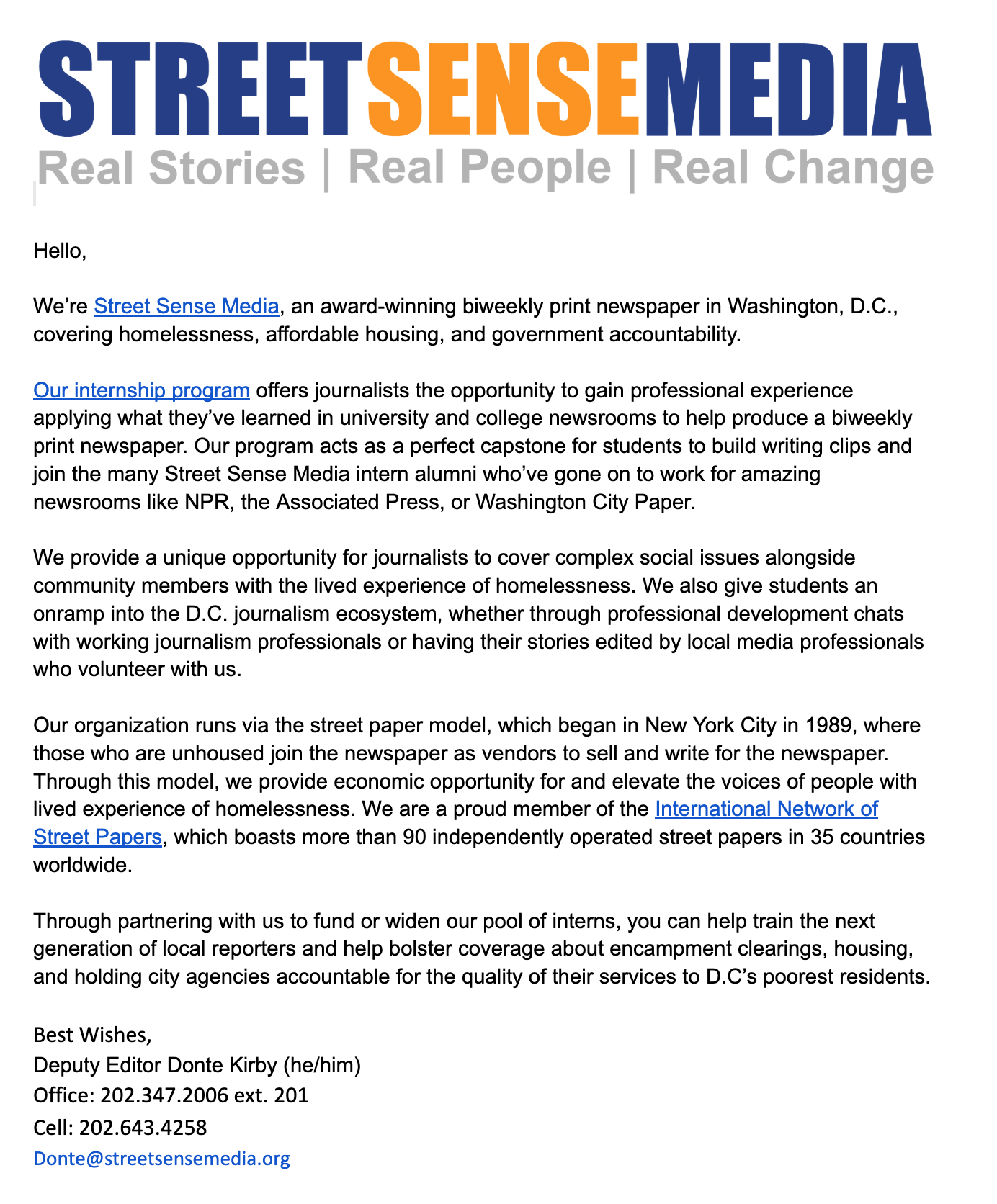
For newsrooms creating a one-pager, answer these questions:
- What will students learn in our newsroom?
- What kind of work will the students produce? (medium, beat, etc)
- What makes this experience different or unique from another internship?
Creating the one-pager made the process of reaching out to new partners smoother and faster. We quickly saw success after sending an email with the one pager to the UCDC program. The program connects students throughout the University of California system with opportunities in Washington, D.C. The program added Street Sense Media to its university internship platform, putting the newsroom’s internship positions in front of students across nine UC campuses.
Testing Handshake
Next we turned to Handshake, a job and internship platform used by colleges and universities. Street Sense already had an employer account but hadn’t used it yet.
We posted Street Sense’s editorial internship and selected universities where we wanted the listing to appear. We aimed for universities in and around the DC metro area, because this particular listing was for a part-time position in the spring. Just a few minutes after positing, the University of Maryland-Baltimore approved the listing to be shown to its students. A week after posting, five students from the university have applied to Street Sense’s internships on Handshake. The challenge is getting them to email Street Sense with their application directly instead of on the Handshake portal.
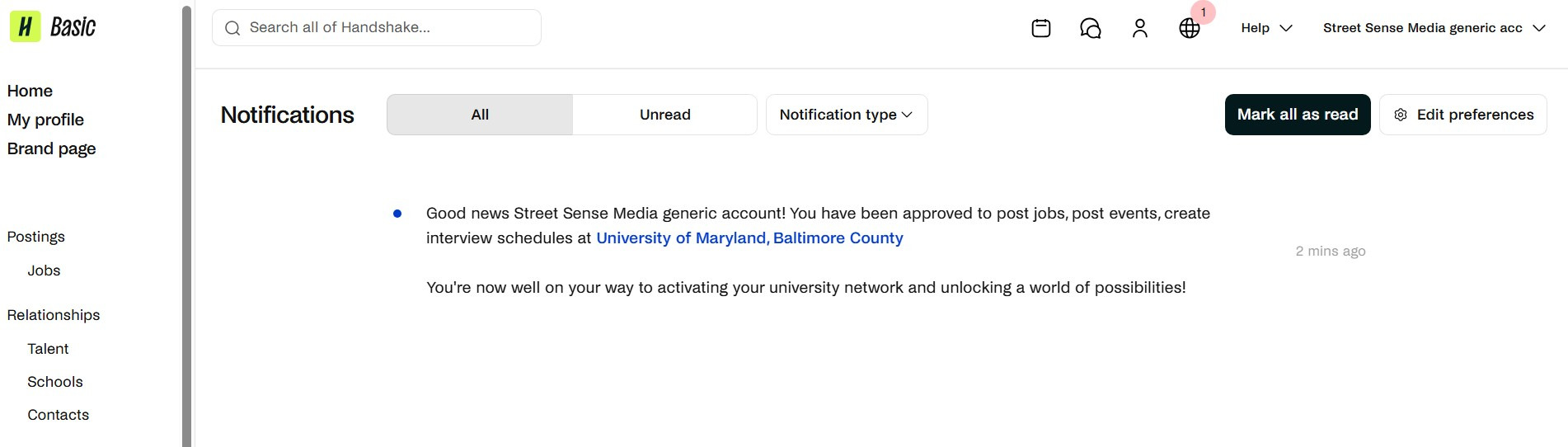
Posting on Handshake took about 10-15 minutes and we liked how we could target which university students could see our internship posting. However, some of the smaller DC colleges didn’t have Handshake accounts, so we mostly found it useful for getting in front of larger university student populations.
For the smaller schools, Street Sense plans to directly reach out to their career centers, journalism and communications departments and student publications.
University funding opportunities
Showcasing the internship application in front of more students addressed only part of Street Sense’s goal. We also wanted to get our internships in front of programs and organizations that can pay the intern directly. We researched university work-study and internship-funding programs.
We learned that several universities in the DC area offer funding for students who secure unpaid or partially paid positions at nonprofits and mission driven organizations. Street Sense is planning to reach out to several of these programs, including the work study program run through George Washington University.
We’d recommend reaching out to universities directly to see if they provide internship funding for students, have a work study program or an internship program targeted for your part of the country. For example, the University of Nebraska has funded rural journalism internships in their state.
Look at organizations you are already a part of
Street Sense was already a member of the Institute of Nonprofit News, which has dedicated internship funding opportunities for member newsrooms. Street Sense is now on their newsletter so they can be aware of opportunities as they arise.
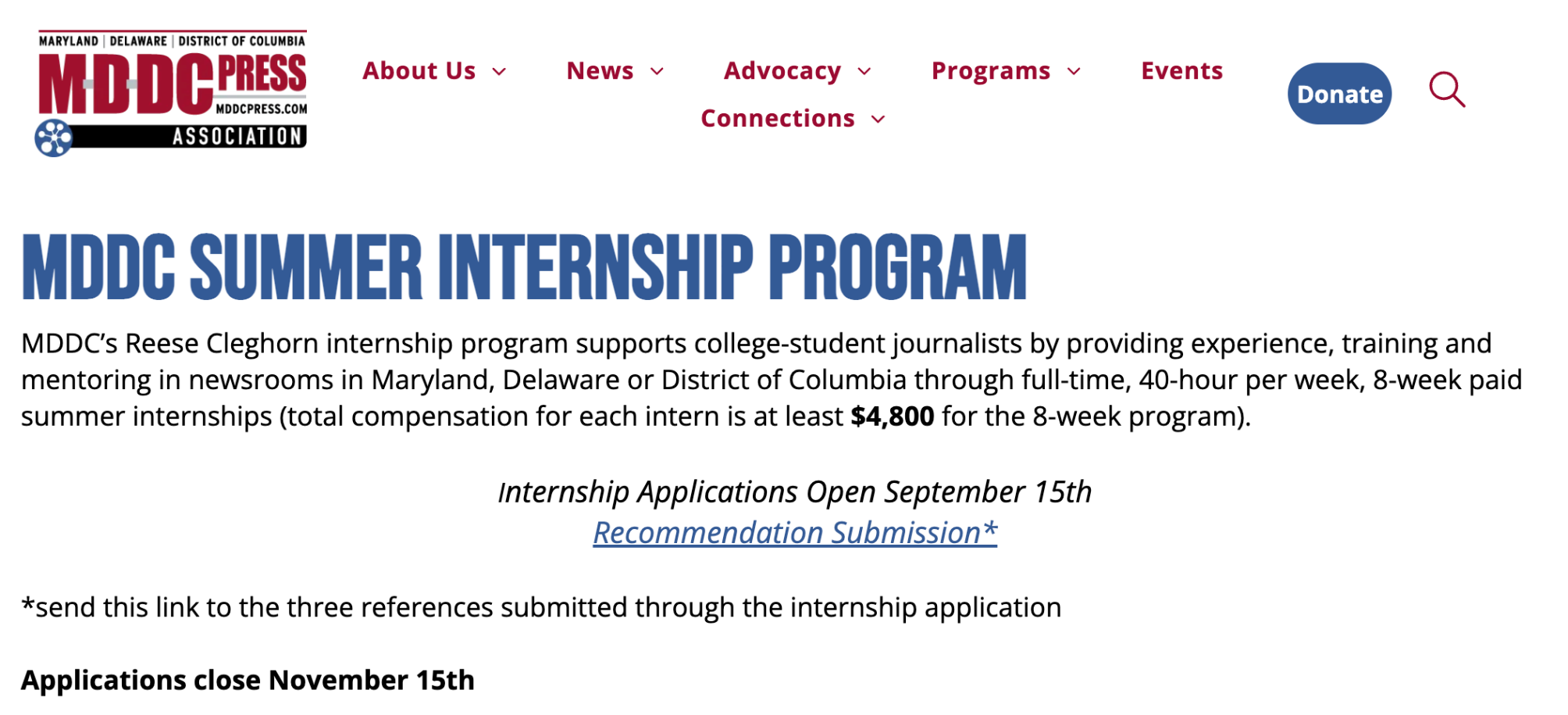
Next, we looked at local press associations. Members of the Maryland, Delaware, and District of Columbia Press Association (MDDC) can apply for $5,000 in funding for eight-week internships. Street Sense is deciding if the fee to become a member is feasible for them and worth the benefits.
Before searching for new funding, take stock of which organizations your newsroom is already a part of. They may have internship funding, fellowships, or point your towards other opportunities you are eligible for but aren’t currently using.
Key takeaways
- Build a tracking sheet you can update and keep using
- You can start with ours!
- Look beyond local to you universities
- We found several university funded semesters in DC programs that Street Sense can apply for. If you are a rural newsroom or your newsroom has a specific reporting focus, look for opportunities through universities or other programs for funding for your interns too.
- Ask universities about their internship funding opportunities
- Career centers can help distribute an internship posting and financial aid offices, work-study programs can help provide funding for the intern.
- Build relationships
- Reach out to professors, journalism departments, career offices and student publications to start building that relationship now.
Next steps
Street Sense will continue building university relationships and getting in front of outside funding opportunities as it prepares for its next internship cycle. The organization’s longer term goal is to make its internship opportunities financially accessible and get a wider pool of intern applicants.
The success of our efforts this summer will ultimately be tested when Street Sense starts getting applications for its next cohort of interns. We wish them all the best in helping develop the next generation of journalists.

Sign up for the Innovation in Focus Newsletter to get our articles, tips, guides and more in your inbox each month!