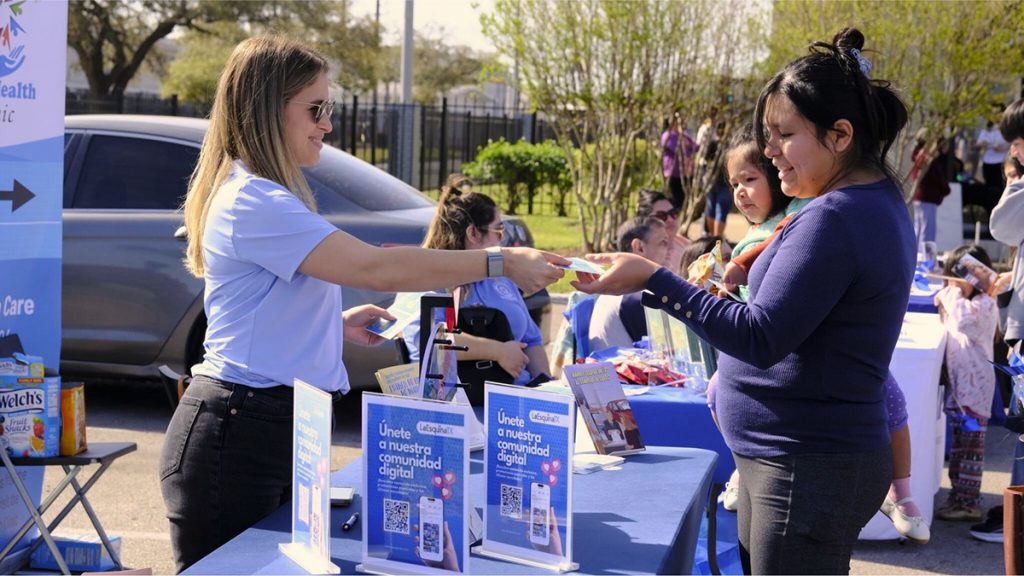
La Esquina TX in a local community event. Picture provided by La Esquina TX
Redefining investigative journalism in underserved communities

Five questions with Jose Luis Castillo, La Esquina TX
A 2025 El Tímpano report found that more than 150 ethnic- and immigrant-focused media outlets have closed since 2020, leaving many people without essential information in their own languages. Well-known newspapers like La Estrella de Tucson and El Mundo in Las Vegas have shut down or stopped printing, creating ‘information deserts’ that hit Latino communities especially hard.
Even with these challenges, there is new hope in Texas. La Esquina TX started in 2021 to fill this ‘dangerous vacuum’ of information. It is more than a news outlet; it also supports a community often overlooked by mainstream media.
Why it matters: Journalism that restores dignity
La Esquina TX demonstrates that a small, independent media outlet can make a real difference by restoring investigative journalism that major networks have stopped doing. Its strength lies in its approach: protecting consumers and supporting vulnerable people who, due to language barriers or immigration status, are often targets of fraud.
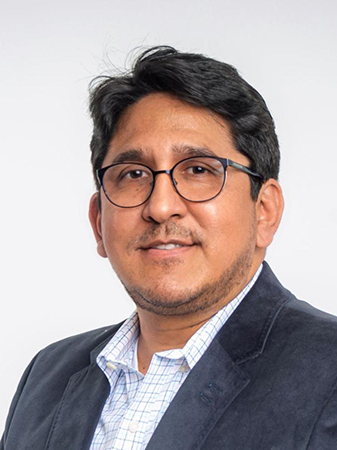
José Luis Castillo, a Peruvian journalist with nearly thirty years of experience, leads this newsroom. Before starting La Esquina TX, he worked at Agencia EFE and the Associated Press, and led investigative teams at Telemundo Houston, where he won several Emmy Awards for exposing abuse. His career combines the discipline of major news organizations with the care of community journalism, helping rebuild public trust within his community.
Five questions with José Luis Castillo
Yaujar-Amaro: For a small newsroom that wants to better serve immigrant communities, but is short-staffed, what would be the concrete first step you would recommend in their coverage or way of working?
Castillo: I think that having alliances, alliances with other media, I think it’s a pretty significant help, because doing it alone or having a very small team, you could have a certain reach, but not as much as if you started working with other media […] who have the same needs as your population, your community.
And the other thing is to be practical, not to want to cover too much, knowing that you are limited but rather to be practical in your coverage and in the time you can dedicate to it and that the final product is what you are looking for, but being practical, because if not, that’s where the problems begin.
Yaujar-Amaro: “Preséntanos tu caso” transforms public complaints into investigations. What are the key design or process decisions behind that project that other newsrooms could realistically copy?
Castillo: I think the key is to know how to listen first. I let them vent, for example. But also, to know that, with proof, with evidence, you will be able to help that person. I believe that having certain tools or a guide is going to be very useful to a journalist who encounters a type of fraud […] If you don’t have the tools or the knowledge, find someone who has. There are networks of journalists where you will find one who is dedicated to that […] And to bring out the best in that journalist or that journalistic institution that is dedicated to that, so that you can replicate it.
I feel like it’s a really good way to gain trust with your community when you say, “Okay, I’m going to help you,” right? At the same time, you are helping many people who are going through the same thing and don’t know what to do.
Yaujar-Amaro: From your perspective, what are the most frequent mistakes that the media in general make when trying to cover immigrant communities, and how could they avoid those mistakes?
Castillo: I think that you look at all the big media, the mass media, right now, the issue is migration, and the people they are interviewing are Hispanic. But they are doing it in English. Or they translate it without the translation techniques necessary to reach your target audience.
I think that these media could visualize, even more so, if they have someone who is dedicated […] to doing their interview and writes it in Spanish, not translated, but who does it originally in Spanish. I do feel that they could earn or have more direct access by writing as a journalist who not only understands the community but also writes in their language and reports in that language.
Yaujar-Amaro: If a local foundation or institution asked you what kind of support would strengthen La Esquina’s work right now, what would be the main one or two things you would mention?
Castillo: Logically, it is financing. Financing to be able to cover what I was telling you before, to have greater coverage, to have freelancers, and to be able to do more work. And the other thing I would ask them is to pay more attention to us and spread what we do. To collaborate more with the local media, so that they don’t treat us as if we didn’t exist.
Yaujar-Amaro: Looking ahead, what types of collaboration between immigrant-serving media outlets or between newsrooms, small and large, could most powerfully improve reporting and accountability?
Castillo: I think that, so far, social networks, the digital world, are helping us to disseminate what we are doing and to have collaborations with other media […] But I still believe in the role.
For example, in this last research that we’ve been doing, I realized that because people say to me, “Can you print it? Can you print it out to have it here, to show it to others?” So, I think it would be good for us […] to have those alliances, but also, for example, in my case, to try to make those types of alliances so that your stories are on paper as well. I would like to have that kind of alliance, so that the stories we are doing, which take us a lot of work and many months of research, also have this other platform.
A message for the future of independent journalism
The closing of Latino media outlets over the last ten years is worrying. Many large companies that broadcast in Spanish often have goals that do not align with the needs of the communities they serve. In response, José Luis has a clear message for those who create and support journalism: do not give up and always keep your ethics.
“If you have the impetus and desire to have your own media outlet, do it. Look for alliances,” advises Castillo. Although the path can be lonely and collegial solidarity may be lacking, it is vital to seek help and trust that support networks exist. “There will always be someone there who is going to tell you: ‘No, do it like this, do it like this.’ But don’t give up.”
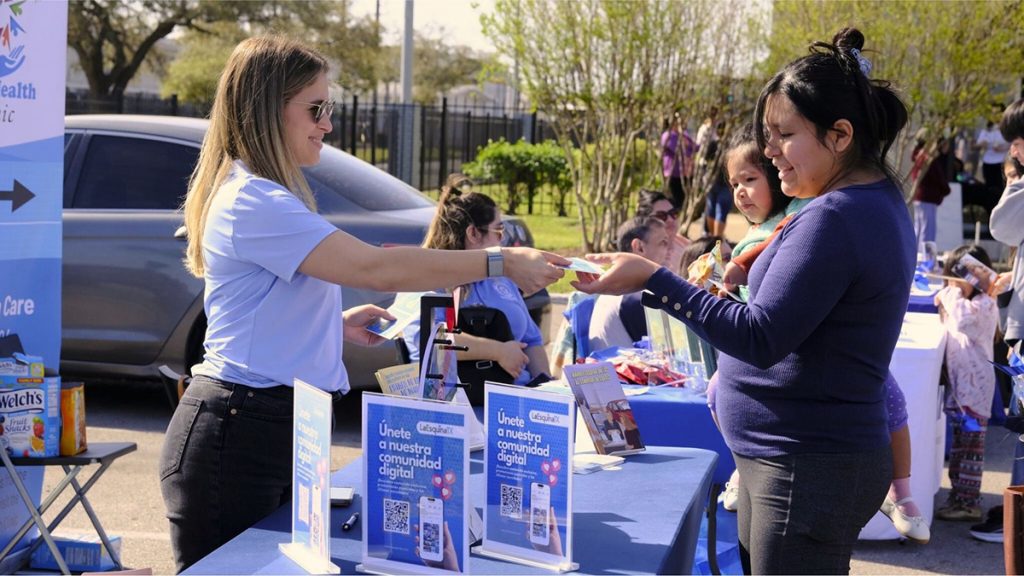
La Esquina TX: redefiniendo el periodismo de investigación en comunidades desatendidas
Cinco preguntas con Jose Luis Castillo
La crisis de los medios inmigrantes y una nueva esperanza en Texas
En los últimos años, los medios que sirven a comunidades inmigrantes en Estados Unidos han enfrentado grandes dificultades. Según un informe de El Tímpano de 2025, desde 2020 han cerrado más de 150 medios étnicos y enfocados en inmigrantes, dejando a muchas comunidades sin información importante en su idioma. Periódicos históricos como La Estrella de Tucson y El Mundo en Las Vegas han desaparecido o dejado de imprimir, lo que ha creado “desiertos informativos” que afectan sobre todo a los latinos.
A pesar de esta crisis, en Texas ha surgido una nueva esperanza. La Esquina TX, fundada en 2021, nació para cubrir ese “vacío peligroso” de información. No solo es un medio de noticias, también es una herramienta de apoyo para una comunidad que muchas veces pasa desapercibida para los grandes medios.
Por qué importa: Periodismo que devuelve la dignidad
El trabajo de La Esquina TX es importante porque demuestra que un medio independiente y pequeño puede marcar la diferencia en la vida de las personas al retomar el periodismo de investigación que las grandes cadenas han dejado de lado. Su valor está en el enfoque: proteger a los consumidores y exigir cuentas para las poblaciones vulnerables que, por barreras de idioma o estatus migratorio, suelen ser víctimas de fraude.
José Luis Castillo, periodista peruano con casi treinta años de experiencia, está detrás de este proyecto. Antes de fundar La Esquina TX, trabajó en la Agencia EFE y Associated Press, y dirigió equipos de investigación en Telemundo Houston, donde ganó varios premios Emmy por exponer abusos. Su trayectoria une el rigor de las grandes agencias con la sensibilidad del periodismo comunitario, algo clave para recuperar la confianza del público.
A continuación, compartimos cinco preguntas clave que muestran la visión y los retos de este proyecto, respondidas por su fundador.
Cinco preguntas con José Luis Castillo
1. Para una sala de redacción pequeña que quiere servir mejor a las comunidades inmigrantes, pero que tiene poco personal, ¿cuál sería el primer paso concreto que recomendarías en su cobertura o en su forma de trabajar?
José Luis Castillo: Yo creo que tener alianzas, alianzas con otros medios, creo que es una ayuda bastante significativa, porque hacerlo solo o tener un equipo muy reducido, podrías tener un cierto alcance, pero no tanto como si empezaras a trabajar con otros medios […] que tengan la misma necesidad que tu población, de tu comunidad.
Y lo otro, quizás, es ser práctico, no querer abarcar mucho sabiendo que estás limitado, sino más bien ser práctico en tu cobertura, en el tiempo que le puedas dedicar y que el producto final sea el que tú estás buscando, pero siendo práctico, porque si no, ahí empiezan los problemas.
2. “Preséntanos tu caso” transforma denuncias del público en investigaciones. ¿Cuáles son las decisiones clave del diseño o del proceso detrás de ese proyecto que otras salas de redacción podrían copiar de una manera realista?
José Luis Castillo: Creo que la clave está en saber escuchar primero. Yo dejo que ellos se desahoguen, por ejemplo. Pero también saber que, con pruebas, con evidencias, vas a lograr ayudar a esa persona. Yo creo que tener ciertos tipos de herramientas o una guía va a servir mucho a un periodista que se encuentre con un tipo de fraude […] Si no lo tienes así, busca a alguien que sí lo haya hecho. Hay redes de periodistas en donde vas a encontrar a uno que se dedica a eso […] Y sacar lo mejor de ese periodista o de esa institución periodística que se dedica a eso para que tú puedas replicarlo.
Yo siento que es una muy buena manera de ganar confianza con tu comunidad cuando tú le dices: “Okey, te voy a ayudar”, ¿verdad? Porque al mismo tiempo estás ayudando a un montón de personas a las que les está pasando lo mismo y que no saben qué hacer.
3. Desde tu perspectiva, ¿cuáles son los errores más frecuentes que cometen los medios en general cuando intentan cubrir a las comunidades inmigrantes y cómo podrían evitar esos errores?
José Luis Castillo: Yo creo que en sí tú te fijas en todos los medios de comunicación grandes, los masivos, ahorita el tema es migración, y la gente a la que están entrevistando es hispana. Pero lo están haciendo en inglés. O la traducen sin las técnicas de traducción, digamos, necesarias para poder llegar a tu público objetivo.
Yo creo que estos medios podrían visualizar, incluso mucho más, si es que tienen a alguien que se dedica […] a hacer su entrevista y la escriba en español, no traducida, sino que lo haga. Yo sí siento que pudieran ganarse o tener acceso más directo escribiéndolo como un periodista que no solo entiende lo de la comunidad, sino que la escriba en tu idioma y que reporte en ese idioma.
4. Si una fundación o institución local te preguntara qué tipo de apoyo fortalecería más el trabajo de La Esquina ahora mismo, ¿cuáles serían la o dos cosas principales que mencionarías?
José Luis Castillo: Lógicamente, es financiamiento. Financiamiento para poder cubrir lo que te decía anteriormente, tener mayor cobertura, tener freelancers, poder hacer más cosas.Y lo otro que les pediría es que nos hagan más caso también para difundir lo que hacemos. En colaborar más con los medios locales, que no nos vean como si no existiéramos. Que nos tomen más en serio.
5. Pensando en el futuro, ¿qué tipos de colaboración entre medios que sirven a personas inmigrantes o entre salas de redacción, pequeñas y grandes, podrían mejorar de manera más poderosa la información y la rendición de cuentas?
José Luis Castillo: Yo creo que, hasta ahora, las redes sociales, el mundo digital, nos están ayudando a difundir lo que estamos haciendo y a tener colaboraciones con otros medios […] Pero todavía sigo creyendo en el papel.
Por ejemplo, en esta última investigación que hemos estado haciendo, me daba cuenta de ello porque la gente me dice: “¿Lo puedes imprimir? ¿Lo puedes imprimir para tenerlo aquí, para enseñarselo a otros?” Entonces, yo creo que sí sería bueno para nosotros […] tener esas alianzas, pero también, por ejemplo, en mi caso, tratar de hacer ese tipo de alianzas para que tus historias estén en papel también. Me gustaría tener ese tipo de alianza, de que las historias que estamos haciendo, que nos toman mucho trabajo, muchos meses de investigación, tengan también este otro tipo de plataforma.
Un mensaje para el futuro del periodismo independiente
El cierre de medios hispanos en los últimos diez años ha sido preocupante. Muchas grandes empresas que transmiten en español a menudo tienen intereses diferentes a los de la comunidad a la que dicen servir. Frente a esta situación, el mensaje de José Luis para quienes fundan y apoyan el periodismo es claro: no se rindan y mantengan la ética.
“Si tienes el ímpetu y las ganas de tener tu propio medio de comunicación, hazlo. Busca alianzas”, aconseja Castillo. Aunque el camino es solitario y a veces falta solidaridad entre colegas, es vital buscar ayuda y confiar en que existen redes de apoyo. “Siempre va a haber ahí alguien que te va a decir: ‘No, hazlo así, hazlo asá’. Pero que no se rindan”
Cite this article
Yaujar-Amaro, Claudia (2026, Feb. 3). Redefining investigative journalism in underserved communities. Reynolds Journalism Institute. Retrieved from: https://rjionline.org/news/redefining-investigative-journalism-in-underserved-communities/