Finding the sweet spot with the Google Ad Grants Program

A conversation with Tyler Dedrick from Mountain State Spotlight
Innovation in Focus spoke with Tyler Dedrick about his newsroom’s approach to utilizing the Google Ad grants program. With a background in Google Ads before he started working in local news, Tyler Dedrick shares his insights on how he runs Google Ads with Mountain State Spotlight.

Dinneen: What is your advice for newsrooms who are deciding if they should try Google Ads?
Dedrick: Understanding whether Google Ads is worth the investment involves understanding how your audience likes to get their information. If readers (current or potential) tend to get their news and information through Google, then Google Ads is a powerful way to get in front of those readers more often and also to find new readers. A lot of the set-up on Google Ads is on the front end; it’s not quite set-it-and-forget-it, but as far as ad platforms go, there’s less day-to-day optimization involved.
Dinneen: What is your recommendation to newsrooms just starting out with building campaigns?
Dedrick: So my advice is to think about your news as a product. And from there, think about how people might be looking for that product. Maybe they’re really interested in environmental news or a particular vertical. Start broad because you can always narrow down. Google has different tiers of keywords, exact match all the way to broad match. And my advice is start with broad because you can always narrow it down if you do end up hitting that ad grant threshold. I’ve worked with several newsrooms as well as nonprofit organizations and we have consistently struggled to hit that 10K budget because there’s a 5% click-through rate threshold that you need to be hitting. It’s a balancing act between the breadth and the quality of the ad results that you’re serving.
Dinneen: When you’re setting up a campaign, how long would you recommend running that campaign to see results?
Dedrick: It depends entirely on your volume. If you’re a local newsroom in a large city, say New York or Chicago, you are going to be able to make informed decisions much more quickly than if you’re covering a rural area in Montana, Wyoming, or West Virginia. It’s much more about the volume of your results. I would say at a campaign level, probably get to 500 clicks before you’re making any kind of decision, which can take quite a while for a lower population area. You can run statistical significance tests to see what works.
Dinneen: Can you tell me a little bit more about the ad groups and how they work?
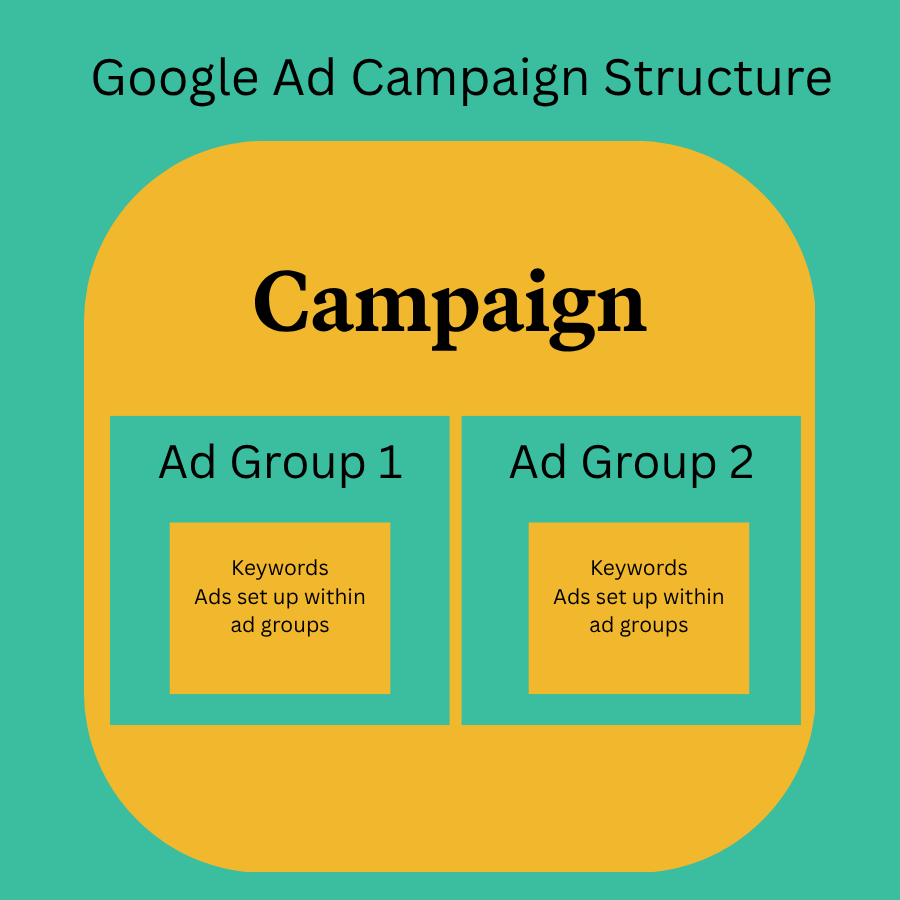
Dedrick: So Google has structured campaigns. Within each ad group is where you find your keywords and the ads that are both set up within individual ad groups. You can do things like location and schedule within the ad group.
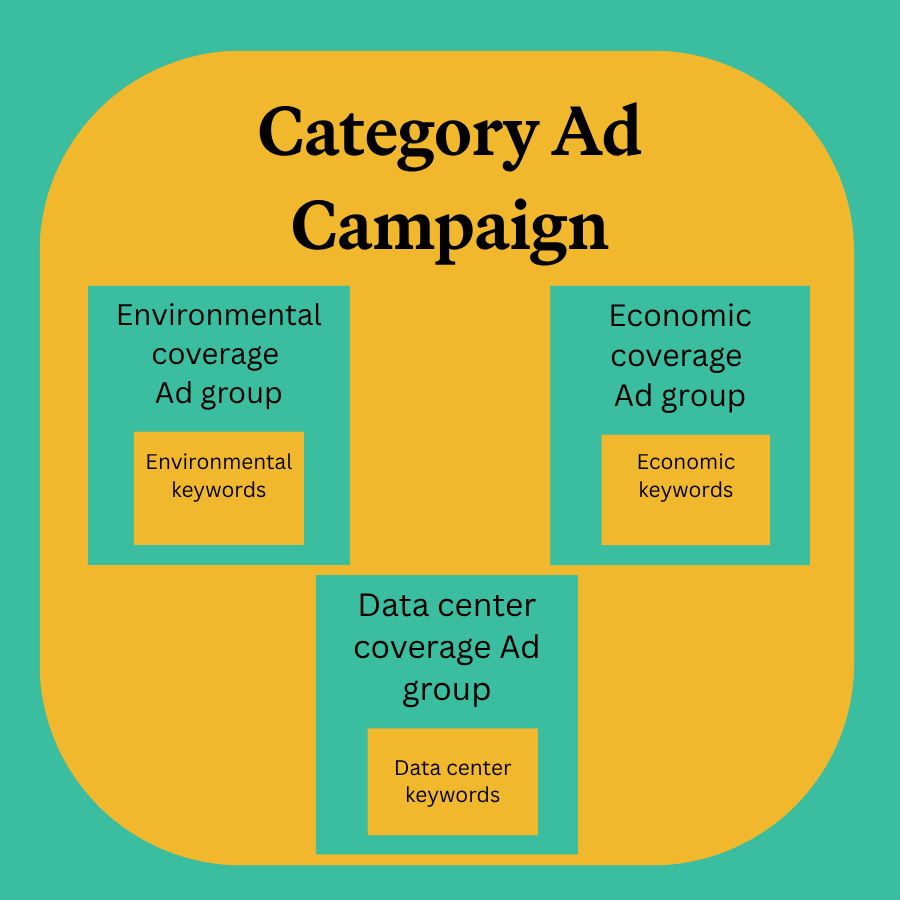
For example, we have our election keywords that go in our election campaign. But we have what we call our category ad campaign. And within that campaign, we have our different ad groups that are our environmental coverage, our economic coverage, our data center coverage.
Dinneen: What [type of Google Ad campaigns] have worked well for you?
Dedrick: Right now it’s election keywords. But, generally we see good traffic through our state government campaign. I think it is due to the broadness of the keywords, like “West Virginia legislature.” And that’s generally interesting to people and something they’ll be Googling.
That goes back to thinking about the product searcher fit. If somebody’s searching this, what are they looking for? Legislative news is one example of a keyword that drives not a ton of traffic, but really strong click-through rates for us. People might be searching for that because they want to know what’s going on.
Dinneen: How often are you checking your Google Ad campaigns? How much should newsrooms be interacting with this?
Dedrick: Yeah. Again, that goes back to volume. So, you know, we’re a pretty low volume. I check once every couple of weeks. In the last 14 days we have had 300 clicks. So a very small amount of volume over the last 14 days. But, if you were getting more you should be checking it more often and it goes back to, when you asked how long between running a test and making a decision, it just purely depends on volume. It’s not really time constrained so much as volume constrained. When I was running ads with a bigger budget, more than the 10 grand that Google gives us, I was checking every day. It’s a different strategy than when you’re struggling to spend 10,000 a month.
Dinneen: We’ve talked with newsrooms struggling to set up their first campaign, feeling like it’s not super intuitive. What would your advice be for those just starting out?
Dedrick: Don’t overthink it. You do need to balance volume versus efficiency. For me, hitting a strong click-through rate with a relatively high volume is the sweet spot in terms of deciding what kinds of keywords readers are interested in. If you have Google Ad grants, I assume you’re already set up on Google Analytics and you can go into referral traffic and see how long people are spending on site from your ads. And that’ll just give you another insight into not just the quantity of the traffic that these ads are driving, but the quality of the traffic.
You can always get fancier too. You can set up leads, but just take it one step at a time. For many small news publishers, the [Google] recommendations will be helpful. There’s always more complicated ways to do things when you’re more experienced. If you’re feeling overwhelmed, truly just start with the simplest iteration of what you’re looking to do. And you can always build on that iteration.
There are a lot of slack channels full of really helpful people trying new things to help you as you experiment, such as LION, INN and Gather spaces.
Editor’s Note: This interview has been edited for clarity and brevity.

Sign up for the Innovation in Focus Newsletter to get our articles, tips, guides and more in your inbox each month!