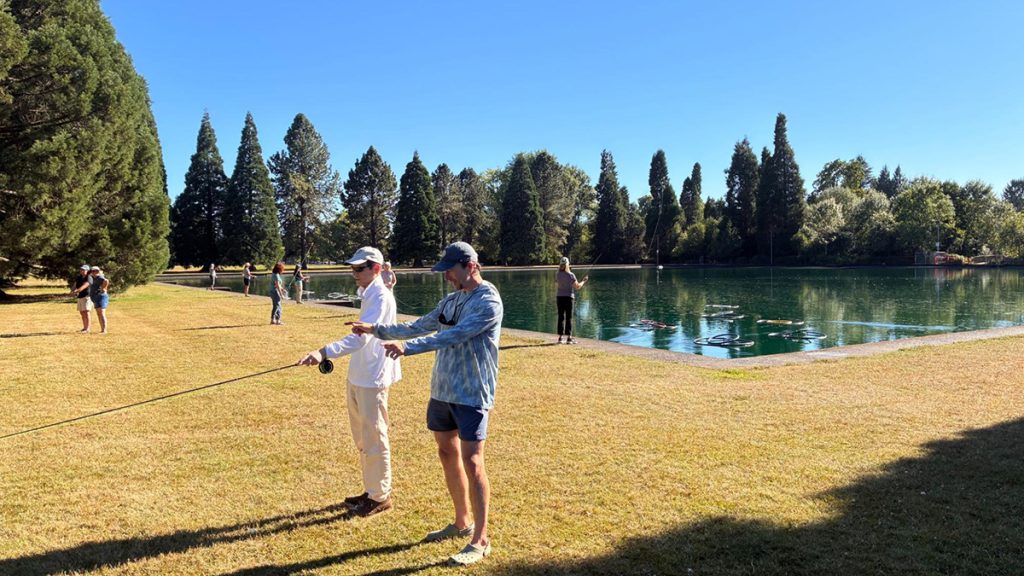
A Current Flow State casting meetup at Portland's casting pond. Photo: Robert Linnemann
How audience interviews surface opportunities for service-oriented journalism


Talking to people gets you the answers that analytics don’t: the ‘How?’ and ‘Why?’ behind your audience’s motivations
If you’re running a small news organization and asking questions like, “Why are the people registered to my newsletter not becoming paid members?” “Why aren’t my events drawing a larger audience?” “Is the voter guide I produced actually useful to people?”
You know that your digital analytics can’t give you answers to these questions. They’ll tell you how many people opened the newsletter or RSVP’d to the event, but not why they did or if they used the information.
Analytics might give you an idea of the size and scale of these questions, but can’t tell you why something is happening or how to make it better. That’s where sitting down and talking with your audience or subscribers comes in.
In service design, we start by getting to know our audience’s everyday realities so we can understand how to provide a service they can actually depend on. This matters for journalism practitioners because we’re typically not selling a one-time product people can buy off a shelf. Instead, we’re selling a service that lives inside people’s networks and communities, where they come to us for reliable information that helps them navigate their lives. To do that well, we have to understand what’s going on and how they’re using what we offer.
Many news organizations already incorporate this kind of research at the start: community listening and focus groups. But interviews can be just as valuable once you’re up and running, helping you diagnose what isn’t working or where you can expand. You don’t need to hire a market research firm to do it. Any size team or creator can build interviews into a short or ongoing process to learn how their audience uses what they make.
How to get started with interviews
A well-run interview shows you people’s activities, motivations, and frustrations in their own words. Those accounts are more useful than your predictions about what people might want.
Any interview series should include at least 5 to 10 people (the advice we got: you have enough when you feel like you can almost predict what they’re going to say on your research question), and it can be done over a matter of days or weeks, by one team member or several.
A good interview is a guided conversation that lets people tell you stories and reflect on moments in their real life, rather than describe plans or hopes about how they might react to something that happens.
To get started
- Plan your research question and who you’re going to reach out to. You can start by writing down who you’re curious about and what you’re curious about them, including your knowns and unknowns.
- Draw your list from newsletter subscribers, members, or whoever you’re interested in getting to know better, but don’t only reach out to only your biggest fans – they’ll tell you what’s working, which feels great, but teaches you almost nothing. Mix in lapsed subscribers, people who signed up and went quiet, or people who complained once and never came back.
- Reach out personally and offer to set up a short meeting, in person or online. Be as transparent as you’d like about why you’re interviewing them: “I’d like to get to know a little more about…” or “I’m curious about…”
For example: “I’m trying to improve our news organization’s local map of the neighborhood, and I’d love to learn more about how it’s useful to you and what parts of the city you’re curious about.”
It doesn’t need to be more formal than that. You’re just talking to another person. You can do it over a calendar appointment or over coffee, and you can offer a small gift or exchange in return if you’d like, but it’s often not required. If your intent is a better-informed community, your motivations may already be aligned enough for them to say “Yes!” without an added incentive. Just make sure it doesn’t turn into extractive quizzing.
How to construct questions that surface opportunities or frustrations
Here’s a common stumbling block that takes some practice: often, the question you ask out loud and the question you actually want answered are two different things.
When you’re talking with someone, put them at ease and be transparent about who you are and why you’re there. Ask them to reflect on their own experiences either in their life or using your product, such as:
- Tell me what happened when you used X.
- When was the last time you did X?
- How did that make you feel?
- Can you tell me a little more about that?
- What could have made it better?
- What did you do after you used X?
Handle your interview questions with care. Try to avoid questions that dead-end into a yes-or-no answer. By asking unintentional questions, you won’t come up empty – you’ll just get answers, confident ones, that simply confirm whatever you already believed. Most people would rather tell you what you want to hear than admit they don’t use your product, and even honest people are bad at predicting their own future behavior.
A failed interview hands you comfortable, wrong conclusions, and sends you away more certain, not less, of the wrong things.
A few more tips as you build out your questions
- Ask about past experience, not future aspirations. A question like “What types of news would you like to read?” asks people to predict their own behavior, which they’re bad at, and it invites aspiration rather than honesty about what they actually value. Asking what they did and how they felt about it gets you grounded answers about their everyday reality and what matters to them.
- Remove institutions from the question. “How do you feel about local government or media in our town?” invites opinions about institutions. “What’s the last story about our town that you shared with a neighbor?” surfaces what a person is living through and what was useful to them.
- Ask what people would lose, not what they value. Agreeing costs nothing, so “Is this useful?” gets you polite yeses. Absence is so much harder to fake. The strongest version points at a gap people have already lived through: “Was there a period when you couldn’t get to it? What did you do instead?” Where no such gap exists, the hypothetical works: “If it disappeared tomorrow, what would you miss, and where would you go?”
When you’re done, you’ll likely start to hear the same patterns across interviews, whether about people’s lives, the place they live, or the topic you cover. That pattern is often the opportunity, and (warning: discovery is addictive) it’s rarely the one you expected going in.
People won’t tell you directly what news or information product they need or value. They won’t say “I need a new podcast on X topic” or “I need a newsletter that tells me that X happened.”
Instead, they’ll tell you where in their life they’re struggling, frustrated, or curious, and it’s on you to read between the lines and do the analysis to figure out what your best opportunity bet may be.
An example of interviews that revealed where to build more and what not to do
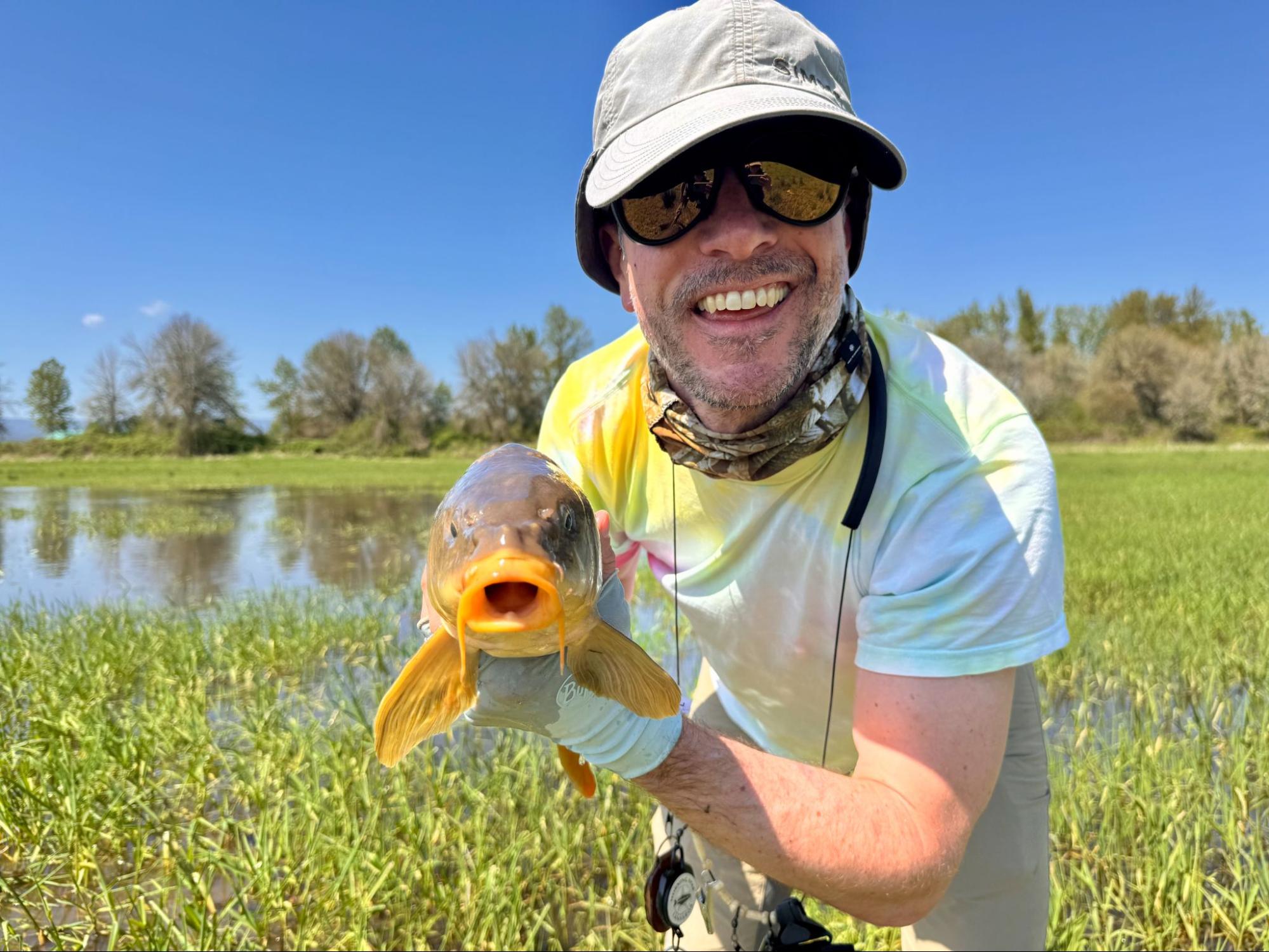
Nick Parish, creator of Current Flow State, a publication in Portland, Oregon dedicated to helping people make fly fishing a bigger part of their lives, wanted to learn more about how to serve people who participated in his intro to fly fishing classes.
He’d done the standard post-class Net Promoter Score surveys that showed how satisfied people were with the classes, but wanted to know where to invest more for former class participants, who might be interested in future Current Flow State opportunities or becoming members. So, he reached out to prior interview alumni to ask about their experience in the class.
How did you decide who to interview?
Nick: I’m lucky because I get to spend high-quality time with people through our Introduction to Fly Fishing classes. They come to a class, we work together one-on-one, and some of them go on to read the publication or become part of the broader community.
Before we started doing interviews, our post-event outreach was pretty standard: what are your highlights, your lowlights, what would you do differently, how likely are you to tell a friend about the class? It was useful, but limited.
[I picked] out the people who seemed really avid: not just people checking a box, but people with tenacity, curiosity, a propensity to want to do more. I wanted to understand what really lit them up, and then understand their lives more broadly from there.
Did you need to offer incentives for people to talk to you?
Nick: No, I just reached out honestly. I said I was interested in improving the class and making it better for the next people who came along. I’m constantly trying to refine what I understand about how the class went and how it can be better.
Everyone was more than willing. I don’t think anybody expected a gift card. People are willing to tell you how they feel, and if you build trust, they’re willing to help you make the thing better.
That’s a cool part for people trying this for the first time: there are a lot of people out there who want to help. If you can find a way to let them help that is sustainable and regulated, it’s all just waiting.
What were you hoping to learn that attendance numbers or surveys couldn’t tell you?
Nick: Someone can say, “I want more information on tying knots,” or “I want more information on how to cast farther.” But when you actually ask, “What made it feel like you were able to enjoy this?” or “What were the best two to three minutes?,” you peel back the information-seeking layer and get to fulfillment, satisfaction, and emotional resonance. That’s where the useful stuff was.
What did you assume people valued most before you started listening more closely?
Nick: I would have guessed that the best moment of a class weekend was when people caught a fish. That’s the goal I had built the class around: take people to a place where the fishing isn’t too hard, where they have a good chance of catching something.
But maybe 10 percent of people I talked to said catching a fish was the best moment.
The majority said the highlight was learning to cast a fly rod properly, or the first couple of times they could do it right, get the line out straight and far, and feel the rod load.
That changed how I thought about the class. It wasn’t necessarily about the outcome of catching a fish. It was about feeling competence while developing a new neuromuscular skill, like hitting a tennis ball or a golf ball the right way. Once I understood that, I could build programming, conversations, and content around that feeling of control and accomplishment.
Was there a need people revealed that you hadn’t fully seen before?
Nick: One big blind spot was how anxious some people felt about what to do once they actually caught a fish. I’ve handled fish a lot, so to me it felt obvious: you put it in the net, take it off the hook, and release it in a way that minimizes harm. But several students were nervous or squeamish about touching a fish, and not always the people I would have expected.
That opened up a broader conversation about ethics, catch-and-release, and the harms we might be doing even when we’re trying to be careful. It made me realize people need help mentally preparing for that moment.
So we can help people take a beat, make sure the fish is in a safe net where it can breathe, and know what to do next. I’m even thinking about using a fish plushie in class. It’s a little silly, but people can practice how to hold it, how to be gentle with it, how to prepare for the real encounter.
How did the interviews change the way you think about publishing?
Nick: This is an area I’m still finding challenging, largely because of my own ego. In fly fishing, there’s a lot of apex-predator journalism: “I went to this crazy place, caught this big fish, look at me.” Those stories can be fun to write, but they don’t help students get off the couch, go to their local pond, meet someone new, see a cool bird, watch a sunset, or catch a fish in a way they hadn’t before. So when I think about editorial planning, I have to keep putting my mind in the brain of the reader: how is this going to help them?
There’s still value in memoir-style writing. It can make people feel less alone, or show them that what they’re feeling isn’t isolated to them. But I’m trying to balance longer, slower pieces with a more consistent front burner of useful links, practical tidbits, and small resources that help people take the next step.
What did the interviews help you understand about someone’s journey from beginner to self-sufficient angler that you’re building?
Nick: I used questions about next steps like: “If you were trying to get that peak sensation again in the next seven days, what would be the next realistic plan?” “What decision feels hardest now that you’re on your own?” “What did you do afterward?”
The answers I got suggested durable content resources I can create: stories, action items in an email series, small pieces of guidance that help people in the key moments that matter in their journey.
One of the questions I asked was: “If you told a friend about this class, what would you say they’ll feel afterward?” The number one answer was confidence.
That’s a big deal in fly fishing because there’s so much terminology, so much information, and so much latent gatekeeping: specialized places, intimidating fly shops, all of that. One person said they felt like they had a “toehold,” something they could rely on and use to pull themselves up. Another said, “It’s not insurmountable. I don’t feel overwhelmed anymore.”
Those phrases became a kind of foundation for me, because I’m not only serving people who took a class, I’m also serving the fly-curious people who come to the site or newsletter. So I’m trying to deliver some version of that confidence-building experience online.
Did the interviews change how you think about your product strategy?
Nick: They helped me understand what I don’t want to do. A lot of people say they want “community,” but online communities are often wishful thinking unless you’re prepared for the work that comes with it. There are already dedicated fly-fishing communities that exist. I think I can be more useful by pointing people toward them than by trying to pull them into a community of my own.
That also fits what I have energy for. I’m not a fly fishing guide. If I wanted to fish with people all the time, I’d be a guide. I’m an angling educator. I want to create educational settings where people experience the joy of fly fishing, go out on their own, and then come back and tell me about the cool fish they caught, or how good the casting felt.
The interviews also shaped the events we’re trying. Since people were so lit up by learning to cast properly, we started a free monthly Friday night casual casting session. Anyone can come and I can walk around, offer small tips, practice my own casting, and create an intentional space for people to develop their skills.
It also connects people to existing communities. In Portland, one of the most active groups is the Stonefly Maidens, a women-only fly fishing club. Almost every avid female angler who starts in our class gets pointed there. Now, some of their members come to the Friday night sessions too. That creates a self-sustaining loop: and every time I spend time with beginners, I get new ideas for digital content: a drill, a game, a way someone could analyze their own cast.
What advice would you give a newsroom or creator wants to interview its audience, but feels awkward about doing so?
Nick: People love to talk about themselves. That was one of the first things I learned as a journalist. I worked as a tabloid newspaper reporter, so I had to have hard conversations with people in stressful situations. Now, when I talk with people, it’s about things they’re passionate or curious about. They’re happy to tell me all sorts of stuff.
If you can approach the conversation with kindness and empathy, people are usually open. Don’t be afraid of questions that have emotional aspects to them. That’s how we develop trust: by having conversations that move beyond the rational or clinical and into something more sensitive.
The other thing is: don’t be afraid of silence. Interviewing is a form of conversationalism. There’s give-and-take, message sending and message receiving. But when you ask people to remember what something felt like — the best two or three minutes, the hardest part, where they were frustrated — they often need time to dig through their memory bank and put themselves back in that moment.
Don’t fill all the silence. Let it hang. The longer you can let it hang, the more people can turn cloudy, nebulous emotions into something denser and more tangible. That’s where the insight often comes from.
Note: This interview has been lightly edited for clarity and readability.