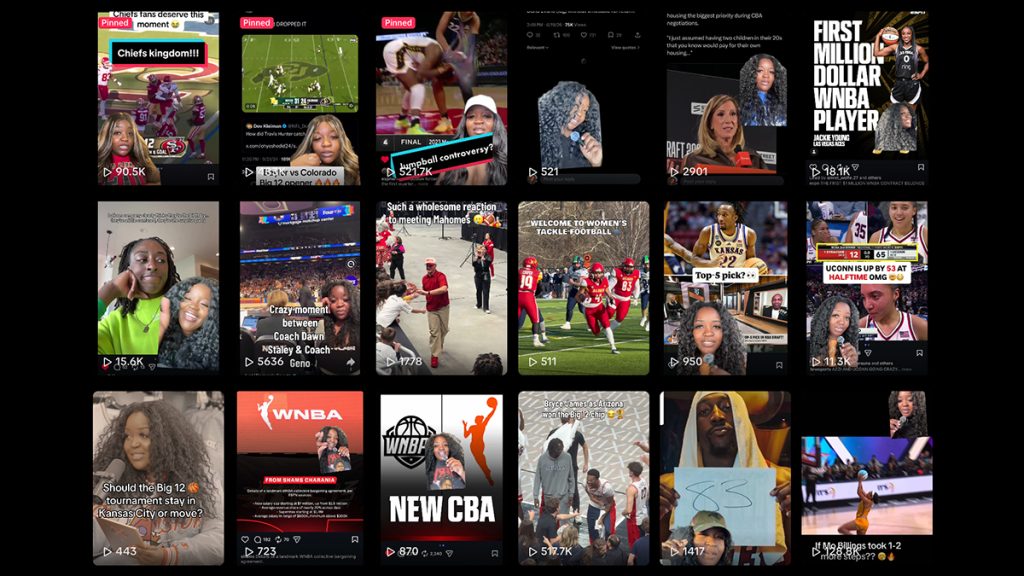
How to get started creating vertical videos


A conversation with creator journalist Alexa Stone
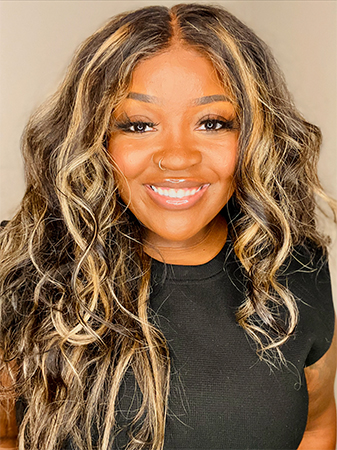
Alexa Stone is a vertical video creator at the Kansas City Star. She has built her career with innovative videos across multiple platforms. When she started, she noticed a gap in the market that she thought vertical video could fix. She created viral videos such as her videos about women’s basketball, which led to her work with ESPN. Stone values open mindedness, trying new things and spotlighting underrepresented communities. “I like questions and doing things that you can’t google,” Stone said.
Innovation in Focus student staffers Ishrat Madiha and Annie Goodykoontz spoke to Stone about how newsrooms can start creating more vertical video.
Goodykoontz: How did you get interested in vertical video?
Stone: Honestly, I started creating content, or vertical vid as people say, because I wanted to become a journalist and people weren’t giving me an opportunity. It was just a quicker way of me doing it. Women’s basketball was a huge thing for me especially. I saw a hole in the storytelling for women’s basketball. I wasn’t seeing the coverage that I wanted to see, so I created it.
Madiha: How do you think vertical video works as news coverage?
Stone: I feel like social has a bigger reach. I feel like people are on their phones and on social media more than they’re reading. I think that socials have become kind of the number one thing to get your news and information. Whenever I used to write a story before– I mean, even now– I write a story and it’ll be something that I’m making a Facebook post about. I’m aiding it with a video because I can give you more context. I can show you visually why I’m saying this.
Madiha: Who’s your target audience and how do you navigate figuring that out ?
Stone: It kind of just depends on if it’s personally or professionally. But I feel like I have the same target audience, because I’m a double minority — a woman and I’m Black. I feel like those underrepresented communities are very important to me, so I make content for them. Like in sports, an underrepresented community is women’s sports. At the Kansas City Star, underrepresented [communities are] Black, Hispanic, people of color and women. So I ask myself what are those things that mattered for me as the audience and consumer? Pretty sure it matters for them too. So I’m very passionate about underrepresented communities.
Madiha: How do you accommodate different audiences?
Stone: I think it depends on the topic, some topics everybody cares about. Politics, and people care about what’s going on in their community, so that could be any age. Food, people care about new restaurants opening.
Madiha: How do you decide what to make videos about?
Stone: I think for me, because I didn’t grow up with a news background, I’m looking at it like, “Why do I care about this?” and “What are people talking about in regards to this problem?”
Madiha: Do you have a process that makes it easier to turn interviews into vertical video?
Stone: I provide information that may help to [answer] specific questions, but I’m not doing audio only. That’s something that I noticed– it may be a little overwhelming to record video as you’re asking these questions, but I’m recording visually, and so then I chop from there. That’s my process, but I don’t usually use a script. I only produce scripts if I’m writing a script for another reporter.
Madiha: In your experience, what works and what doesn’t work for vertical video?
Stone: With social media it just depends on your newsroom and what you’re reporting on, so I think you just have to try it and see what works. I can’t really say what works and what doesn’t work for everyone, but I know for a fact, having a strong hook is needed. I think if you don’t have a strong hook, no one is going to watch. And I keep coming back to that, because a hook is very important.
Goodykoontz: What practical advice do you have for the reporters who are diving into it and feel like they don’t know what they’re doing?
Stone: I record video because you can include a transcript with the video. So I think that’s probably the biggest thing, start recording a video when you are interviewing somebody and then grab those B roll scenes and additional visuals afterwards.
Goodykoontz: Do you think vertical video itself is an easily accessible way for journalists to tell stories?
Stone: Oh, yes. People wouldn’t give me an opportunity and I created [that opportunity] through vertical video. Everybody has a phone, everybody can make social media. Don’t wait on somebody to tell you that you’re allowed to cover this.
Editor’s Note: This interview has been edited for clarity and brevity.

Sign up for the Innovation in Focus Newsletter to get our articles, tips, guides and more in your inbox each month!
Cite this article
Madiha, Ishrat; and Goddykoontz, Annie (2026, May 4). How to get started creating vertical videos. Reynolds Journalism Institute. Retrieved from: https://rjionline.org/news/how-to-get-started-creating-vertical-videos/