‘Critics in Columbia’ pilots alternative to imperfect press junket formula
It seems like a win-win situation: A film festival showcases the latest films. Critics cover the event, writing reviews and drawing attention to a cultural touchstone. Filmmakers, journalists, and the city and organizations hosting the event all harness the buzz to reach their own audiences.
But whether it’s gas and hotel reimbursement for a visit to a film festival or air fare to a fine art exhibition, many journalists find themselves turning down opportunities to cover interesting events all over the world because of some news organizations’ policies around accepting high-end perks from third parties. An art critic accepting free travel to the opening of a new museum gallery — so the logic goes — might feel pressured to provide a positive portrayal of that gallery in return.
In a period of declining public trust of news organizations, such policies are not likely to go away completely as news organizations continue to uphold high ethical standards around conflicts of interest. But Rebecca Ritzel, currently a Residential Fellow at the Missouri School of Journalism’s Reynolds Journalism Institute (RJI), believes there is a way to honor the industry’s commitment to editorial independence without sacrificing important opportunities that can help journalists connect more authentically with audiences and sources alike.
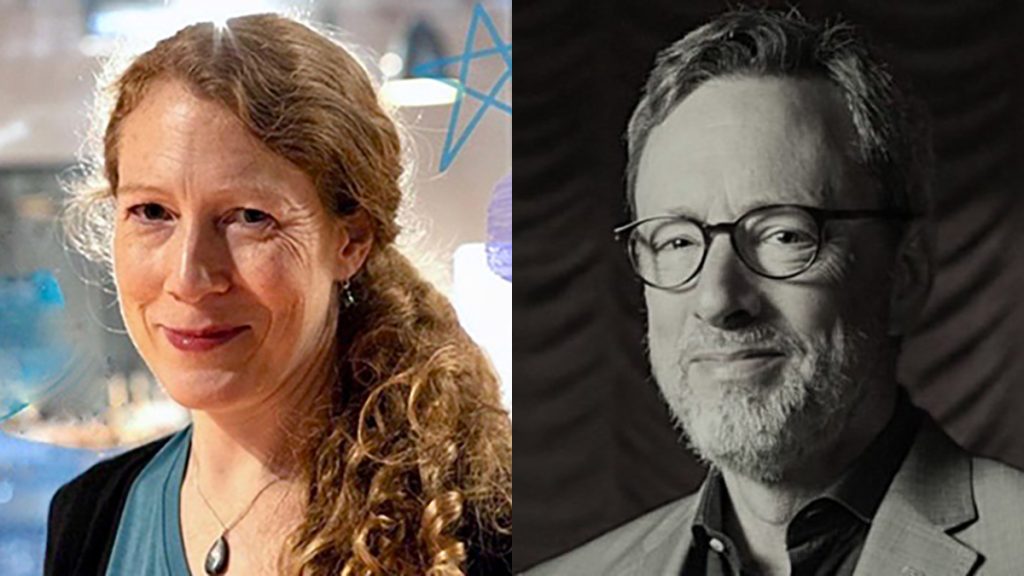
“There’s a huge professional development opportunity to allow people to go to these events,” said Ritzel, a longtime contributor to The Washington Post who has more than 20 years of experience in arts and culture journalism for North American outlets. “But it’s not just about developing your own experience. It’s helping you develop street cred with the people you’re interviewing. If you can say, ‘I’ve been to True/False Film Fest’ to a documentary filmmaker, you’re on a level playing field.”
“There’s a huge professional development opportunity to allow people to go to these events. But it’s not just about developing your own experience. It’s helping you develop street cred with the people you’re interviewing.”
Rebecca Ritzel
True/False, a documentary film festival running March 5-8 in Columbia, Missouri, is the stage for a pilot program crafted by Ritzel that will showcase an alternative method of bringing the press and arts festivals together. Over the course of the week, five professional guest critics will provide guidance to about 65 students reviewing the festival’s films for The Maneater, Mizzou’s student newspaper. Some of the students are also contributors to Vox Magazine, the School of Journalism’s professional culture magazine. High school students will receive additional guidance in the form of a free workshop.
The five guest journalists are Sam Adams, Monica Castillo, Pelin Çilgin, Marina Fang and Jada Yuan.
The program, called Critics in Columbia, features no quid pro quo. The professional journalists will receive a stipend but will not be required to review any of the films. In this case, the funding comes from RJI, creating another degree of separation between the festival and the journalists and illuminating what Ritzel considers a viable way to navigate ethical challenges.
“This is where community partnerships become important,” Ritzel said. “If there is a local journalism school or community foundation, they can be an intermediary. Festival organizers can take a fairly small amount of money, give it to one of those organizations and have a significant impact on their community.”
The concept appealed to Michael Phillips, who served as a consultant throughout the guest critic application process and will lead a training session on Tuesday with Maneater reporters. Phillips served as the Chicago Tribune’s film critic from 2006 to 2025 as part of a legendary tradition of Chicago film criticism that has also included Roger Ebert, Gene Siskel and Richard Roeper.
The two newspapers at the heart of that tradition — the Chicago Sun-Times and the Chicago Tribune — no longer staff full-time critics. Phillips, like Ritzel, is now an independent journalist, an increasingly common path for arts critics in an industry with fewer and fewer full-time opportunities available for them (and some outlets, like The New York Times and The Washington Post, require freelancers to pay their own way). For Phillips, that means education around film criticism needs to focus on the skills involved, not the particulars of a career path that has evolved in the era of YouTube critics, podcasts and review aggregator Rotten Tomatoes.
“You can’t promise anyone the career you had two-and-a-half generations ago. That’s ridiculous. But what we can do is get everybody at Critics in Columbia into the mindset of thinking about two or three things they learned by participating.”
Michael Phillips
“You can’t promise anyone the career you had two-and-a-half generations ago. That’s ridiculous,” said Phillips, who also directs the University of Illinois College of Media Roger Ebert Fellowship, which brings students to True/False each year. “But what we can do is get everybody at Critics in Columbia into the mindset of thinking about two or three things they learned by participating. Hopefully, what they learn and the experience of diving into True/False is going to make them better writers.”
One thing he hopes the students learn, particularly at a time of declining trust in news organizations and industry conversations about the role of bias, is that arts criticism is not objective news. It’s commentary, or, as he puts it, “informed subjectivity.” It’s a concept he ties to the idea of Critics in Columbia and community journalism more broadly as shrinking newsroom budgets and plunging federal funding for the arts and humanities have combined to create a plight for arts coverage.
“We have to look a little bit beyond the frame of everything we’re writing about now — you damn well know that everyone responsible for getting a film shown in your local city or getting a play produced in your local theater was utterly preoccupied with everything going on outside their buildings,” he said. “It’s no crime to write about the world surrounding the work you’re writing about. We have to write about the world we live in.”
Ritzel, too, is occupied with the wider implications of the program. The guest critics will each be required to provide publishable feedback for RJI about the experience and how it could be repeated at other festivals, and she is already seeing interest from others in writing about the program.
In other words, she views the impact of the program on the industry in much the same terms that she uses to describe the benefits of journalists covering arts festivals. Back in 2009, she was able to travel to Wales as part of a British Council cultural exchange program that sent three American journalists to Wales and three Welsh journalists to America. She didn’t immediately write about what she saw in her time there, but less than a year later, she covered a Welsh coral choral group’s performance for the Washington Post. Any time an opportunity to cover something related to Wales pops up, she seizes it.
The widening ripples of impact from such an experience might lack the guarantees of an unethical, ‘pay to play’ relationship. But she believes a community partnership offers its own advantages.
“There will be a longer term payoff that is worth the investment,” Ritzel said.
H2
Cite this article
Fitzgerald, Austin (2026, March 3). ‘Critics in Columbia’ pilots alternative to imperfect press junket formula. Reynolds Journalism Institute. https://rjionline.org/news/critics-in-columbia-pilots-alternative-to-imperfect-press-junket-formula/