Free tools, big impact: RJI’s resources for election coverage

November elections are coming. For journalists at large dailies and national outlets, that means months of planning, dedicated staff and robust budgets. For the rest of American journalism, the community newspapers, small digital outlets, local TV stations and public radio newsrooms that most people actually rely on, it often means doing more with less, again.
The good news is that the Reynolds Journalism Institute has spent the last several years building a library of free, practical resources designed specifically for newsrooms like yours. These playbooks, tools and guides can help local journalists cover elections more effectively, fight disinformation and serve communities that are too often left out of the political coverage conversation.
”It’s possible to produce stellar election journalism without a massive budget or a dedicated data team,” said Randy Picht, executive director of RJI. “These free resources can give resource-constrained newsrooms the technical boost they need to track results, cover down-ballot races and engage voters effectively this fall.”
The resources span everything from an AI-powered election dashboard that one California outlet used to track results across 13 counties on a shoestring budget, to a first-of-its-kind tool that monitors Spanish-language radio stations for disinformation in real time. Most journalists have never heard of them. That’s what this guide is for.
With November still months away, there is time to explore these tools, adapt them to your newsroom’s needs and build them into your coverage plan. Here is where to start.
The tools
RJI’s resources for political and election coverage range from highly specific technical tools to broader guides that any newsroom can put to use immediately. Here is a look at what is available and how to make it work for your coverage this fall.

AI-assisted Election Dashboard Playbook
What it is: A free, step-by-step playbook that walks newsrooms through building an AI-powered dashboard to collect, organize and display election results for readers.
Who it’s for: Any newsroom covering local, county or municipal elections, especially smaller outlets without dedicated data teams.
Why it matters for November: National organizations focus on the top of the ticket. Down-ballot races, the ones that most directly affect daily life, often go uncovered. Bay City News in California used this playbook to track results across 13 counties on election night with a small team, giving readers a centralized hub for results they could not find anywhere else. RJI has documented the process in enough detail that other newsrooms can replicate it.

Community-Centered Candidate Forum: A How-To Guide (Innovation in Focus)
What it is: A detailed, replicable guide to hosting a candidate forum that puts community voices at the center, developed through a collaboration among four central Pennsylvania newsrooms including WITF, York Dispatch, York Daily Record and PennLive/Patriot News. The piece includes a facilitator script, planning templates and honest lessons learned.
Who it’s for: Any newsroom, large or small, that hosts or is considering hosting candidate forums or voter engagement events. It is especially useful for newsrooms looking to rebuild community trust and move beyond the traditional talking-heads debate format.
Why it matters for November: Voter cynicism about political coverage is real, and the traditional candidate forum format often reinforces it. This guide offers a tested alternative where candidates listen before they speak, and where the community sets the agenda. Nearly 200 people attended the Pennsylvania event, and participants said it felt meaningfully different from forums they had attended before. The planning templates and facilitator script are ready to adapt and use.
How to Build a Statewide Election Map (Innovation in Focus)
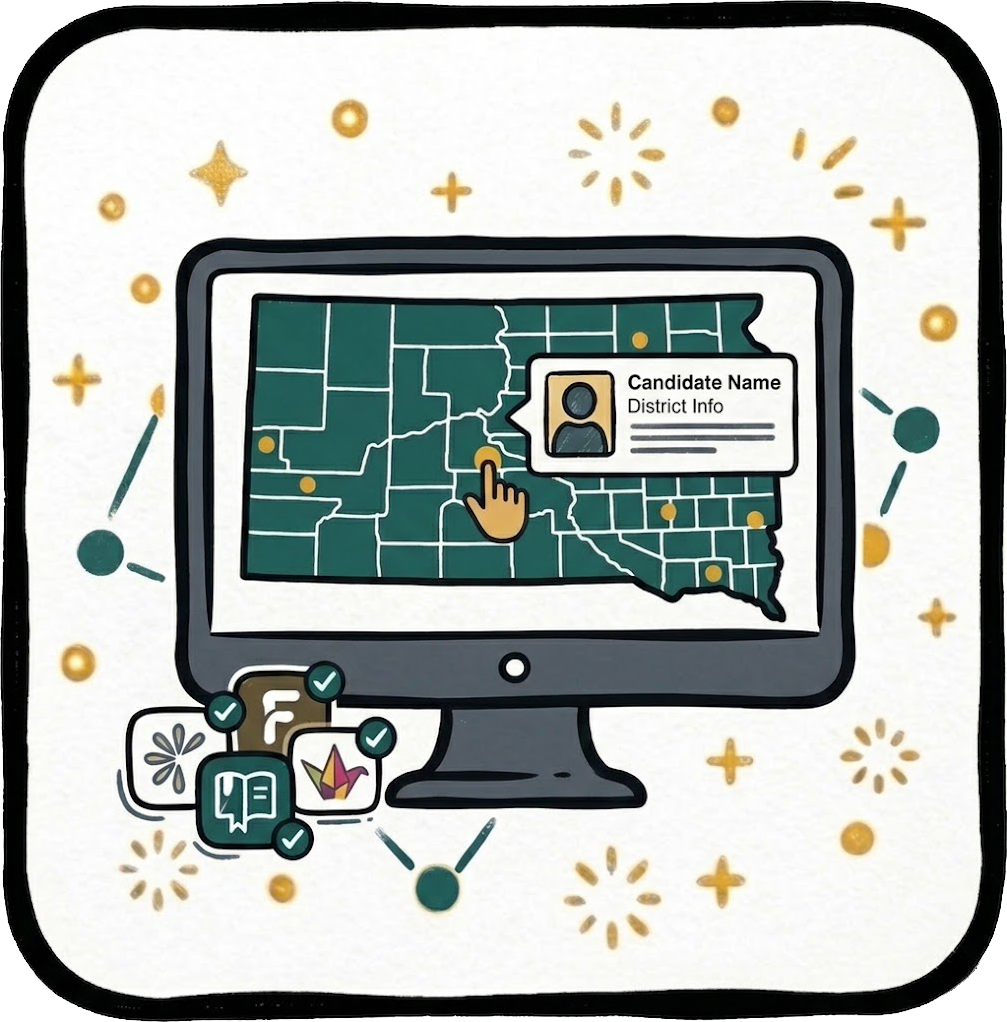
What it is: A step-by-step guide to building an interactive, no-code election map using Flourish, developed with South Dakota Public Broadcasting. The piece walks through exactly how SDPB created a statewide legislative candidate map with clickable district pop-ups, and includes an honest comparison of four other mapping tools, Mapster, StoryMaps, Felt and Padlet, with notes on cost and capabilities.
Who it’s for: Newsrooms planning voter guides, legislative coverage or any election project that would benefit from helping readers find their district and candidates in one place. No developer required.
Why it matters for November: Voter guides are one of the highest-value services a local newsroom can provide, and an interactive map takes that service to another level. This guide removes the technical mystery from building one, and the tool comparison section saves newsrooms the time of evaluating options on their own. The Flourish template SDPB used is publicly available and free to adapt.

VERDAD
What it is: A free, open-source tool that uses AI to monitor Spanish-language radio stations across the country, flagging and translating potential misinformation and disinformation into English in real time.
Who it’s for: Newsrooms covering Latino communities, investigative reporters tracking disinformation, and any outlet operating in a market with a significant Spanish-speaking population.
Why it matters for November: Disinformation targeting Latino voters has become one of the most significant and least covered threats to informed civic participation. VERDAD monitors more than a dozen states around the clock, and users can filter results by state, station, topic and political lean. The tool recently received a $350,000 MacArthur Foundation grant to expand into Arabic, Haitian Creole and Vietnamese, making it increasingly useful across a range of communities.
Bilingual Guide for Journalists Covering Latino and Spanish-Speaking Communities
What it is: A practical, downloadable guide developed by Factchequeado with RJI support, available in both English and Spanish, offering 17 tools to combat misinformation and improve coverage of Latino communities.
Who it’s for: Any reporter or editor covering politics, immigration, elections or civic affairs in communities with Latino populations.
Why it matters for November: Latino voters are the largest ethnic minority in the United States and a critical constituency in several key states. This guide gives journalists the sourcing strategies, terminology guidance and fact-checking tools to cover these communities accurately and without relying on stereotypes or misinformation.

Pop-Up Community Newsroom Toolkit
What it is: A practical guide for small newsrooms that want to produce deeper, more collaborative coverage by bringing in local experts as active contributors rather than passive sources.
Who it’s for: Small and mid-sized newsrooms that have important political stories to tell but not enough staff to tell them thoroughly.
Why it matters for November: Election cycles create enormous demand for in-depth local reporting at exactly the moment when small newsrooms are most stretched. This toolkit offers a tested model for expanding capacity without expanding payroll, drawing on community expertise that often goes untapped.
From the field: Real newsrooms, real lessons
Sometimes the most useful guidance does not come from a polished playbook or toolkit. It comes from a journalist who just did the thing and is willing to tell you exactly what worked and what didn’t. RJI’s Innovation in Focus series captures that kind of hard-won practical knowledge through conversations with newsrooms that have been experimenting with new approaches to election coverage. Here are two worth reading before November.
Q&A: Early lessons from elections roundtables in West Virginia (Innovation in Focus)
What it is: A practical Q&A with Tyler Dedrick, audience manager at Mountain State Spotlight, a statewide nonprofit newsroom in West Virginia, sharing honest lessons learned from hosting community roundtables as part of their election’s coverage plan. The piece covers format, promotion, logistics, timing and what he would do differently.
Who it’s for: Newsrooms of any size that want to get into the community before election season rather than just publishing at it, and particularly smaller newsrooms without dedicated events staff who need realistic, budget-conscious guidance.
Why it matters for November: The roundtable model Dedrick describes is simple and replicable. The central question Mountain State Spotlight brought to each event was straightforward: what issues do you want to hear candidates talk about this election season? That one question drove their entire coverage plan. His advice on setting backwards deadlines, finding the right venue, using Facebook Groups to reach people who do not already know your newsroom, and partnering with community organizations to expand reach is immediately actionable for any newsroom starting to plan now.
Q&A: Key questions to consider when building voter guides (Innovation in Focus)
What it is: A detailed Q&A with Erica Peterson, a journalist and election coverage specialist working with the Knight Foundation’s Election Hub, covering everything a newsroom needs to think through before building a voter guide, from determining scope and user experience to specific free tools and how to incorporate community input.
Who it’s for: Any newsroom considering a voter guide for November, especially those that have never built one before or want to go further down the ballot than they have in the past.
Why it matters for November: Peterson’s advice is grounded and specific. She walks through how to determine scope when covering hundreds of races, how to think about user experience and search traffic, and how to use free tools like Govpack, TurboVote and the Knight Election Hub to fill information gaps that voters genuinely have. She also makes a compelling case for going all the way down the ballot, noting that most voters walk into a booth unprepared for local races like judges, county sheriffs and assessors. Her point that voter guide copy can be reused year after year is a practical argument for any editor making the case internally to invest the time.
Additional resources worth bookmarking
Beyond the tools and guides above, RJI offers several other resources that belong in any newsroom’s ongoing toolkit.
The News Media Help Desk, launched in late 2025 in partnership with the Local Media Consortium, is a centralized hub featuring case studies, how-to guides and a tool comparison database called the Scorecard that helps newsrooms evaluate and select third-party platforms.
The “AI Is Here” series documents how newsrooms around the country are integrating AI into their journalism, with real examples, honest assessments and practical takeaways including specific coverage of AI use in election reporting.
Start now, not in October
November has a way of arriving faster than anyone expects. The newsrooms that cover elections best are not necessarily the ones with the biggest staffs or the largest budgets. They are the ones that plan early, use every available resource and refuse to leave their communities without the information they need to participate in democracy.
RJI has done much of the heavy lifting already. The playbooks are written, the tools are built and the guides are ready to download. All that is left is for newsrooms to put them to work.
Visit rjionline.org to explore the full library of free resources, and consider subscribing to the RJI Weekend Newsletter to stay current on new tools and research as they become available.
Cite this article
Fitzgerald, Austin (2026, June 11). Free tools, big impact: RJI’s resources for election coverage. Reynolds Journalism Institute. Retrieved from: https://rjionline.org/news/free-tools-big-impact-rjis-resources-for-election-coverage/