RJI Student Innovation Fellows unveil tools and strategies for community newsrooms in public webinar

Contact: Kat Duncan, duncank@rjionline.org
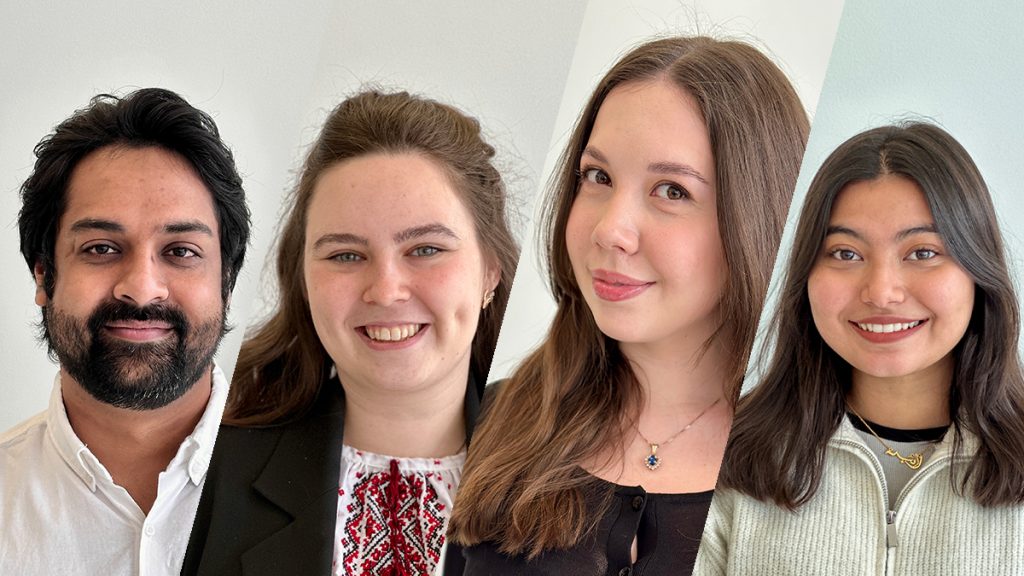
This summer, four international master’s students at the Missouri School of Journalism each spent 12 weeks stationed in a community newsroom, where they helped bring to life everything from new audience engagement strategies to data visualizations and automated information tracking.
As the newest cohort of Student Innovation Fellows from the School’s Reynolds Journalism Institute (RJI), they were part of RJI’s efforts to make experimentation, new technologies and innovative strategies more accessible. The Fellows recently presented the results of their work in a free webinar that offers a primer on a variety of tools and novel approaches to audience engagement, from training youth reporters to automating a directory of startup businesses.
At a time when many small and mid-sized newsrooms face headwinds from tight budgets and maxed-out staffing, the projects were designed to not only solve challenges at the participating newsrooms but to provide guidance for other news organizations to replicate the work.
“I am very proud of the innovative work our student Fellows accomplished this summer,” said Kat Duncan, director of innovation at RJI. “They all worked hard to bring new ideas, technology and techniques into their newsrooms in a way that made their projects sustainable, replicable and meaningful for the communities those newsrooms serve.”
Under the guidance of a newsroom mentor, each Fellow focused on two projects in their newsroom, addressing needs that intersected with their skills and interests. At the same time, they wrote informative articles for RJI that other newsrooms can use to guide related efforts.
The Fellows and their projects
Muhammad Osama Farooq
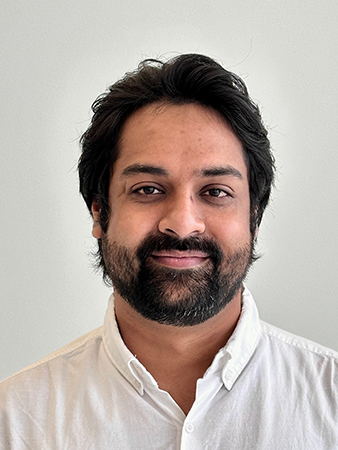
Farooq was paired with the Detroit Free Press, where his fellowship centered on empowering reporters by building up their mobile video skills and highlighting community news partnerships.
Recognizing that today’s beat reporters must often balance writing with photo and video duties on tight deadlines, Farooq created a comprehensive Vertical Video Playbook. Developed through one-on-one sessions with journalists across different beats, the playbook provides practical templates and strategies for turning a story into an engaging, high-quality social video straight from a smartphone.
“When I started meeting with reporters, I found they were doing reporting along with, videos photos and so much multitasking,” Farooq said. “Reporters kept asking me to keep things as simple as I can because sometimes we don’t even have one hour for the video.”
Farooq also helped produce a video series spotlighting the Free Press’s collaborative work with local nonprofit news outlets like BridgeDetroit and Chalkbeat Detroit. The series explores how newsrooms working together can deliver stronger, more comprehensive coverage for their community.
Together, the projects highlight how accessible multimedia tools and cooperative reporting can expand a newsroom’s reach and deepen its impact in the community it serves.
“I believe this is a replicable model for local news outlets everywhere and even for solo reporters,” Farooq said. “Everything can be applied by any newsroom here in the U.S., and I think it will be really helpful for them to serve their local communities.”
Mariia Novoselia
Novelia spent the summer at Technical.ly, which covers technology and startups nationwide. Her work focused on harnessing automation and artificial intelligence to ease newsroom workloads and help journalists work more efficiently.
Novoselia automated Technical.ly’s Realist Startup Tracker, a public directory tracking more than 200 emerging companies that previously had to be updated by hand. Integrating a variety of AI tools — the USPTO database for patent tracking, DataForSEO for search visibility and Apollo.io to count the number of employees at a given company — she built Google Colab scripts to gather and display the data automatically.
She also developed an AI-powered Guest Post Portal designed to streamline the editorial submission process. The tool offers real-time feedback on article pitches—guiding contributors on how to sharpen their ideas before submission, while helping editors prioritize the strongest stories.
“The portal’s purpose was to streamline the editorial workflow so that technically editors don’t have to sift through submissions that don’t align with their vision or area of coverage,” Novoselia said. “And it also gives advice to authors so that they can make the best of their submission.”
Crucially, she packaged her project into accessible templates and scoring guides, creating a framework that other newsrooms can easily adapt to their own coverage areas.
“You can just take that as inspiration and make it about your specific criteria that your newsroom wants to measure,” she added.
Elizaveta Orlova

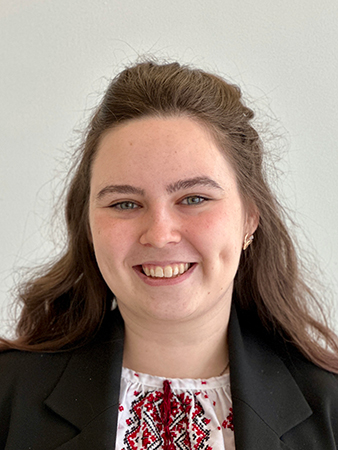
Orlova worked with Mirror Indy on projects that aimed to forge community connections in fun and creative ways. Through a Youth Reporting Program, she helped the outlet train four children to produce YouTube videos, Instagram content, articles and more, with the subjects determined based on the interests of the participants.
For Orlova, the key to success with the program was balancing earnest coverage — which ranged from a playground in peril to the environmental impacts of data centers — with lighter pursuits.
“Don’t forget to have fun with them, because they are kids,” Orlova said. “For our last episode, we were filming at the Indiana State Fair. It was crazy, it was funny. At the same time they were interviewing people, they were having fun, they were riding the rides, they were eating crazy foods. It’s important to spend time with them as kids.”
Her other project was a Kindness Map, an interactive map that the community can use to see and share locations where people experience kindness. Users can scroll through images, read about the kindness-centered experiences people have shared (and share their own experiences), explore volunteer opportunities and learn more about local businesses.
Both projects were designed to build stronger community engagement from the ground up rather than taking a more top-down approach.
“The newsroom creates the structure, but the community helps make the project bigger,” she said. “…It’s really important to give people the chance to introduce themselves and to participate in the work of your newsroom.”
Laiba Khan Zai
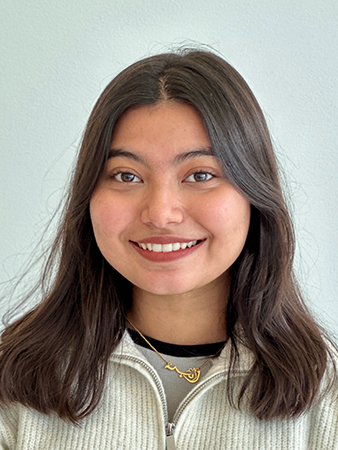
Zai joined the Times Union in Albany, New York, where she built tools to make local government more transparent and translate data-driven reporting into dynamic social content.
Her primary project tackled the oft-fragmented world of local government; she built a local legislation tracker across four counties in the state’s Capital Region. By auditing municipal records and organizing them into a unified system, she created a valuable reference hub for journalists doing accountability reporting and for residents wanting to stay informed on decisions impacting their communities.
The audit also happened to expose issues with how public records were built and organized by local governments.
“This audit was not just a background exercise,” she said. “It kind of became a map of extraction challenges. We found there were missing meeting minutes, there was difficult navigation, there were inconsistent formats and very unclear outcomes.”
For her second project, she addressed the challenge of presenting complex data to audiences in an increasingly fast-paced world where bite-sized content often performs best. She created a library of adaptable visual templates and animated graphics that allow newsroom staff to quickly turn statistics, timelines, and election results into compelling social media posts.
“News organizations publish a lot of really nice data-driven stories but the social platforms demand a very different kind of form,” she said. “Their findings have to be very visual, quick, very easy to understand, but they also have to have maximum context.”